Thursday, May 15, 2008

Mars Petcare Dog Food Recall: Follow-up

Why FDA Needs Mandatory Recall Authority

In 2007, 70 people in 19 states became infected with Salmonella Schwarzengrund. The first confirmed cases were reported in May in Pennsylvania. One month later, infections with the outbreak strain of Salmonella had turned up in Ohio and several other states.

Based on information uncovered by Pennsylvania health authorities and the CDC, suspicion fell on dry dog food as the source of the multi-state outbreak. Hot on the scent of the common link, investigators sampled 13 dog stool samples and 22 samples of dry dog food – and found the outbreak strain of Salmonella Schwarzengrund in 5 of the stools and in 2 dog food samples.

The implicated dog food was manufactured in the Pennsylvania plant of Mars Petcare. Pennsylvania Department of Health inspectors visited the Mars production plant on July 12th and collected 144 environmental swab samples for lab analysis. One of the samples yielded the outbreak strain of Salmonella Schwarzengrund.

Mars suspended production at its Pennsylvania plant for several months (July-November 2007) for a comprehensive clean-up and disinfection of the entire production facility. And it instituted a product recall – but only of the two specific products that were proven by FDA lab tests to be contaminated with Salmonella Schwarzengrund.

Mars Petcare's Pennsylvania facility produced dry dog food under 25 different brand names. Based on patient interviews and Salmonella-positive dog stools, some of these other brands – and some other production dates – also were implicated in the outbreak. The company, however, chose not to recall any products unless FDA could prove – based on Salmonella-positive lab results from unopened bags of dog food – that the products were contaminated.

Logically – given the scope of the outbreak, the confirmed presence of the outbreak strain in the production environment, the finding of Salmonella-contaminated dog food from two different batches, and the epidemiological evidence – the entire outstanding production from this plant should have been recalled. But FDA did not have the necessary authority to insist on a more extensive recall.

A report of the outbreak investigation appeared in this week's issue of Morbidity and Mortality Weekly Report, a CDC publication. The writer's frustration shines through clearly in the discussion of the recall. The Editorial Note to the report reads, in part, as follows:
"The case-control study found an association between infections in households and use of dry dog food or dry cat food produced by manufacturer A. In addition, the outbreak strain was isolated from 1) opened bags of dry dog food (brands A and B) that were produced in plant A by manufacturer A, 2) stool specimens from dogs in case-patient households that ate dry dog food produced in plant A, 3) an environmental sample from plant A, and 4) two bags (brands E and F) of previously unopened dry dog food produced in plant A.

A voluntary recall of specific-sized bags of two brands of dry dog food issued by the manufacturer in August 2007 was based only on lot-specific testing of finished unopened bags found to be positive for Salmonella by official FDA testing. Other sizes of bags of the two brands of dry dog food, although produced at plant A, were not recalled. Other brands of dry dog or cat food produced at plant A, including brands associated epidemiologically and microbiologically with illness, also were not included in the recall.

Plant A ceased operations during July--November 2007 to allow for cleaning and disinfection. However, because dry pet food has a 1-year shelf life and all contaminated products were not recalled, contaminated dry pet food might still be found in homes and could provide the potential for causing illness. Only an estimated 3% of Salmonella infections are laboratory-confirmed and reported to surveillance systems (2); therefore, this outbreak likely was larger than the 70 laboratory-confirmed cases identified."

Mars Petcare produces such familiar brands as Royal Canin, Pedigree and Nutro, as well as a large number of store brands. It is part of Mars, Incorporated – the company that has given the world M&Ms, Mars Bars and Uncle Ben's Rice.

The Mars Petcare dry dog foods have a one-year shelf life. Some of the dog food that was produced before the July 2007 plant shutdown is still in circulation. If you have purchased any dry dog food that was manufactured at Mars Petcare's Pennsylvania plant, please discard it. If you purchased a store brand or regional brand and are unsure of where it was made, contact your retailer and ask for the name of the manufacturer. Or call Mars North America's consumer hot line toll-free at: 1-800-627-7852.

Aged Black Pepper Cheese Recalled

Sweetwater Valley Farms has recalled a single production lot (Lot Number 616-361) of its Aged Black Pepper Cheese due to the presence of Listeria monocytogenes in the product. The cheese was distributed between December 27, 2007 and May 12, 2008 through the company's retail store in Philadelphia and through a Winery in Portland (both located in Tennessee).

The contamination was found during a routine sampling program carried out by the Tennessee Department of Agriculture. No illnesses have been reported.

If you purchased the recalled production lot of cheese, please return it to the store for a refund.

Canadian Ground Meat Recall - E. coli O157:H7

The Canadian Food Inspection Agency is advising consumers that ground beef and ground bison supplied by Trimpac Meat Distributors, Inc., of Vancouver, BC may be contaminated with E. coli O157:H7, and is being recalled.

The recall includes lean ground beef and a selection of ground meat patties and burgers, encompassing a range of production dates that span at least two months. The recalled products are sold by a number of retailers in British Columbia. There have been no illnesses associated with these products so far.

Details of the recall are included in the CFIA advisory (click on link in first paragraph). If you have purchased any of the recalled meat, please do not consume it.

Sub Sandwiches Recalled in Canada

Smith’s Snack Service, Ltd. has recalled its Smith Snacks Small Sub (UPC UPC 6 23858 00026 0), Best Before date JUN/08/08, as they may be contaminated with Listeria monocytogenes. The recall was announced this morning by the Canadian Food Inspection Agency, which is monitoring the situation.

The recalled Sub sandwiches were distributed only in the province of Newfoundland and Labrador.

According to the CFIA news alert, there have been no illnesses reported. There is no mention of how the contamination was detected, or by whom.

Young children, the elderly, pregnant women and people with weakened immune systems are especially at risk of serious illness as a result of an infection with Listeria monocytogenes. If you have purchased one of these sandwiches, please discard it.

Wednesday, May 14, 2008

South Africa's Dirty Little Secret: Update

The number of baby deaths in the Ukhahlamba region of Eastern Cape Province has risen to 123, according to an article in Port Elizabeth's "The Herald Online".

I first reported this story on April 23rd. At that time, 80 babies were thought to have died of diarrhea and other complications after having consumed contaminated tap water. The safety of the region's water supply had been compromised by a breakdown in the drinking water treatment system – a breakdown that was allowed to persist for several months.

Until recently, the South African government had done nothing to correct the source of the problem, other than to form a committee to investigate. That committee is compiling a report to present to the health ministry.

According to the latest article, the government has finally taken steps to carry out an emergency upgrade of the water treatment system. Perhaps we have seen the end of this outbreak, at last.

Myanmar After The Storm: Part 5


It's time to put the needs of the people first.


Ever since Cyclone Nargis struck Myanmar on May 3rd and decimated the population of the Ayeyarwaddy River Delta, the international community has been trying to help the cyclone victims.

And in the aftermath of the storm, the military junta in control of that unfortunate country has responded:
Meanwhile, heavy rain is continuing to soak the already-saturated delta and another cyclone may be forming in the region.

The United Nations, in order to avert what it is describing as a "second catastrophe", is calling for an air and sea corridor to funnel supplies and personnel directly into the stricken region. France, Britain and Germany have gone even further.

These three countries plan to propose to the Security Council that the UN invoke its humanitarian 'responsibility to protect' and deliver assistance to the storm victims without the agreement or cooperation of the Myanmar government. Not all EU countries approve of this approach, and there is no indication when France, Britain and Germany plan to make this proposal – or whether China and Russia, who are both against the idea, would veto such action.

As aid shipments pile up waiting for clearance to enter Myanmar via Yangon Airport, as aid workers sit impatiently on the sidelines waiting for permission to enter the disaster areas, and as Myanmar's senior general, Than Shwe, dodges telephone calls from UN Secretary General Ban Ki-Moon, people are dying needlessly.

France, Britain and Germany have it right. Protecting the lives and health of the Myanmar people is far more important than protecting the national sovereignty of Myanmar's military regime.

Tuesday, May 13, 2008

Smoked Salmon Spread Alert In Georgia

The Georgia Department of Agriculture has alerted consumers to the presence of Listeria monocytogenes in one batch of Smoked Salmon & Cheese Spread manufactured by Bright Water Seafoods, LLC, of Charlotte, NC.

The seven-ounce packages of spread are identified by UPC #1971100073, and carry a Best Before date of 060608. The contamination was detected as part of the State's routine sampling program.

Georgia has advised the FDA about its findings and has notified the public to avoid consuming this product.

This is the second time in less than a year that the Georgia Department of Agriculture has detected Listeria monocytogenes in a seven-ounce package of Bright Water Smoked Salmon & Cheese Spread. Last year's finding did NOT result in any FDA action – no consumer-level alert or recall notice. Nor has the Company's home state of North Carolina issued any alerts so far. What does Georgia know that no one else seems to?

Bits and Pieces: Foreign Material Recalls

There's been a rash of food recalls recently due to the presence of metal or plastic bits in the products. The problems have turned up in Australia, the United Kingdom and the United States.

Australia
May 1st: Woolworth's recalled 6-packs of "Home Brand Mini Spring Rolls" due to metal shavings or wire in the products. The 300-gram packages were identified with best before dates of 11/02/09 to 14/04/09 and were distributed in several states.

May 6th: Australian International Foods Pty Ltd recalled several of its meat, poultry and vegetable rolls due to the presence of metal wire. The recall included all products labeled with a best before date of 11 Feb 09 to 14 April 09.

United Kingdom
May 12th: The Food Standards Agency has alerted British consumers to a recall of "Nestlé Nutrition Build-up Original" milk-based powder, due to the possible presence of thin pieces of plastic in the product. The 400g packages are identified with batch code 72760949 and a best before date of 10/2009. This product is a nutrient-rich dietary supplement and is given to patients and other individuals at risk of malnutrition.

United States
May 12th: Fairbank Reconstruction Corp., of Asheville, NY, is recalling more than 23,000 pounds of ground beef that may be contaminated with pieces of plastic. The recalled product, which was produced on May 5th, was distributed in Connecticut, Maryland, Massachusetts and New York. The company initiated the recall after receiving complaints that consumers had found plastic in the meat. There have been no injuries or illnesses reported.

The ground meat was packaged in 1-pound to 5.3-pound trays of ground beef or patties and was sold under several store brand names, including Shaws, BJ's, Price Chopper and Fairbank Farms. The trays are labeled with Est. 492 inside the USDA seal of inspection, and carry date codes of 05/13/08, 05/15/08 or the Julian date code 124.

Monday, May 12, 2008

Food Poisoning Around the World - May 12th Edition

With all of the attention focused on Myanmar during the past nine days, the rest of the world has been left to its own devices. But that doesn't mean that there was nothing to report. Here's what we've been missing.

South Africa
The breakdown in the drinking water distribution system that resulted in the deaths of 78 babies over several months in the Eastern Cape province is no closer to being repaired. The province's health and water system officials are still waiting for information to be sent to them "from the ground level" before confirming that the babies died from diarrhea as a result of drinking contaminated water. Meanwhile, nothing has been done to repair the broken water system.

Viet Nam
Eighty people were treated for food poisoning on April 30th after attending a wedding party in Ha Tay Province that morning. The 80 victims, who were suffering from vomiting and diarrhea, were among a total of 600 guests at the wedding. The health authorities have sampled eight foods that were served at the wedding in an effort to determine the source of the outbreak.

Food poisoning claimed the life of a Son La hydroelectric dam construction site worker and sickened 120 other workers who attended a party together on May 1st. Food samples are being tested, but no results are available yet. Son La is located to the west of Hanoi.

Hong Kong
Ten people – one man and nine women – complained of food poisoning after eating a meal at a training school. All ten were treated at a nearby hospital and released. The school was not named. The Centre for Health Protection is investigating the gastroenteritis outbreak.

Russia
Two cases of botulism were reported in Samara during the first quarter of 2008. The cases were linked to the consumption of home-preserved mushrooms or fish. Samara is located in the Volga Federal District – approximately 700 km (435 miles) ESE of Moscow, as the crow flies – and is the administrative center of the Samara Oblast.

Sunday, May 11, 2008

Myanmar After The Storm: Part 4

The sky has fallen on the people of Myanmar, and there is no relief in view. It has been raining all day in the hardest-hit part of the Ayeyarwaddy River delta; heavy thunderstorms are predicted to continue for the next three days.

Now that the ruling junta has secured – through intimidation and intrigue – a "victory" in its referendum, it has grudgingly inched open the front door of the country to a few aid workers. Supplies have begun clearing through the Yangon airport with greater efficiency, and some boats, trucks and fuel have become available to transport food, medicines and shelters to the victims.

At best, however, only a trickle of aid is reaching victims. Part of the problem is the lack of decent roads. Driving in Myanmar is a challenge even under good conditions, and the massive flooding produced by Cyclone Nargis has washed out or blocked many roads. Even the waterways are treacherous. One boatload of supplies struck a submerged tree and sank.

Meanwhile, the disease clock is ticking. With decomposing human bodies and animal carcasses floating in the floodwater, and with no source of clean water for drinking or washing, victims desperately need the supplies of drinking water and disinfectant tablets that are being caught up in the Yangon airport bottleneck.

UNICEF, one of the few aid agencies that has managed to maintain a presence in Myanmar in recent years, reports that hospitals in Bogalay Township – one of the hardest hit parts of the delta – are receiving 6,000 patients each day. Approximately 20,000 people from this township have lost their homes and are living in 50 refugee camps. In Pyapon Township, also located in the Ayeyarwaddy delta, 16,000 people are living in 35 camps. One of these camps, which houses 3,500 people, has only 5 latrines.

As bad as the situation is for the displaced adults, it is far more precarious for the children. Even before the cyclone struck, roughly one-third of Myanmar's children were malnourished and, therefore, susceptible to disease. Already, about 20% of the children in the flooded areas are suffering from diarrhea and dehydration. Their future is becoming increasingly bleak as time passes.

Myanmar's neighbors – especially Thailand and China – and other countries around the world are responding generously with pledges of money, food and aid workers. Now it's up to the Myanmar government to unlock its doors and allow aid to flow as quickly as possible to those who need it.

Saturday, May 10, 2008

Recalls and Outbreaks: News Briefs

After several days of focusing on Myanmar, it's time to catch up on what's been happening around the United States.

Texas
R&R Alsatian Sausage and Products of Castroville has recalled beef jerky sold in bulk quantities on or after April 25th. Tests conducted by the Texas Department of State Health Services detected Listeria monocytogenes in the jerky. The testing was part of a routine sampling program, and no illnesses have been reported. Customers who purchased beef jerky from the Castroville location should either destroy it or return it to the company.

Texas
The State Department of Health Services (SDHS) is investigating a food poisoning outbreak, which is linked to a Relay for Life event that took place in Shelby County (east Texas) on May 2nd. More than 36 of the 450 attendees at the fund raiser later complained of nausea, diarrhea, vomiting and fever. KTRE (Channel 9) in east Texas reported yesterday that the illness was diagnosed as Salmonella, but SDHS has not confirmed either the food or the microbe at the source of the outbreak.

California
The San Diego hepatitis A outbreak has now expanded to include 22 victims – 10 women and 12 men. There is still no news on the source of the virus. All of the victims were customers of the Chipotle Mexican Grill in La Mesa, CA. None of the 26 restaurant employees tested positive for a recent hepatitis infection.

Minnesota
Norovirus has made an appearance at Gage Elementary School in Rochester, MN. At least 13 students complained of nausea, severe vomiting, and diarrhea, keeping the school janitors busy. The Olmsted County Public Health department has sent out letters to parents in the school district, warning of the norovirus outbreak.

New York
Two Brooklyn neighborhoods have been alerted to an outbreak of Shigella that is making the rounds of the Orthodox Jewish residents. The communities of
Borough Park and Williamsburg have experienced more than 150 cases so far this year. The New York City Department of Health is working with community leaders and rabbis to raise awareness of the disease and help to contain the outbreak. Shigella is found in the stools of infected persons and can be spread through fecal contamination of food or water. The infection can spread rapidly in schools and daycare centers.

California
The Moscone Convention Center in San Francisco was the venue for a Norovirus outbreak last week. According to city public health officials, about 70 people – all but 3 of them staff members – fell ill between April 30th and May 8th. The health department is working with Moscone management to determine the origin of the outbreak and make cleaning recommendations. Scheduled events are going on as planned. If you are attending an event at the Moscone Convention Center, please take extra precautions to wash your hands thoroughly and often – especially before eating.

New Jersey
Seventeen cases of Salmonella have now been confirmed in the Princeton University outbreak. An additional 70 cases of gastrointestinal illness are being investigated, but have not yet been confirmed as Salmonella, according to the University. Health officials are investigating, but have not yet identified the source of the outbreak. Nevertheless, the school has stopped serving some produce items, and has closed a salad bar and a Mexican food station in the dining center.


Friday, May 9, 2008

Myanmar After The Storm: Crisis Mismanagement

The military government of Myanmar should be congratulated. They are writing the ultimate case study of how to turn a disastrous situation into a complete catastrophe.

With more than 1 million of its people homeless, hungry, thirsty and in dire risk of infectious diseases, the military cabal that controls this country has said to the world, "Give us your money, your food, your water, and your medical supplies – but STAY OUT."

The United Nations World Food Programme took the unprecedented step of halting aid flights to Myanmar temporarily after the UN was forced to transfer the supplies into government warehouses. The country's leaders denied impounding the supplies, claiming that the government simply wanted to control the distribution of food itself. The UN has since announced that it will resume aid flights on Saturday.

Myanmar has been under pressure to allow aid workers into the country ever since the magnitude of the disaster became apparent. The Prime Minister of Thailand, Samak Sundaravej, canceled a planned visit to Myanmar earlier today. He had hoped to persuade the country's leaders to allow in aid workers, but decided that this would be a fool's errand.

Fortunately for the residents of the storm-ravaged Ayeyarwaddy Delta, the International Red Cross, the United Nations and many individual countries are sending money and supplies despite the attitude of the Myanmar government. Seven Red Cross workers have finally received visas to enter the country, and more are expected to follow soon.

According to Michael Annear, the regional disaster response coordinator for the Red Cross effort, 1.5 million Myanmar people have been left homeless by Cyclone Nargis; the estimated death toll has climbed to 66,000.

The relief efforts will not be helped by the weather. The town of Labutta, almost completely destroyed by the recent cyclone, is expected to receive an additional 16 inches of rain during the next week. Yangon will receive slightly less – about 14 inches in the next seven days.

The additional monsoonal rainfall will not only hamper relief efforts. It will exacerbate the spread of enteric diseases such as cholera and dysentery throughout the delta.

Let's hope that Myanmar's ruling military junta will realize before it's too late that they need outside assistance to cope with this disaster, and that they and will open the country's doors to those who are trying to help the Myanmar people to survive.

Organic ≠ Safe

The "Organic" label on an item of food is not a guarantee of safety. Take, for example, today's recall announcement by Waitrose, Ltd. of the United Kingdom.

The Food Standards Agency issued a Food Alert today, advising consumers that Waitrose was recalling some of its Organic Eggs due to lead contamination. The company has recalled all date codes up to and including 20 May 2008 of eggs marked with the farm identification code OUK 20137.

Apparently, the flock of free-range hens that produced these eggs had consumed lead shot. The company is concerned that some of the lead might have contaminated the eggs.

The company is requesting that consumers check their egg packages for the identification code and return the recalled eggs to any Waitrose outlet for a full refund.

Ground Beef Recall: E. coli O157:H7 Visits Hawaii

Palama Holdings, located in Kapolei, Hawaii, has recalled 68,670 pounds of ground beef because it may be contaminated with E. coli O157:H7, according to a May 8th news release from USDA. The recalled ground beef was produced April 9, 2008, through April 21, 2008 and was distributed throughout the the state of Hawaii.

The recall includes 1/4 pound and 1/3 pound ground beef patties, as well as 5-pound and 10-pound chubs. Packages are marked with EST. 11077. The chubs, however, may be repackaged or reground at retail, in which case the establishment ID number will be lost.

The USDA recall news release states that the contaminant was detected by company tests and that no illnesses have been reported. That's comforting, as far as it goes.

But I wish USDA – or Palama – would explain why it took more than 2 weeks (April 21 to May 8) for the company test to return a positive result when reliable, validated screening tests are available that provide a preliminary result in 24 hours. Furthermore, even when a preliminary result is positive, that result can be confirmed within a couple of days by a competent independent testing lab.

I also wonder at the range of processing dates – April 9 through April 21 – included in the recall. What is the rationale for these dates? Was April 9th the only batch that tested positive? Or was "regrind" carried forward from April 9th all the way to April 21st?

I'll be watching for the next installment. Meanwhile, please check the USDA news release for details on the ground beef products included in this recall. And, now that the summer outdoor cooking season is almost upon us, please review the USDA's recommendations for safe outdoor cooking.

Thursday, May 8, 2008

Myanmar After The Storm: Cholera Erupts

"The (feared) cholera epidemic has begun," according to a doctor quoted today in The First Post.

As I predicted in Myanmar After The Storm: Part 1, cholera – always endemic in this region – has spread in two areas of the Ayeyarwaddy (Irrawaddy) Delta. The lack of clean water, fresh food, and even rudimentary sanitary facilities will make this epidemic extremely difficult to contain.

The flooded rice paddies are strewn with the dead bodies of people and oxen, contributing further to the spread of enteric diseases. I expect that dysentery, acute watery diarrhea, and hepatitis will follow on the heels of the cholera.

Every day that aid workers are delayed from entering the flood zones will exacerbate the health crisis. But even once the workers and their supplies arrive, it will be months before life in the delta can even begin to return to normal.

Myanmar After The Storm: Part 3

Based on the latest "unofficial" numbers, the death toll from Cyclone Nargis is likely to climb into the hundreds of thousands – as many as 80,000 just in the area surrounding the Ayeyarwaddy (Irrawaddy) Delta town of Labutta. The "official" tally is lagging far behind, at 22,980 dead and 42,119 missing.

The cyclone and its accompanying storm surge devastated the low-lying Ayeyarwaddy Delta, the source of 65% of the country's rice production. The damage caused by the storm, and its impact on the delta's rice paddies, will reverberate through the entire region.

What This Means For Myanmar
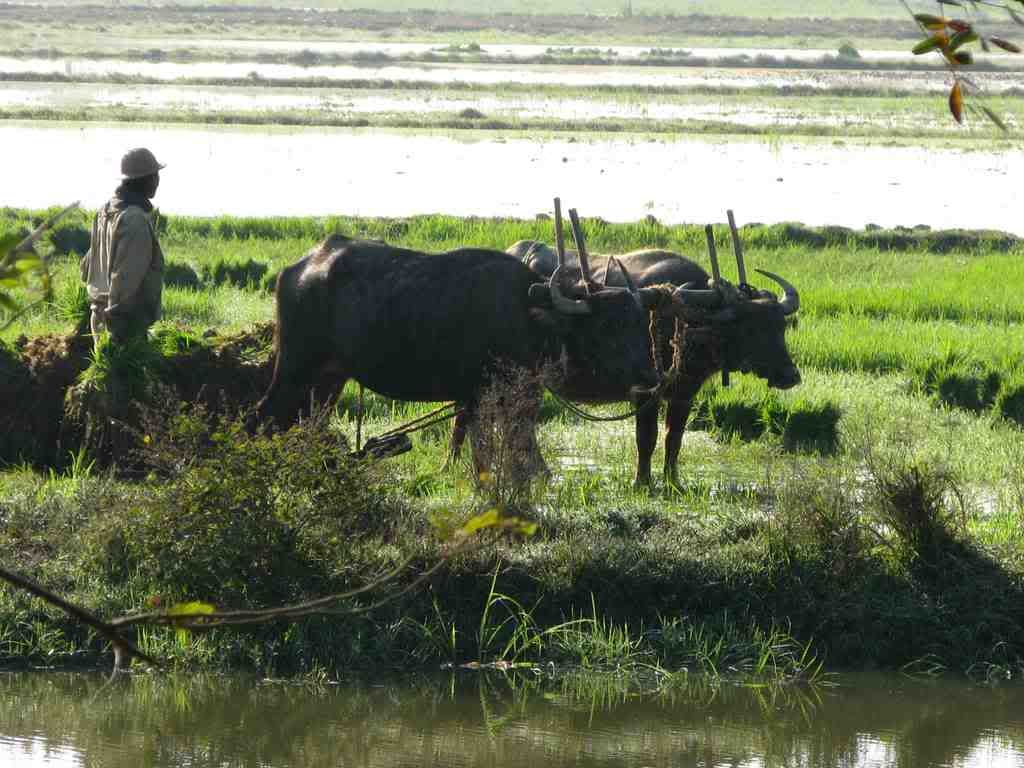
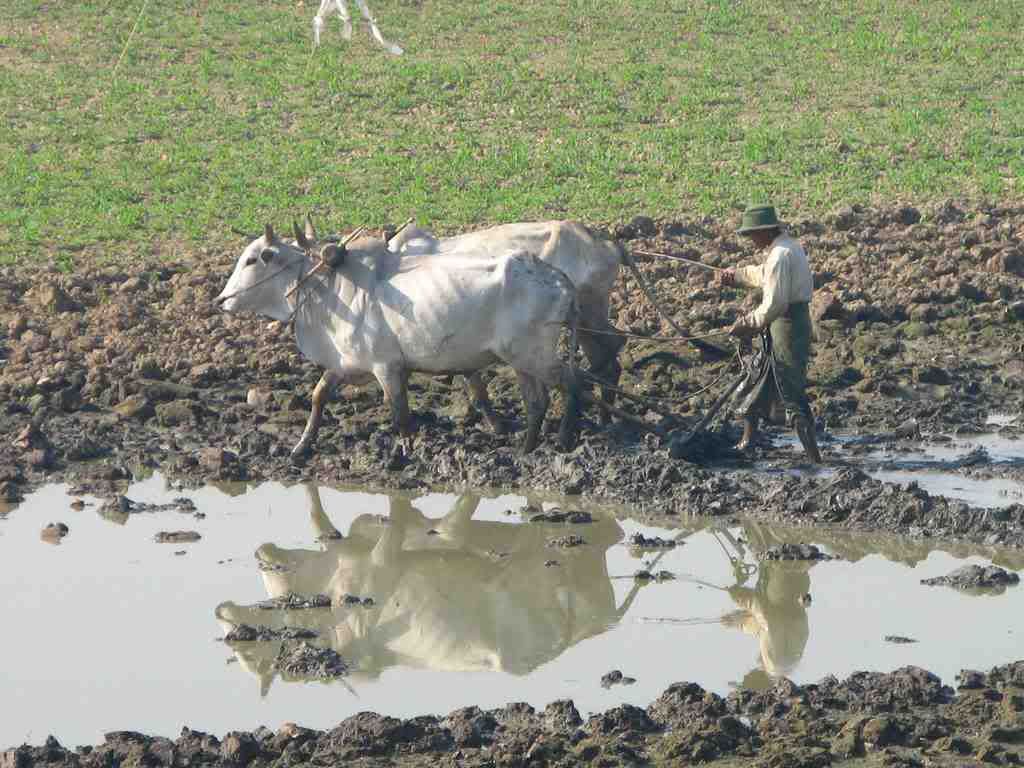
Most Myanmar villagers farm the way their grandfathers did – using plows drawn by oxen or water buffaloes, and fertilizing their fields with manure. Nevertheless, the country produces more rice than it needs, and has exported its surplus rice for many years.

A farmer and his water buffaloes plowing a rice paddy somewhere between Yangon and Bago


This rice farmer near Mandalay prefers oxen


Rice paddies are normally flooded during the early part of the crop cycle. But this storm struck the delta during the worst possible time – the winter crop harvest period. Fields like the ones shown above are now completely under water. What hasn't been destroyed by flood waters has been polluted by dead bodies – both human and animal.

The region to the southeast of Yangon received a double-whammy. In addition to damage caused by the cyclone's winds and rain, a 12-foot high storm surge inundated the coastal region with sea water.

Rice farmers in Louisiana learned first-hand in 2005 about the long-term damage a storm surge can bring. The storm surge that accompanied Hurricane Rita contaminated Vermilion Parish's rice fields with sea water. The resulting high salt levels put most of the fields out of commission for a year or more.

Under normal conditions, rice farmers in the Ayeyarwaddy Delta produce two – sometimes even three – crops each year. The country had been planning to expand rice acreage to 8.26 million hectares (20.4 million acres) from 8.1 million hectares (20 million acres) this year – an increase of just under 2%. Instead, the arable acreage in the delta will shrink dramatically.

The International Impact
In 2003, Myanmar produced 27 million tons* (24.6 metric tonnes) of rice. Only Bangladesh, China, India, Indonesia and Vietnam grew more rice that year. Between April 2004 and March 2006, the country exported 180,000 tons of rice annually. Its rice exports fell to just 14,500 tons in fiscal year 2006/07, but rebounded in 2007/08.

Myanmar had been able to take advantage of recent shortages and high prices to expand its sales of rice to Bangladesh (~198,000 tons), Singapore (385 tons) and Sri Lanka (5,500 tons). The country was expected to export 660,000 tons of rice in 2008/09. This will no longer be possible, thanks to Cyclone Nargis.

As recently as May 5th, The Wall Street Journal (WSJ) carried a story with the headline "Softening Rice Prices Suggest Market Peak Has Come, Gone." According to the article by Tom Polansek, Thailand – the world's largest rice exporter – had begun to release into the market 2.1 million tonnes (2.3 million tons) of rice that it had stockpiled.

But this story was out-of-date even before it was published. On May 6th, Bangladesh announced a virtual ban on rice exports. The following day, BBC reported that rice prices had risen for the fourth day in a row at the Chicago Board of Trade.

Myanmar's exports are little more than a drop in the world's rice bucket. The WSJ article mentioned that world rice "ending" stocks (the rice left over after taking supply and demand into account) surpassed 77 million tonnes (85 million tons) in April. Now some of that excess rice will be needed to feed Myanmar's displaced farmers and city dwellers.

The annual rice consumption by Myanmar's people in normal times is approximately 17 million tons, all of which is grown domestically. With the fields that produce 65% of the rice crop unusable, possibly for a year or more, the country may need to import as much as 11 million tons of rice – roughly 13% of the world's surplus – to feed its people.

Inevitably, Myanmar's unanticipated need to import large amounts of rice and other foodstuffs will force the international price of rice even higher than ever. We have already seen riots in Bangladesh, Haiti, Egypt and Somalia, among others, as their people rebelled against food shortages and high prices. Watch for more violence as prices spike even higher and as countries compound the problem by hoarding their surpluses for internal consumption.

Cyclone Nargis made its landfall in Myanmar. But its impact will be felt around the world.

*Please note. For consistency of presentation and for the convenience of readers, I have converted metric tonnes into US tons.

Wednesday, May 7, 2008

Myanmar After The Storm: Part 2

Myanmar's "official" death toll from Cyclone Nargis still stands at 22,000 this morning. According to the United Nations, more than one million people are homeless, and 5,000 square kilometers of the Ayeyarwaddy (Irrawaddy) River delta are still under water.

The United Nations and several of Myanmar's neighbors – Thailand, India and China – have flown shipments of food and other aid supplies into the country. The United States has also offered assistance, but Myanmar's ruling military junta has not yet authorized entry visas for foreign aid workers.

As I mentioned in Part 1 of this series, the risk of disease outbreaks is extremely high. Mosquito-borne diseases such as malaria and dengue are endemic in Myanmar, as are cholera and dysentery.

Yangon's Special Problems
As residents of Yangon struggle to reclaim their city, they face a different – though no less difficult – set of challenges from those being experienced by their rural compatriots.

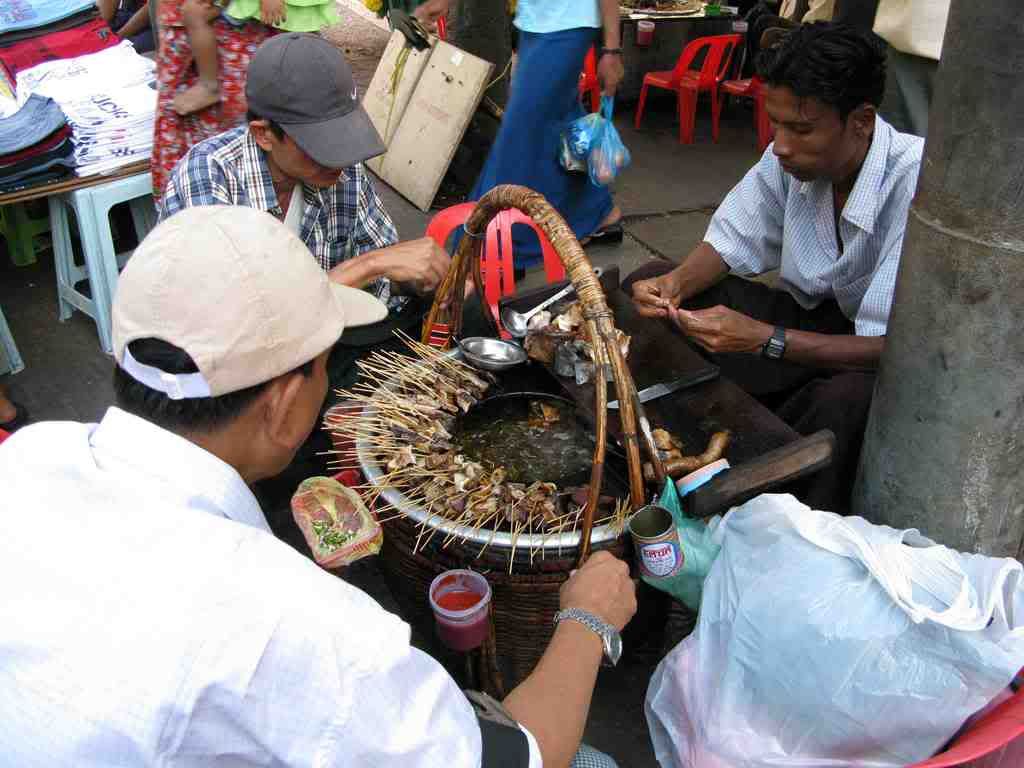
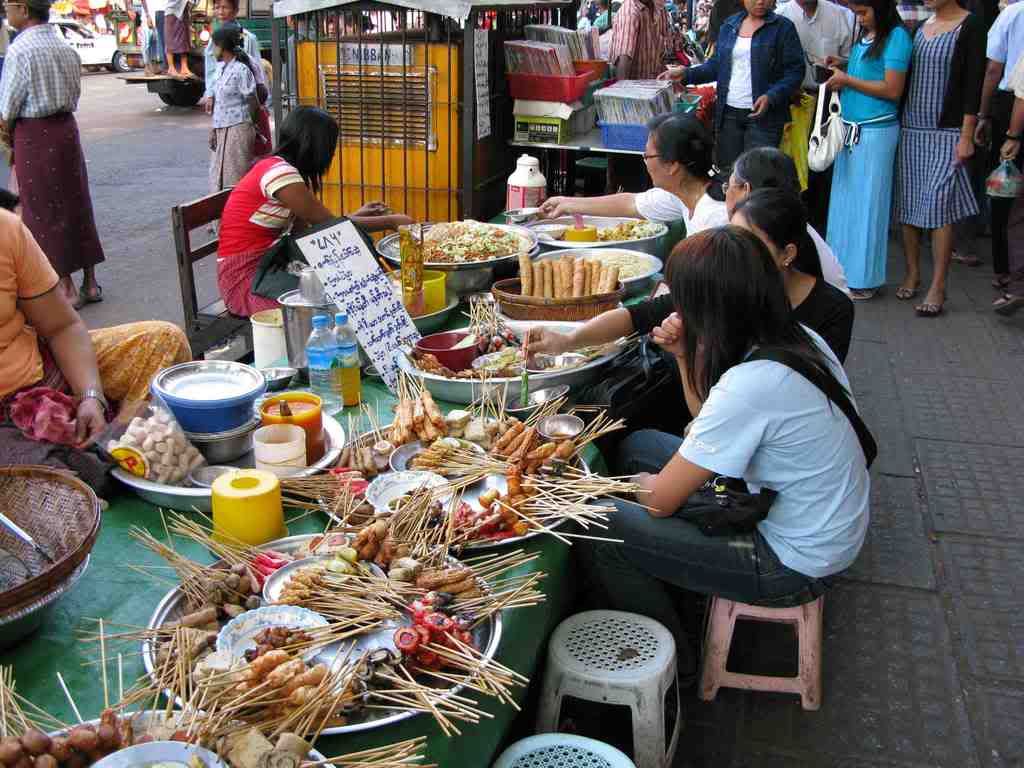
When we visited Yangon in January of this year, we were shown the "usual" tourist spots – the City Centre, the Shwedagon Pagoda, the immense reclining Buddha, and so forth. We also took some roads less traveled, at least by tourists. We walked the side streets where local residents buy their food supplies for the day and where they stop for a bite of Myanmar style fast food.

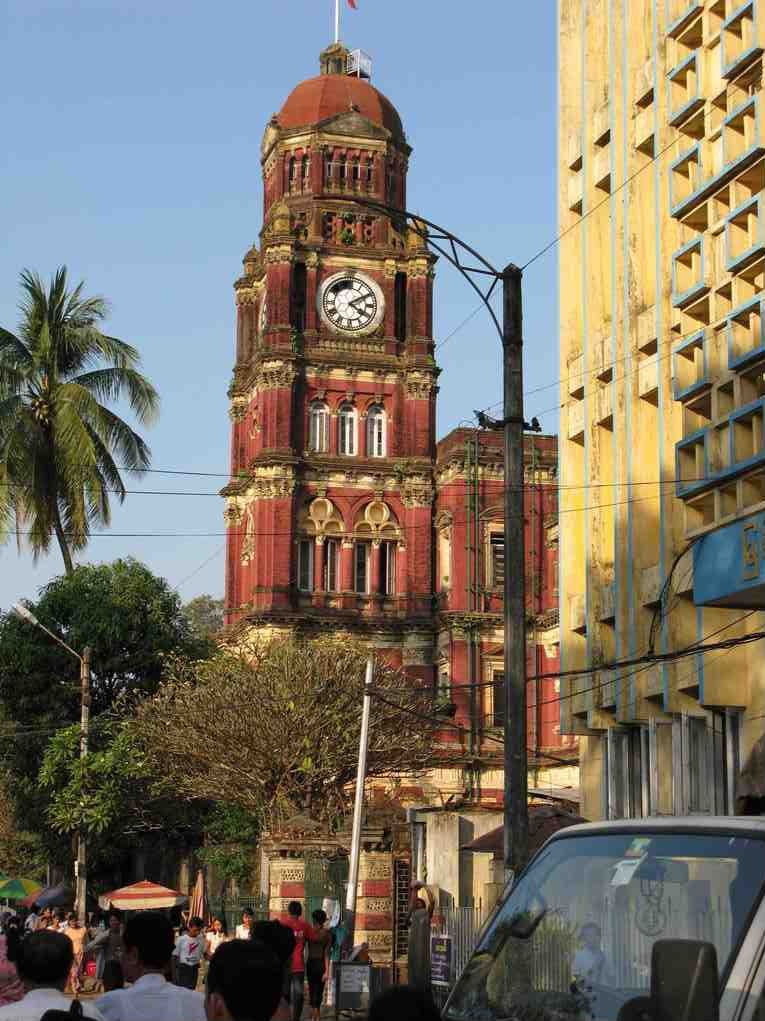
We were struck by the aging beauty of some of Yangon's buildings in the city centre.


The red brick High Court building is a Yangon landmark, easily recognized by its clock tower.


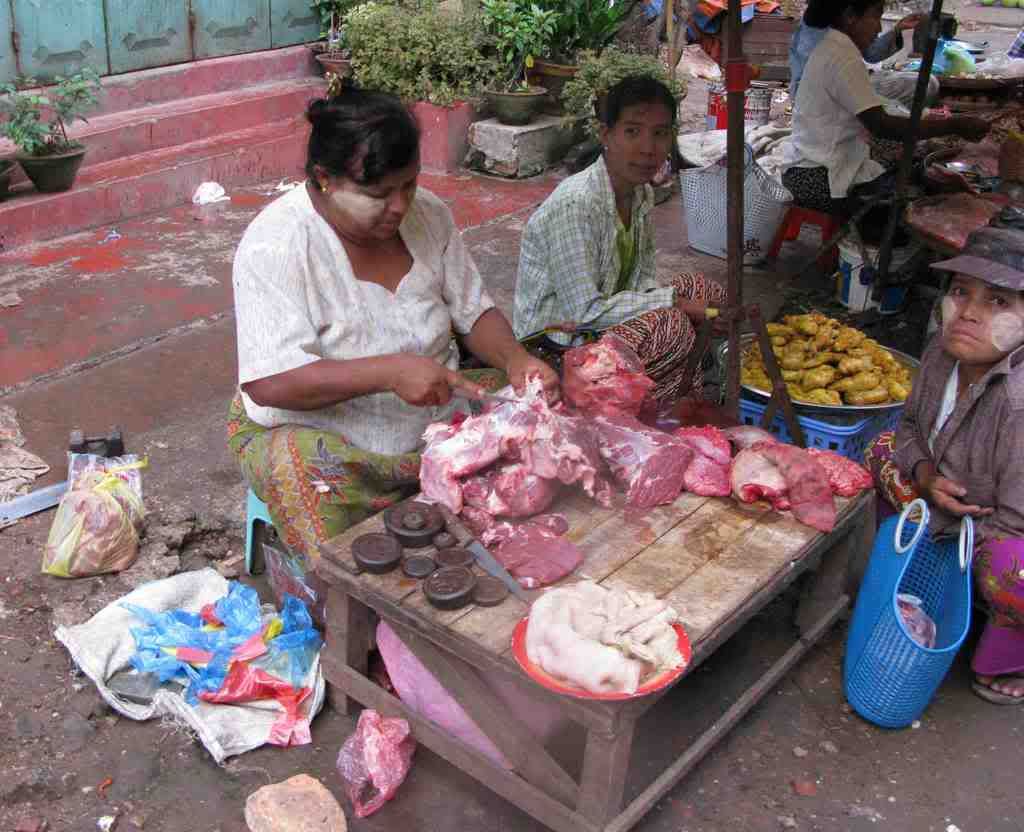
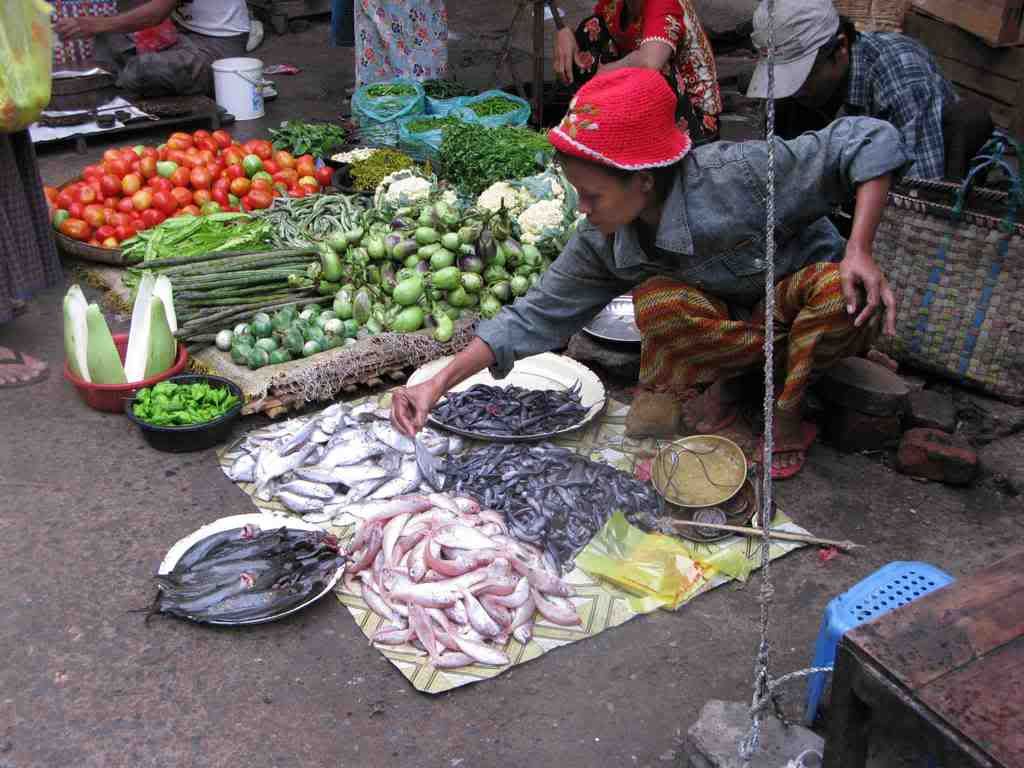
We learned that, even in this city of more than 5 million, most people cannot afford to run a refrigerator. Shopping for food is a daily chore. The morning markets were crowded, rain or shine, including this one – held every morning in the side streets and lanes of the City Centre.

One of the many meat vendors


Fish and produce displayed on sheets laid directly on the pavement


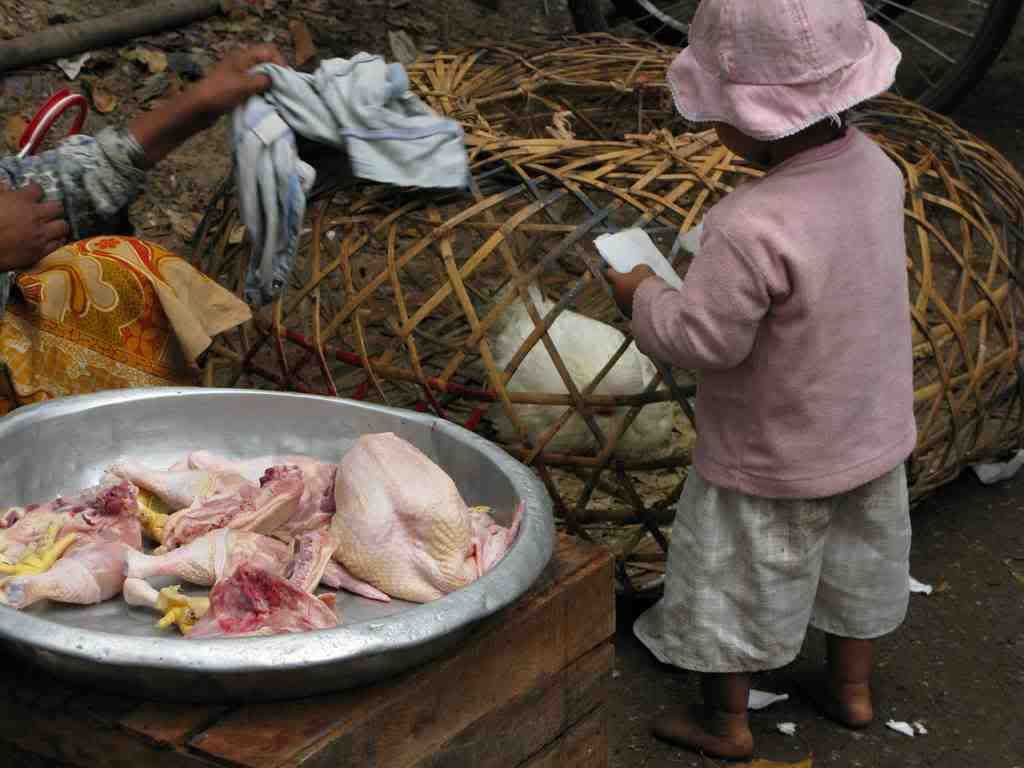
Fresh poultry for sale


The side streets – and the sidewalks of some main thoroughfares in downtown Yangon – were lined with vendors, who never seemed to lack for customers.


With the extensive damage to Yangon's buildings, and with downed trees and power lines blocking roads, these markets will not be able to function for some time to come. There are a few supermarkets in the city, but they cater to the wealthy. The average Yangon family cannot afford to shop there – even if the food is available.

There will be a lot of hungry people in Yangon over the next several weeks. And hungry people can easily become angry people. Look for reports of unrest and repression in and around Yangon as food supplies and tempers get short.


For more background on Myanmar, click on "Southeast Asia" under "Series and Topics"

Hepatitis Update: San Diego and Albuquerque

Chipotle Mexican Grill, La Mesa, CA
Another woman has been added to the list of restaurant patrons who have become infected with hepatitis A virus and who patronized Chipotle between March 1st and April 22nd. This brings the total number of cases linked to the restaurant to 21 – 9 women and 12 men. The county is still no closer to identifying the source of the virus.

IHOP, Albuquerque, NM
New Mexico is still investigating this outbreak. Two IHOP food servers and two restaurant patrons have been infected with hepatitis A virus. No new cases have been confirmed since the initial report.

If you have eaten at one of the restaurants implicated in these outbreaks and you begin to experience symptoms of hepatitis or gastroenteritis, please contact your health care provider or your local department of health.

Tuesday, May 6, 2008

Chipotle Hepatitis Update: 20 Cases + 1 Lawsuit

San Diego County revealed yesterday afternoon that the total number of cases of hepatitis A infection linked to Chipotle Mexican Grill in La Mesa has risen to 20. The list of victims now includes 8 women and 12 men, ages 23-59.

Bill Marler has been contacted by four of the victims, and reported in his blog today that one lawsuit has been filed against Chipotle.

The county is still trying to find the source of this outbreak. None of the 26 Chipotle employees from that location have tested positive for a recent hepatitis infection.

In a statement released on April 28th, a Chipotle spokesperson disavowed any responsibility on the part of the restaurant. The company based its assertion on a string of "A" ratings from County inspectors and on the absence of a smoking gun (that is, a hepatitis-positive employee of the La Mesa restaurant).

If you have eaten at the La Mesa Chipotle Mexican Grill at any time between March 1st and April 22nd and are feeling ill, please consult your health care provider or contact the San Diego County Epidemiology Branch at (619) 515-6620.

Myanmar After The Storm: Part 1

According to the BBC, Myanmar's death toll from Cyclone Nargis has already surpassed 22,000, with at least 41,000 people still missing. Tens of thousands more have been left homeless. In Yangon – the country's largest city and its former capital – clean drinking water and electricity, already in limited supply before the storm, are more difficult to obtain than ever. Five regions with a combined population of 24 million – roughly half of the country's total population – have been declared disaster areas.

But as devastating as the immediate consequences of the storm have been, the longer term repercussions are potentially even more severe – both for the Myanmar people and for other countries in the region.

On The Political Front
Myanmar's constitutional referendum was scheduled to take place on May 10th. Long touted by the military junta that rules this country as a "pathway to democracy", the referendum – and the constitution it is supposed to ratify – has been viewed with disdain by most observers outside Myanmar. The junta declared yesterday that the referendum would proceed as planned in spite of the devastation caused by Cyclone Nargis. They have since announced that voting in the hardest hit areas would be delayed until May 24th.

Given the extent of the storm damage, it is difficult to imagine how residents of Yangon and of the Ayeyarwaddy (Irrawaddy) River Delta would be able to vote, even with the two-week delay. This will skew the voter turnout in favor of the northern half of the country, including the new capital city of Naypyidaw. Perhaps, that is what the junta hopes will happen. After all, Naypyidaw is heavily populated with government officials and civil servants, all of whom are dependent on the junta for their livelihood.

Public Health
According to the World Health Organization, cholera, dysentery and watery diarrhea are among the diseases endemic to Myanmar. Any of these water-borne diseases may run rampant in the aftermath of a natural disaster, where safe drinking water is scarce and sanitary toilet facilities even more so.

Last summer and fall, Iraq suffered an outbreak of cholera and acute watery diarrhea that sickened more than 30,000 people (3,315 confirmed to be infected with Vibrio cholerae) and claimed 14 lives. It was only due to adequate and timely treatment of the victims that the loss of lives was relatively small.

Ready access to treatment is critical for victims of cholera and acute watery diarrhea. Victims of Sudan's 2006 outbreak were not as fortunate as the Iraqis. Northern Sudan reported 2,007 cases of acute watery diarrhea between mid-June and mid-April that year. Seventy-seven of the victims died. The southern part of the country was affected even more severely. In the first half of 2006, southern Sudan recorded 16,187 cases of acute watery diarrhea – 476 of them fatal.

Sanitary toilet facilities and clean drinking water are rare commodities in rural Myanmar at the best of times. The tragic loss of life caused by Cyclone Nargis probably will be amplified by the typical "diseases of disaster" – cholera, dysentery and diarrhea – that follow so often in the wake of storms, floods and earthquakes in much of Asia and Africa.

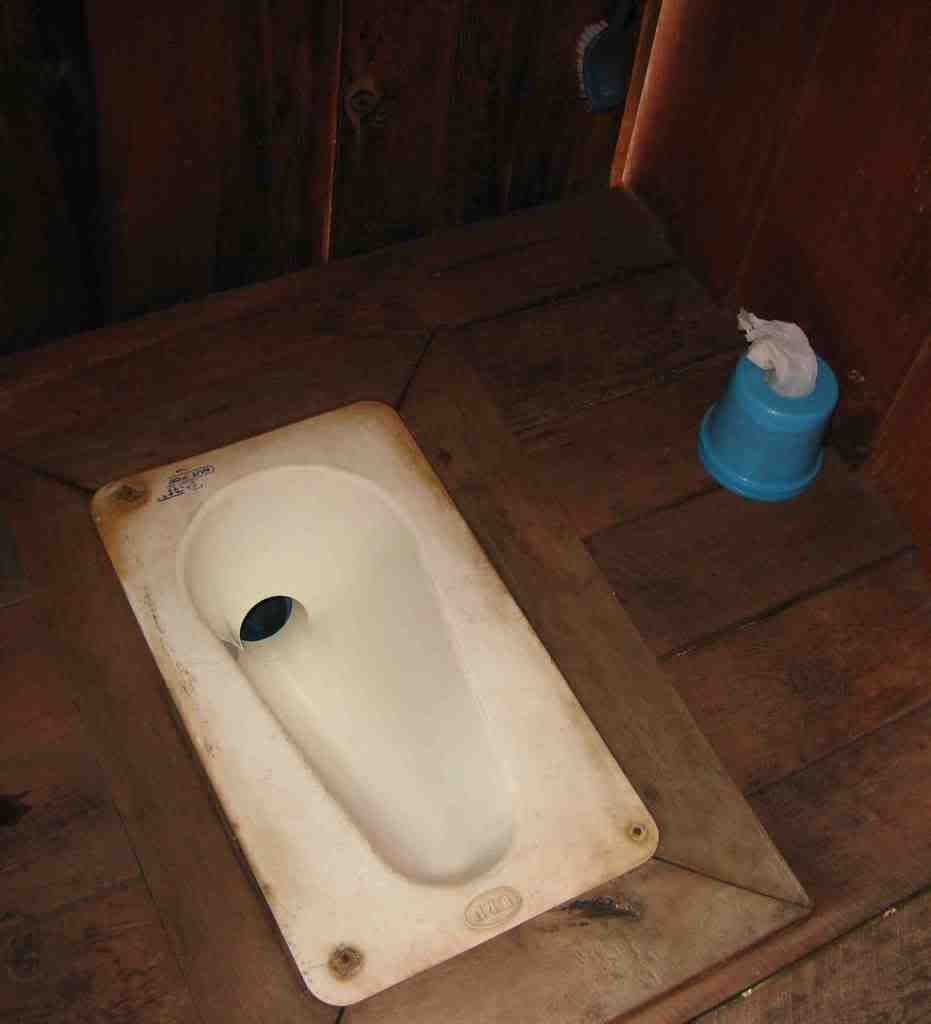
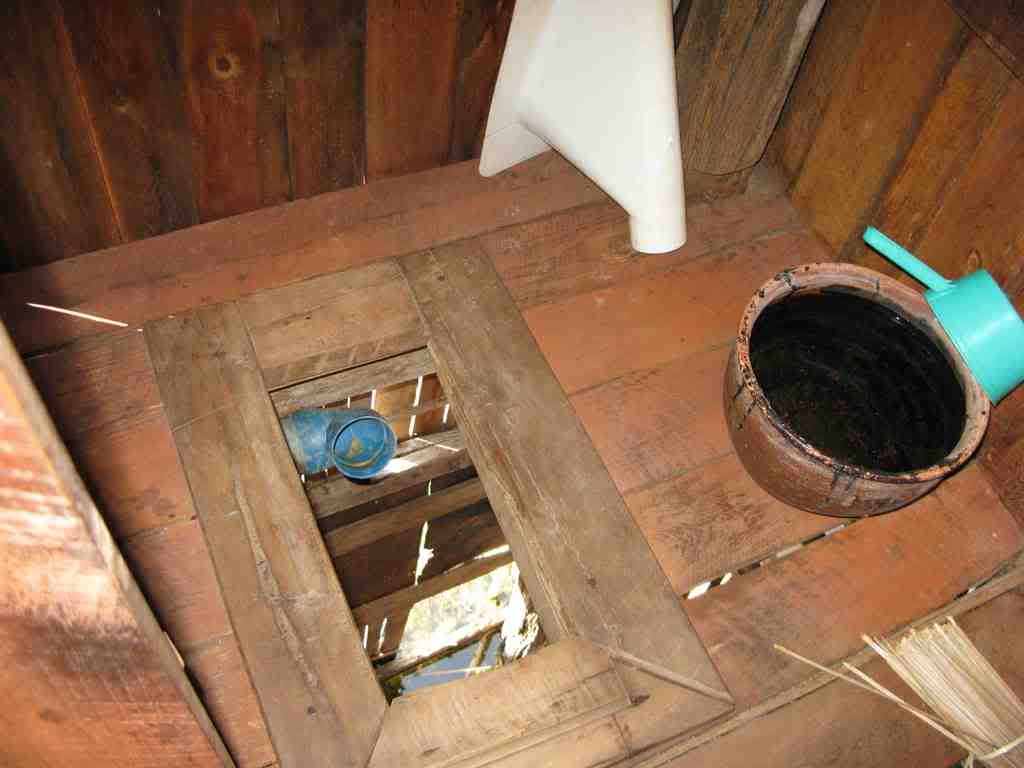
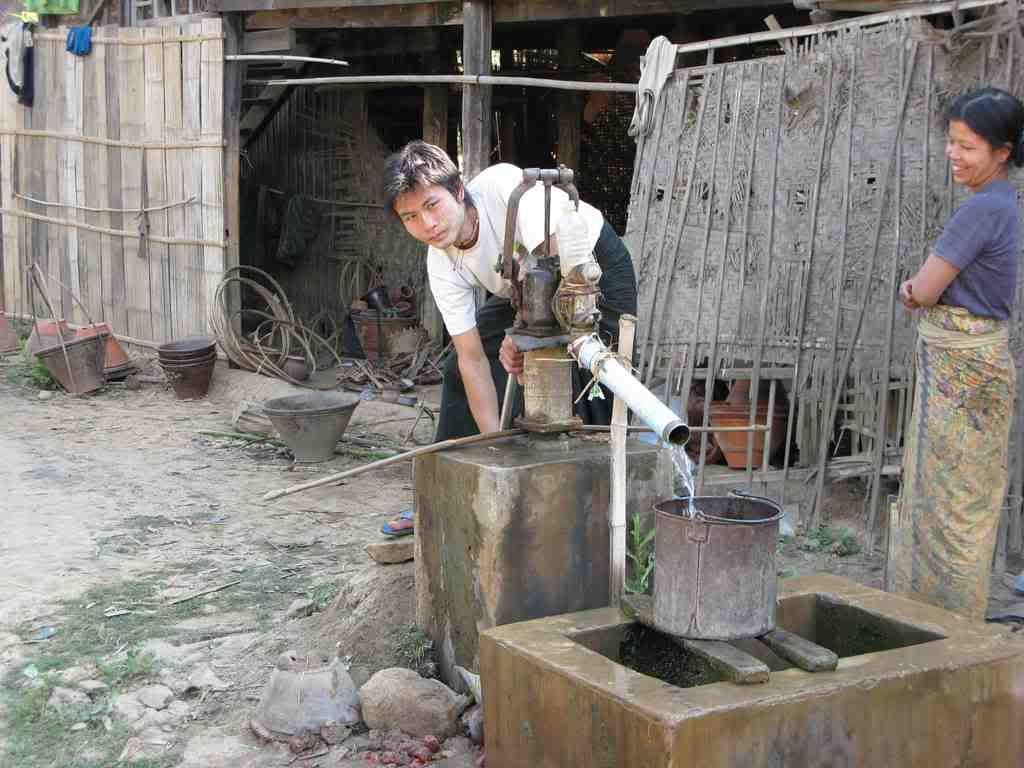
The following photos were taken in January 2008 and illustrate the sanitation problems that rural residents of Myanmar confront even at the best of times.

This is the exterior of an outhouse in an Inle Lake village.


The outhouse "commode"


An empty slot waiting to receive its commode (leaning against the wall). Human waste from these outhouses drops directly into Inle Lake.


Community well belonging to a "dry land" village on the shore of Inle Lake.


The waters of Inle Lake also serve as the kitchen sink for washing pots and pans


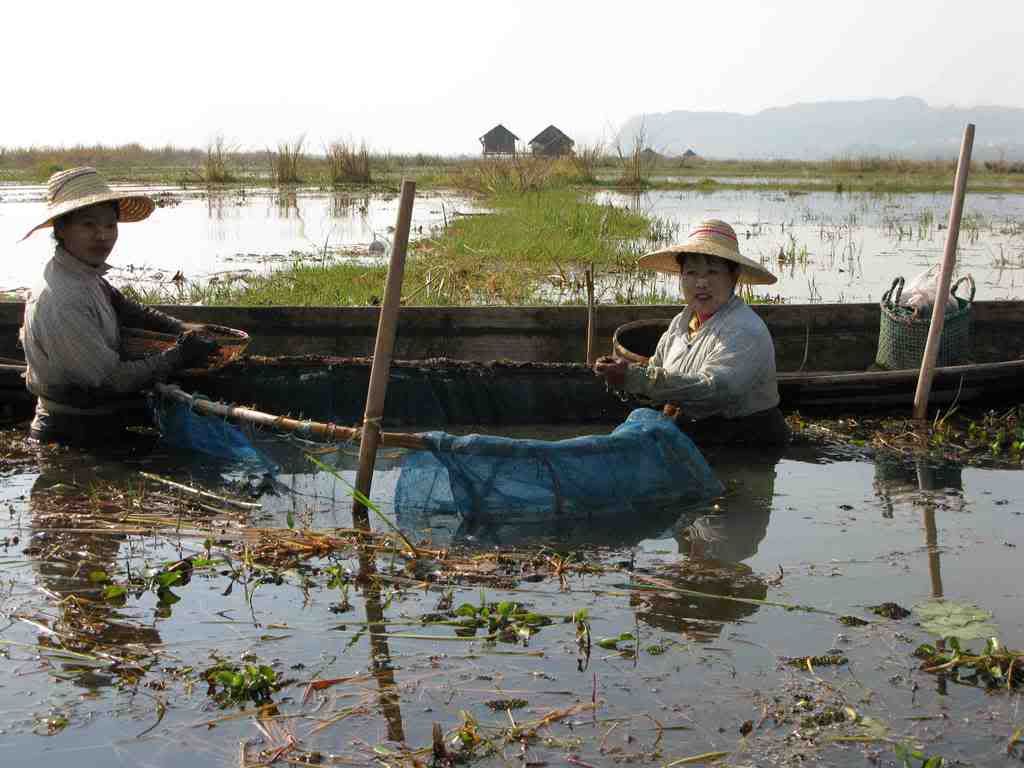
And when the rice paddies along the shore are flooded by water from the lake, they become a source of fresh-water shrimp.


Unfortunately, Myanmar's longer-term travails are just beginning. And the entire region will suffer the consequences.


For more background on Myanmar, click on "Southeast Asia" under "Series and Topics"