Showing posts with label sanitation. Show all posts

Wednesday, June 3, 2009

Do "Natural" Sanitizers Work?

June 3, 2009

The Internet abounds with web sites that tout the use of "natural" sanitizers, such as vinegar and lemon juice. These products are inexpensive, non-toxic and very attractive to consumers who wish to avoid harsh chemicals and expensive cleansers. But they don't necessarily work.

Researchers in Ohio and Colorado recently compared the ability of chlorine bleach, hydrogen peroxide, vinegar (acetic acid), citric acid (the active agent in lemon juice) and baking soda to kill three common foodborne pathogens: Salmonella, E. coli O157:H7 and Listeria monocytogenes.

Ordinary household bleach was the clear winner, killing large populations of all three pathogens with a contact time of only one minute at room temperature. Hydrogen peroxide, used full strength out of the bottle (3% concentration) was second best. It took care of Salmonella and E. coli O157:H7, but was less effective than bleach against Listeria monocytogenes – even when the contact time was extended to 10 minutes.

Full-strength vinegar (5% acetic acid) killed Salmonella readily; vinegar had more difficulty, though, with Listeria monocytogenes and E. coli O157:H7. Citric acid (the "sanitizing" agent in lemon juice) was even worse, needing 10 minutes to knock off even Salmonella. And baking soda had no sanitizing effect at all.

The authors of the research report caution that their tests were carried out under very specific conditions. Real life tend to be more challenging than the lab experiments.

The bottom line? For effective and inexpensive sanitizing of kitchen counters, bathroom toilets and other areas where microbes lurk, nothing beats bleach.

Wednesday, May 20, 2009

Cholera Chronicle: May 20, 2009

Welcome to the eFoodAlert Cholera Chronicle. Periodically, we'll present a summary by region of cholera news from around the world.

Cholera is spread through human fecal contamination of food and water supplies. It is a frequent Disease of Disaster, accompanying famines, floods, wars, and other natural- or man-made disasters. Its victims typically are destitute, displaced or debilitated. And, all too often, dead.


Africa
  • Zimbabwe: The United Nations reported on May 11th that the death toll for this 9-month outbreak has reached 4,271; at least 97,400 people have been infected with Vibrio cholerae since August 2008. The good news is that the number of new cases has dropped significantly – just 65 during April. Nevertheless, the conditions that allowed this outbreak to spin out of control are still in place. Zimbabwe suffers from inadequate medical facilities, inadequate sewage treatment, and and inadequate supply of fresh, safe drinking water. Mugabe inherited a system that worked. When he eventually steps down – or dies – he will bequeath to his successor a broken-down, dysfunctional national infrastructure.
  • Kenya: The government is responding to limit the spread of an incipient outbreak of cholera in the capital city of Nairobi. Three cases have been reported so far. The city's water and sewage company also has responded, by moving to clean and repair the Nairobi sewer system, which typically suffers from an average of 600 sewage blockages and overflows per month.


Asia
  • Vietnam: The country's annual tussle with cholera is well underway. Already, one person has died of cholera and 53 have been infected. At least 500 people have reported suffering from acute diarrhea. The outbreak has spread to 11 provinces so far. Some of the cases have been blamed on contaminated dog meat. As a result, the country has temporarily shut down a dozen or more dog slaughterhouses in an effort to contain the outbreak. 


Cholera can be treated successfully, if adequate medical facilities are available. More importantly, outbreaks can be prevented, by providing communities with safe drinking water, and with sanitary disposal facilities for human waste. 

2008 was the International Year of Sanitation. The World Health Organization partnered with other agencies to promote improvements in sanitation in underdeveloped areas of the world. But it will take many years before these efforts make a significant dent in the problem. 

Meanwhile, cholera will continue to follow in the wake of world disasters.

Monday, October 6, 2008

Cholera by the Numbers: Africa and Asia

"Sixty-two per cent of Africans do not have access to an improved sanitation facility -- a proper toilet -- which separates human waste from human contact."


But, what is a 'proper toilet'?

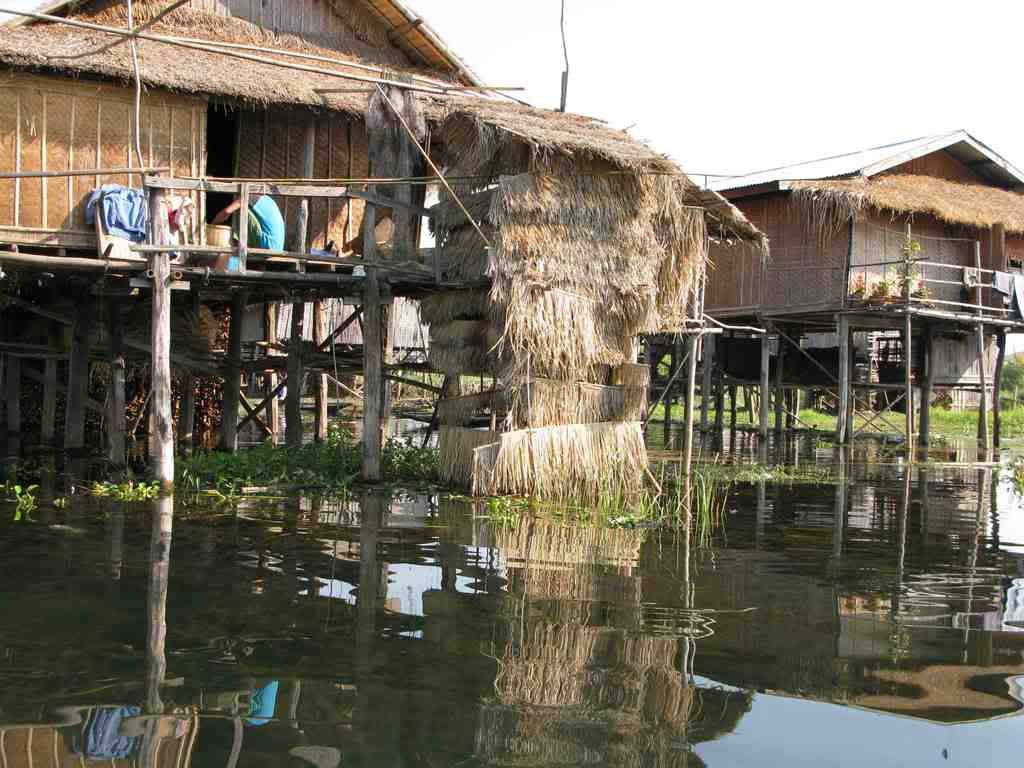
When we visited Myanmar (SouthEast Asia) last January, we had a chance to see for ourselves what constitutes a proper toilet for the more fortunate residents of Inle Lake's floating villages.


A typical toilet cubicle (the thatched wall portion) of an Inle Lake floating village home


A typical toilet


Toilet cubicle ready for installation of toilet. Human waste drops directly into Inle Lake.


Why is this important? Because Inle Lake villagers wash their clothes, their cooking utensils and themselves in the lake. They use lake water for their crops; they net shrimp, which are sun-dried and eaten without cooking; they fish for several days at a time, living on their fishing boats and drinking the untreated lake water. 

Is it any wonder that cholera is endemic in Myanmar and in many other parts of Asia and Africa? Here are some recent examples of the severity of the situation.

Iraq
According to the WHO, the Iraqi government had reported 341 lab-confirmed cases of cholera – and five deaths from the disease – as of September 28th. The current outbreak, which began in August, had spread to nine provinces in a little over a month. The outbreak has since grown to 417 cases, and one more person has died.

India
As flood waters receded, Vibrio cholerae rushed in to fill the void. The Municipal Corporation of Delhi reported 136 cases of cholera in September. And eleven villages in and around Gujarat have also been hard hit, although no specific numbers have been released.

Pakistan
The Swat region of Pakistan, a mountainous area in the north-west of the country near the border with Afghanistan, has reported at least 600 suspect cases of cholera. Two children in the town of Saidu Sharif have died after being hospitalized with symptoms of the disease. The outbreak began two weeks after insurgents blew up destroyed a pipeline grid station that controlled the flow of potable water to villages in the region.

Hong Kong
The Centre for Health Protection reported Hong Kong's fourth confirmed case of cholera for 2008. A 10-year old tourist became ill before arriving in Hong Kong. He has been hospitalized and is reported to be in stable condition.

Indonesia
The Papua region continues to suffer from a cholera epidemic, which has claimed an estimated 200 lives so far this year. Medecins du Monde, a non-governmental organization, reports having treated at least 800 cases of cholera in remote areas of Papua.

Guinea-Bissau
In spite of the best efforts of the World Health Organization to help contain the outbreak, this African country has been fighting a losing battle against a cholera epidemic that has been on-going since May. As of the end of September, the death toll stood at 141 victims, and 7,777 cases of the disease have been reported.

Nigeria
Cholera has been blamed for 21 deaths in Sokoto State. Zamfara State also has been hit with an outbreak, and is reporting at least 100 illnesses and 18 deaths from cholera.

Congo
A refugee camp is at the center of a cholera outbreak that has sickened at least 300 Congolese, and killed 37 of them. The camps were set up to house people who were fleeing from fighting in the eastern part of the country.


In addition to these examples, cases of cholera – some confirmed, some only suspected – have been reported recently in Kenya (at least 30 cases), Uganda (482 cases, 32 deaths), and Ghana. Zimbabweans are on tenterhooks, waiting for the next outbreak and hoping that it will not materialize. 

And knowing that it will.


Friday, September 5, 2008

Hawaii Warns Against Illegal Roadside Food Vendors

The Hawaii Department of Health warned yesterday that consumers should check that a roadside food vendor has been issued a food permit before purchasing or consuming anything from that vendor. The permit is evidence that the vendor is aware of – and required to comply with – safe food handling practices.

No confirmed illnesses associated with illegal food vendors have been reported in the state, but consuming food prepared by one of these vendors is potentially risky.

Anyone who encounters an unlicensed food vendor should report the individual to the Hawaii Department of Health Sanitation Branch, using the telephone numbers listed at the end of the news release.

Thursday, August 21, 2008

New Zealand Norovirus: More Victims, But Hospital Reopens

Dunedin Hospital in New Zealand has reopened for business after closing its doors to visitors, out-patients and new admissions in an effort to contain a recent outbreak of Norovirus.

The decision to reopen the hospital was taken despite the onset of additional cases of gastroenteritis due to this highly contagious virus. Some wards, however, remain closed.

At last count, more than 150 patients and staff at Dunedin and Wakari hospitals have been infected with Norovirus, and 30 patients remain in isolation.

In an apparently unrelated incident, Norovirus also has infected approximately about half of the 24 residents of a rest home in Greymouth, New Zealand. And, halfway around the world, Cheltenham General Hospital in Gloucestershire, England has closed a trauma ward in the hope of containing an outbreak of Norovirus gastroenteritis that has sickened an unspecified number of people.

Misery (a.k.a. Norovirus) not only loves, but also thrives on, company.

Wednesday, August 20, 2008

Water Woes: Cryptosporidium

Cryptosporidium – a protozoan parasite that is able to withstand normal levels of water chlorination – has popped into the news once again, with outbreaks reported in Ohio and New Mexico.

Health officials in Columbus and Franklin County, Ohio have received reports of 31 cases of Cryptosporidium infection since the beginning of July. Suspicion has fallen on public swimming pools – a common means of spread. 

In Albuquerque, the health department has confirmed two cases of Cryptosporidium and is investigating 10 more. Victims reported swimming at the West Mesa Aquatic Center. The city has hyperchlorinated its swimming pools in order to kill the pathogen, and advises that public pools are safe for swimming.

Cryptosporidium infections may be asymptomatic, or they can induce watery diarrhea, stomach cramps, nausea and vomiting. The protozoa is transmitted through contact with infectious feces. Children suffering from diarrhea often can contaminate water in swimming pools or wading pools and pass their infection on to others.


Tuesday, August 19, 2008

eFoodAlert World Tour: Asia and Africa Update

The cost of poor sanitation in developing countries is often overlooked or underestimated. The World Bank reported that Indonesia loses more than $6 billion per year to diseases transmitted by contaminated water and unsanitary practices. According to the WHO, Indonesia, with a total population of some 237 million, suffers 120 million cases of hygiene-related disease – and 50,000 fatalities – annually. 

These statistics should not be a surprise to anyone who has been following the eFoodAlert World Tour and Water Woes series. But this problem extends far beyond Indonesia's borders. BBC News reported today that the International Water Management Institute has found that untreated sewage is being used to irrigate urban crops in many areas of the developing world. 

The IWMI has learned that 5.6 million farmers and their family members in the 53 cities included in their study irrigate using water containing raw sewage, industrial effluent or other untreated urban surface water. Untreated waters, which may contain pathogenic bacteria, pesticides, or other industrial chemicals, can transfer the contaminants to crops.

Today's World Tour is one more illustration of the consequences of poor sanitation and contaminated water.

Guinea Bissau
This African country has been struggling to contain an outbreak of cholera ever since flooding produced by heavy rains helped to spread the disease earlier this year. According to the latest report from Agence France Presse, the capital city of Bissau has accounted for 1,450 of the 1,700 cases so far.

UNICEF, which is already working with the government to disinfect water wells, has just contributed an additional US$600,000 to the country. The money is earmarked for training health agents and for a public health educational campaign.

India
Orissa, a state on India's east coast (Bay of Bengal), is the latest venue for an outbreak of diarrhea caused by drinking contaminated water. Two people are reported dead so far, and an unspecified number are ill in a remote village that has no access to clean drinking water. The outbreak may be due to cholera, but there is no way of knowing for sure, because doctors have been unable to access the village due to the poor condition of roads in the area.

Villagers in the state of Jharkhand  also in eastern India, are in similar straits. At least 18 people have died from severe diarrhea, and more than 24 were still ill as of August 4th, the date of the most recent report.

Uganda
Eastern Uganda finally appears to be gaining the upper hand on its 5-month long cholera outbreak, according to New Vision Online. The epidemic killed 32 people and sickened at least 482. Unfortunately, the country is not yet out of the woods. Western Uganda now is experiencing an outbreak of what may be typhoid. Twenty-seven people have been stricken with the illness so far; nine have died.

Nepal
Dysentery has claim two lives in this Himalayan country recently. Details of the extent of the outbreak are scantly, but one doctor reported seeing an average of 10 dysentery patients at his clinic daily.

Sudan
Cholera is making its presence felt in the south of the country after heavy rains forced 250,000 people from their homes last month. At least 20 people have died, and an unknown number have been sickened. Cholera spreads rapidly in these types of situations, and the toll is likely to increase significantly before the outbreak can be brought under control. 

Hong Kong (China)
Sixteen travelers to Thailand came down with symptoms of food poisoning after returning to Hong Kong. Twelve of the victims visited a hospital for treatment, but none were admitted. In a separate incident, 12 people complained of food poisoning symptoms after eating lunch on a boat trip on August 16th. The victims experienced abdominal pain, diarrhea, vomiting, nausea and fever.

Monday, August 18, 2008

New Zealand Norovirus Update

The news from Dunedin, New Zealand just keeps on getting worse.

I reported on Friday that Dunedin Hospital was forced to close some additional wards after the Norovirus outbreak had spread beyond the initial focus of infection. Now, the entire hospital has been effectively quarantined.

No one is allowed into the hospital except for personnel carrying valid identification and visitors who can demonstrate "exceptional circumstances." Casual visitors are denied entry. 

Most non-emergency hospital activities also have been curtailed. Elective surgeries, out-patient clinics and planned admissions all have been postponed, affecting some 800 people. Only the emergency department is continuing on a "business as usual" basis.

These drastic measures were triggered by a spread of the hospital's Norovirus outbreak to an additional 17 people over the weekend. The outbreak, as of this morning, has affected 57 patients and staff in several wards.

In the spirit of "misery loves company," New Zealanders should know that they are not alone. The Mona Vale Hospital in Manly, Australia also has been struggling to contain an outbreak of Norovirus gastroenteritis. The Manly Daily reported a week ago that at least 10 elderly patients had been quarantined, and wards on two floors closed, in an attempt to control the spread of the disease.

A common complaint from hospital staff running through the press reports on both outbreaks is one of stretched resources, cost-cutting, and the resulting inadequate attention to cleaning and sanitation. These conditions, combined with an immune-compromised population and uncontrolled visitor traffic, make Norovirus outbreaks difficult to prevent and even more difficult to contain.

Anyone planning to visit a hospital patient – in New Zealand, Australia or anywhere else – should take special pains to avoid carrying an infectious agent into the hospital. The last thing your ailing family member or friend needs is the gift of a respiratory or gastrointestinal illness. The rule of thumb should be "When in doubt, stay at home."

A hospital is no place for sick people!

Friday, August 15, 2008

Hospitals And The Vomiting Bug

An outbreak of the "vomiting bug" has closed a ward at Calderdale Royal Hospital in the United Kingdom. According to an article in the Evening Courier, the ward has been closed to new admissions since Monday, after an outbreak of  "sickness and diarrhea" developed among the patients.

Hospital administrators have asked non-essential visitors to stay away, but haven't gone so far as to embargo all visitors to the ward. The cause of the outbreak has not yet been identified; the hospital suspects either Clostridium difficile or Norovirus is behind the sickness.

On the other side of the world, a New Zealand hospital is still struggling to contain its own Norovirus outbreak. The New Zealand Herald reported that two more wards were closed – both to visitors and to new admissions – by Dunedin Hospital earlier this week after nine patients and three staff members began to suffer from vomiting and diarrhea on Sunday. A scheduled surgery also was postponed. Yesterday, yet another ward was closed after four of its 18 patients began to experience the same symptoms. 

The outbreaks experienced by these two hospitals highlight the difficulty all hospitals face when trying to control an infectious disease outbreak. High traffic volume, visitors sporting contagious illnesses, susceptible patients, and overworked staff all contribute to the ease with which diseases can spread. 

Anyone who is suffering from a contagious disease – respiratory or gastrointestinal – has no business visiting a hospital, except in case of a dire emergency. Hospital staff, especially, should avoid coming to work when ill. Face masks and hand washing can only go so far to contain an illness outbreak. The patients must come first.

Saturday, August 9, 2008

Dysentery In The Developed World

Usually, one thinks of dysentery as being in the same category as cholera – a disease of disaster. But that's not always the case.

Shigella, the microbe responsible for dysentery, is spread through what is euphemistically called the "fecal-oral" route. This spread can occur by fecal contamination of drinking water, through poor personal hygiene, improper hand-washing after coming contact with contaminated feces (perhaps when changing a diaper), or through anal sex with an infected person.

Shigella infections produce a range of gastrointestinal symptoms, including: abdominal pain, cramps, diarrhea – often with blood, pus, or mucus – fever, vomiting, and tenesmus. Dehydration can be life-threatening for young children or the elderly.

The Montreal public health department has reported an unusually large number of recent cases in that city – 13 between mid-June and early August, versus just four cases during the same period last year.

Montreal is not alone in reporting increased incidences of Shigella dysentery. There have been at least three US reports in the last month – in Ohio, Oregon and Florida.

The Columbus Dispatch carried a Shigella report on July 21. Public health officials in that city were focusing on day care centers as the possible source for an outbreak that had sickened at least 100 people since the beginning of June. Day care centers, especially those catering to very young children, often are the source of outbreaks spread through fecal contamination.

The Oregon outbreak has been linked to attendance at a country fair near Veneta. At least 8 people have been infected, according to Food Safety Daily News.

In Florida, Shigella has been working its way through Palm Beach County and parts of South Florida, affecting mainly minority and immigrant communities – many of which are overcrowded. Food Safety Daily News reports that children and the immunocompromised appear to be at highest risk of serious illness.

Shigella has been spread by food in the past, but always as a result of contamination by a food handler or from contaminated water used to wash or prepare a food item. The best defense against this microbe is careful attention to proper sanitation and good personal hygiene.

Friday, July 18, 2008

eFoodAlert World Tour: Misery Loves Company

Our tour this week begins and ends in Australia, which has been playing host to World Youth Day, a week-long international convention of Roman Catholic youths. Large gatherings often attract unwanted visitors, and this one has been no exception.

Australia
On July 16th, health authorities told of scattered cases of influenza and gastroenteritis among the pilgrims. By the next day, there were 22 cases of gastroenteritis among the attendees. According to today's report, 23 more attendees were suffering from gastroenteritis.

These number are not large, given the thousands of young people who have gathered for this convention. But they are a useful reminder that one need not be traveling in an underdeveloped country to become exposed to food-borne or water-borne pathogens.

Hong Kong
A regular stop on our tour, Hong Kong has reported another series of incidents of food poisoning linked to restaurant meals. Five groups of victims – 21 people in all – became ill after eating at a Yau Ma Tei restaurant between July 11th and July 14th. And 10 people required treatment for symptoms of gastroenteritis after dining at a restaurant in Sha Tin on July 15th and 16th. One of the Sha Tin victims remains hospitalized in stable condition.

Russia
An outbreak of yersiniosis in Krasnoyarsk has continued to grow. Two more kindergarten-age children have been added to the list, which now totals 141 victims – most of them young children. Twenty-two children and two adults remain in hospital for treatment.

Elsewhere in Russia – in Tatarstan – smoked or dried fish has been fingered as the source of at least 6, and possibly 7, cases of botulism. The fish was either prepared in the home, or purchased from unlicensed stalls.

Philippines
Forty-eight students taking part in a school lunch program began to feel ill on July 10th, minutes after eating a meal that consisted of munggo, bananas, malunggay, sardines and rice. The students became dizzy, complained of stomachaches, and later vomited. Samples of food from the meal were submitted to a government lab for analysis, but no specific source of the food poisoning has been determined.

One week after this incident, four people became ill after eating sardines – one of the items on the menu in the student outbreak. The individuals began to complain of dizziness and stomachaches and also experienced vomiting about two hours after eating the sardines.

Australia
The country is dealing with the aftermath of two outbreaks of gastroenteritis in a nursing home west of Sydney last month that sickened 80 residents and claimed 10 lives. According to the New South Wales communicable diseases director, investigators found evidence of Clostridium perfringens toxin in samples from the nursing home. This toxin usually forms when cooked food is allowed to stand for a few hours at room temperature.


Sunday, July 13, 2008

Water Woes

Water – too much, too little, too dirty – has been in the news a lot in recent months. So it should be no surprise that the G8 nations were lobbied on the subject last week by Water Aid, an international charity.

According to a BBC news report, Water Aid informed the G8 summit that 40% of the world's population lacks basic sanitation infrastructure. The international community undertook at the beginning of the 21st century to cut in half, by 2015, the number of people who lack basic sanitation and toilet facilities. According to Water Aid, improvements in sub-Saharan Africa are so slow that it will only reach the targeted reduction by 2076.

Ethiopia is a poster child for sub-Saharan Africa's sanitation woes. As reported by BBC, the World Health Organization estimates that 64% of the country's population defecate in the open – an significant improvement since 1990, when more than 90% of the country's people did so. Raw sewage flows through the streets of some parts of Addis Ababa, the nation's capital. Some Ethiopians try to boil water before using it for washing or drinking, but the fuel needed to do so is both expensive and in short supply.

Vietnam is one of many countries struggling with contaminated water supplies. Recently, almost 1,600 factory workers fell sick with gastroenteritis after eating a meal in the factory canteen. The canteen kitchen drew water from an untreated and untested well. And factory workers were given drinking water that had not been boiled or otherwise purified.

Storms can also be the harbinger of water woes. A typhoon that hit the central Philippines last month was the trigger for an outbreak of diarrhea that killed at least 15 people and sickened dozens more. Storm runoff carried pathogenic bacteria into the region's drinking water supply.

Even the developed world is susceptible to water contamination issues. Cities in North America that boasted 50 or 60 years ago of modern storm run-off and sewage treatment systems now are wrestling with their aging infrastructure. An intense storm that hit Toronto last week resulted in a release of raw sewage into Lake Ontario that closed more than half of the city's 11 beaches. Residents in the east end of the city reported flooded basements and backed up sewage in their homes.

In this International Year of Sanitation, we would be wise to remember that clean water cannot be taken for granted anywhere in the world.

Tuesday, July 8, 2008

Food Poisoning Around The World: July 8th Edition

Our virtual travel this week consists of four stops, and includes one very unusual outbreak – gastrointestinal anthrax.

Stockholm, Sweden

A two-year-old child died late last week after becoming infected with enterohemorrhagic E. coli. The child, who became ill just over a week ago, succumbed a few days after her symptoms appeared. Health officials do not yet know how the little girl contracted her infection.

The last fatality caused by this microbe in Sweden occurred in 2005. The country usually experiences approximately 100 cases of enterohemorrhagic E. coli infections by mid-year, and this year has been no exception. The pathogen can be transmitted by direct contact with infected animals – on farms or in petting zoos – by eating contaminated food, or by direct contact with the feces of an infected individual.

Masantol, Philippines

More than 100 participants at a "thanksgiving party" became ill last month after enjoying a spaghetti dinner. The victims complained of stomach aches, vomiting, nausea, and diarrhea the morning after attending the Sunday evening dinner. More than one-third of the people were treated in hospital and released. Health authorities did not name the microbe that caused this outbreak, but the symptoms are consistent either with Clostridium perfringens or Bacillus cereus.

Hong Kong
The Centre for Health Protection (CHP) reported two restaurant-food poisoning investigations. On June 30th, 13 people fell ill after eating lunch on a boat trip the day before. Three of the victims were admitted to hospital for treatment, while several others were treated by private doctors.

CHP announced an investigation into two additional food poisoning incidents on July 2nd. Twenty-five individuals complained of abdominal pain, diarrhoea, vomiting and fever after patronizing a Mong Kok hotel buffet on June 30th. In a separate incident, 13 people became ill with similar symptoms after consuming food purchased from a "food premises" in the Central district of Hong Kong. Several victims from both incidents sought treatment for their symptoms.

Separately, Hong Kong's Food & Environmental Hygiene Department (FEHD) lifted closure orders from two sushi restaurants (Itacho Sushi on Hennessy Road, Wan Chai, and Itamae Sushi on Hoi Yuen Road, Kwun Tong) that had been implicated in food poisoning incidents earlier in June. The restaurants were allowed to reopen after undertaking a thorough cleaning and disinfection, and upgrading their workflow procedures.

Finally, FEHD ordered a restaurant on Man Nin Street in Sai Kung to close for cleaning and disinfection after the outlet was found to be the source of two food poisoning incidents, involving 26 people in June and early July. The restaurant will remain closed until FEHD is satisfied that it has corrected its health and sanitation deficiencies.

Ha Giang Province, Viet Nam
Two people died, and more than 400 were sickened in this northern province after eating meat from anthrax-infected animals – the result of good intentions gone terribly wrong.

The owners of two cows, which had died of unknown causes, shared their meat with 90 families in Po Qua Hamlet on June 21st. All those who ate the meat complained of vomiting, stomachache and swollen legs. In addition to the two fatalities, three more victims are in critical condition.

Local authorities are working to contain the anthrax outbreak that has hit cattle in this district. And they have cautioned residents against eating meat from the infected animals.


And thus ends another leg of our world tour.

Friday, June 27, 2008

Norovirus Notes

While public health attention has been focused on Salmonella Saintpaul in tomatoes and E. coli O157:H7 in ground beef, the ever-present norovirus has quietly been striking down restaurant patrons and cruise line passengers.

Last week, approximately 60 restaurant patrons and 40 employees of an Illinois golf club complained of nausea and other "flu-like symptoms" after eating, visiting or working in the dining area of the Arrowhead Golf Club. Specimens obtained from ill employees were found to contain norovirus. The dining area was closed for thorough cleaning and disinfection. It is expected to reopen this evening.

This past week, between 80 and 90 people attending a bible camp near Oakhurst, California were stricken with diarrhea and vomiting. No lab results are available, but local health officials are attributing the outbreak to norovirus.

Norovirus is well known
for the outbreaks of gastroenteritis it has caused in the past on cruise ships. And 2008 has been no exception. Norovirus has been responsible for seven out of eight cruise ship outbreaks of gastroenteritis so far. A ninth outbreak is still under investigation.

One cruise line in particular – Holland America Line – seems to be particularly susceptible to norovirus outbreaks this year. Four of the norovirus outbreaks have involved Holland America ships: the Volendam, the Noordam, the Ryndam, and the Zaandam. A fifth Holland America ship, the Veendam, is the setting for the outbreak that is still under investigation.

Norovirus is a highly contagious pathogen, and can survive on surfaces such as hand rails and door knobs for days. Staying healthy in the midst of a shipboard outbreak is difficult, but possible. To avoid illness, it is essential to be scrupulous about frequent and careful hand-washing, especially before eating, drinking, brushing teeth or any other activities that might bring the hands in contact with the face.

Saturday, June 21, 2008

Food Poisoning Around The World-Resuming The Tour

While US consumers have been consulting ever-changing lists of "safe" sources for tomatoes, the rest of the world has been coping with its normal diet – and its usual variety of food-borne diseases.

New Zealand
Poultry lovers in this country are breathing more easily this month. Cases of Campylobacter infections have dropped by more than one-third in the past year. Cross-contamination of food preparation areas with raw poultry, or eating undercooked poultry, are the most common causes of Campylobacter infection. The reduction in reported illnesses suggests that poultry producers in New Zealand might be starting to get a handle on the level of Campylobacter in their flocks.

Hong Kong
The Centre for Health Protection (CHP) is investigating three separate clusters of reported food poisoning, two of them apparently involving the same restaurant. In total, 17 people have fallen ill. The Wan Chai district restaurant that was responsible for two illnesses on June 9th and four on June 15th has been ordered closed for cleaning and disinfection.

CHP is also looking into another food poisoning outbreak, which sickened 10 primary school children in Hong Kong's Southern District. The four boys and six girls complained of abdominal pain, vomiting, diarrhoea and fever after eating lunch at the school.

Seremban, Malaysia
Eighty students at a local school were taken to hospital in the latest of a series of boarding school-related food poisoning outbreaks in this country. Although two of the students were admitted to hospital, none are in any danger. The school's dining hall remains open, but "under supervision.

Eastern Samar, Philippines
Foul-smelling meat felled 200 participants at a fiesta in Hernani town, Eastern Samar last week. Roughly 70% of the victims were children. Approximately 60 of the villagers, who complained of dizziness, abdominal pain, loose bowel movement, vomiting and body weakness, were treated in hospital and released.

Tokyo, Japan
Clostridium perfringens was blamed by Tokyo health officials for an outbreak of food poisoning that sickened 95 attendees at a training workshop held at the Shinagawa Prince Hotel in Tokyo. The victims fell ill after eating a bento lunch, which was offered on June 12th to workshop participants.

Nigeria
This country takes food poisoning seriously. Fifteen people were arrested following a rash of food poisonings that sent 68 people to hospital and killed two of them. The victims fell ill after eating food served at a ceremony. Some of the 15 detained individuals have since been released.

Jaipur, India
Participants in a religious festival in Jaipur had reason to regret their attendance last week. More than 100 people – most of them children – suffered food poisoning; 90 were hospitalized, and three were reported to be in critical condition. District health authorities are blaming spoiled rice for the outbreak.

Siberia, Russia
Forty-six children who were attending a kindergarten camp have been hospitalized as a result of infection with Yersinia enterocolitica. This pathogen is usually associated with consuming undercooked meat, or cross-contamination during food preparation. The camp is being investigated for possible unsanitary conditions. Due to the relatively long incubation period associated with this infection, health authorities are braced for additional cases.

Wednesday, May 14, 2008

Myanmar After The Storm: Part 5


It's time to put the needs of the people first.


Ever since Cyclone Nargis struck Myanmar on May 3rd and decimated the population of the Ayeyarwaddy River Delta, the international community has been trying to help the cyclone victims.

And in the aftermath of the storm, the military junta in control of that unfortunate country has responded:
Meanwhile, heavy rain is continuing to soak the already-saturated delta and another cyclone may be forming in the region.

The United Nations, in order to avert what it is describing as a "second catastrophe", is calling for an air and sea corridor to funnel supplies and personnel directly into the stricken region. France, Britain and Germany have gone even further.

These three countries plan to propose to the Security Council that the UN invoke its humanitarian 'responsibility to protect' and deliver assistance to the storm victims without the agreement or cooperation of the Myanmar government. Not all EU countries approve of this approach, and there is no indication when France, Britain and Germany plan to make this proposal – or whether China and Russia, who are both against the idea, would veto such action.

As aid shipments pile up waiting for clearance to enter Myanmar via Yangon Airport, as aid workers sit impatiently on the sidelines waiting for permission to enter the disaster areas, and as Myanmar's senior general, Than Shwe, dodges telephone calls from UN Secretary General Ban Ki-Moon, people are dying needlessly.

France, Britain and Germany have it right. Protecting the lives and health of the Myanmar people is far more important than protecting the national sovereignty of Myanmar's military regime.

Sunday, May 11, 2008

Myanmar After The Storm: Part 4

The sky has fallen on the people of Myanmar, and there is no relief in view. It has been raining all day in the hardest-hit part of the Ayeyarwaddy River delta; heavy thunderstorms are predicted to continue for the next three days.

Now that the ruling junta has secured – through intimidation and intrigue – a "victory" in its referendum, it has grudgingly inched open the front door of the country to a few aid workers. Supplies have begun clearing through the Yangon airport with greater efficiency, and some boats, trucks and fuel have become available to transport food, medicines and shelters to the victims.

At best, however, only a trickle of aid is reaching victims. Part of the problem is the lack of decent roads. Driving in Myanmar is a challenge even under good conditions, and the massive flooding produced by Cyclone Nargis has washed out or blocked many roads. Even the waterways are treacherous. One boatload of supplies struck a submerged tree and sank.

Meanwhile, the disease clock is ticking. With decomposing human bodies and animal carcasses floating in the floodwater, and with no source of clean water for drinking or washing, victims desperately need the supplies of drinking water and disinfectant tablets that are being caught up in the Yangon airport bottleneck.

UNICEF, one of the few aid agencies that has managed to maintain a presence in Myanmar in recent years, reports that hospitals in Bogalay Township – one of the hardest hit parts of the delta – are receiving 6,000 patients each day. Approximately 20,000 people from this township have lost their homes and are living in 50 refugee camps. In Pyapon Township, also located in the Ayeyarwaddy delta, 16,000 people are living in 35 camps. One of these camps, which houses 3,500 people, has only 5 latrines.

As bad as the situation is for the displaced adults, it is far more precarious for the children. Even before the cyclone struck, roughly one-third of Myanmar's children were malnourished and, therefore, susceptible to disease. Already, about 20% of the children in the flooded areas are suffering from diarrhea and dehydration. Their future is becoming increasingly bleak as time passes.

Myanmar's neighbors – especially Thailand and China – and other countries around the world are responding generously with pledges of money, food and aid workers. Now it's up to the Myanmar government to unlock its doors and allow aid to flow as quickly as possible to those who need it.

Friday, May 9, 2008

Myanmar After The Storm: Crisis Mismanagement

The military government of Myanmar should be congratulated. They are writing the ultimate case study of how to turn a disastrous situation into a complete catastrophe.

With more than 1 million of its people homeless, hungry, thirsty and in dire risk of infectious diseases, the military cabal that controls this country has said to the world, "Give us your money, your food, your water, and your medical supplies – but STAY OUT."

The United Nations World Food Programme took the unprecedented step of halting aid flights to Myanmar temporarily after the UN was forced to transfer the supplies into government warehouses. The country's leaders denied impounding the supplies, claiming that the government simply wanted to control the distribution of food itself. The UN has since announced that it will resume aid flights on Saturday.

Myanmar has been under pressure to allow aid workers into the country ever since the magnitude of the disaster became apparent. The Prime Minister of Thailand, Samak Sundaravej, canceled a planned visit to Myanmar earlier today. He had hoped to persuade the country's leaders to allow in aid workers, but decided that this would be a fool's errand.

Fortunately for the residents of the storm-ravaged Ayeyarwaddy Delta, the International Red Cross, the United Nations and many individual countries are sending money and supplies despite the attitude of the Myanmar government. Seven Red Cross workers have finally received visas to enter the country, and more are expected to follow soon.

According to Michael Annear, the regional disaster response coordinator for the Red Cross effort, 1.5 million Myanmar people have been left homeless by Cyclone Nargis; the estimated death toll has climbed to 66,000.

The relief efforts will not be helped by the weather. The town of Labutta, almost completely destroyed by the recent cyclone, is expected to receive an additional 16 inches of rain during the next week. Yangon will receive slightly less – about 14 inches in the next seven days.

The additional monsoonal rainfall will not only hamper relief efforts. It will exacerbate the spread of enteric diseases such as cholera and dysentery throughout the delta.

Let's hope that Myanmar's ruling military junta will realize before it's too late that they need outside assistance to cope with this disaster, and that they and will open the country's doors to those who are trying to help the Myanmar people to survive.

Thursday, May 8, 2008

Myanmar After The Storm: Cholera Erupts

"The (feared) cholera epidemic has begun," according to a doctor quoted today in The First Post.

As I predicted in Myanmar After The Storm: Part 1, cholera – always endemic in this region – has spread in two areas of the Ayeyarwaddy (Irrawaddy) Delta. The lack of clean water, fresh food, and even rudimentary sanitary facilities will make this epidemic extremely difficult to contain.

The flooded rice paddies are strewn with the dead bodies of people and oxen, contributing further to the spread of enteric diseases. I expect that dysentery, acute watery diarrhea, and hepatitis will follow on the heels of the cholera.

Every day that aid workers are delayed from entering the flood zones will exacerbate the health crisis. But even once the workers and their supplies arrive, it will be months before life in the delta can even begin to return to normal.

Myanmar After The Storm: Part 3

Based on the latest "unofficial" numbers, the death toll from Cyclone Nargis is likely to climb into the hundreds of thousands – as many as 80,000 just in the area surrounding the Ayeyarwaddy (Irrawaddy) Delta town of Labutta. The "official" tally is lagging far behind, at 22,980 dead and 42,119 missing.

The cyclone and its accompanying storm surge devastated the low-lying Ayeyarwaddy Delta, the source of 65% of the country's rice production. The damage caused by the storm, and its impact on the delta's rice paddies, will reverberate through the entire region.

What This Means For Myanmar
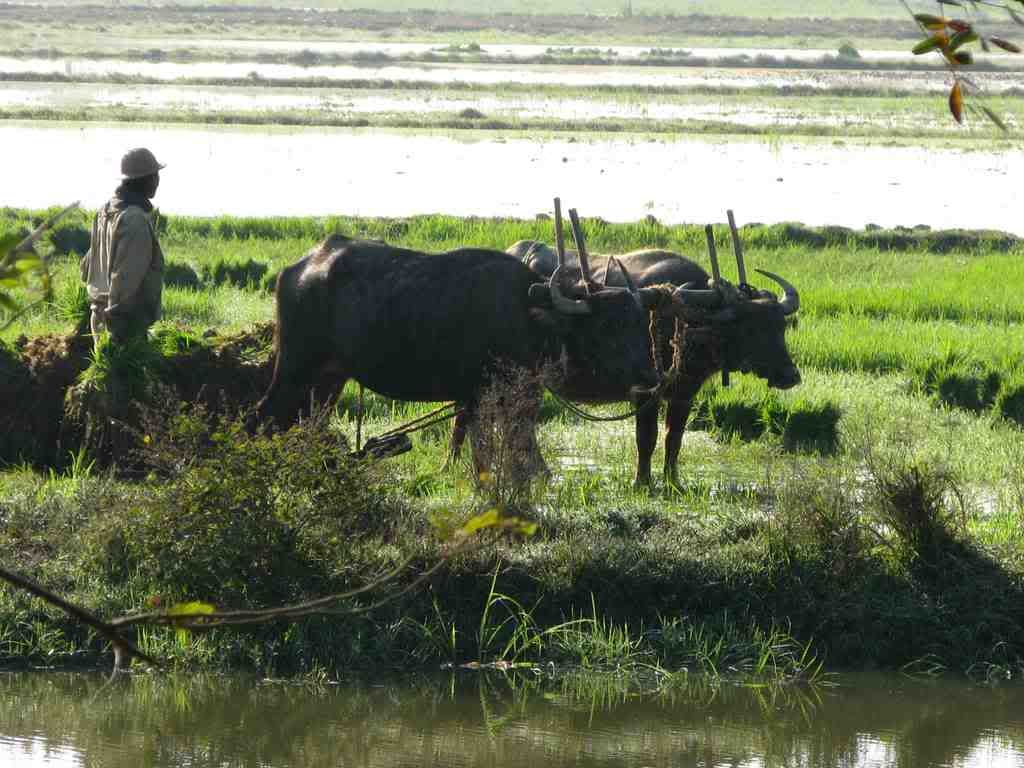
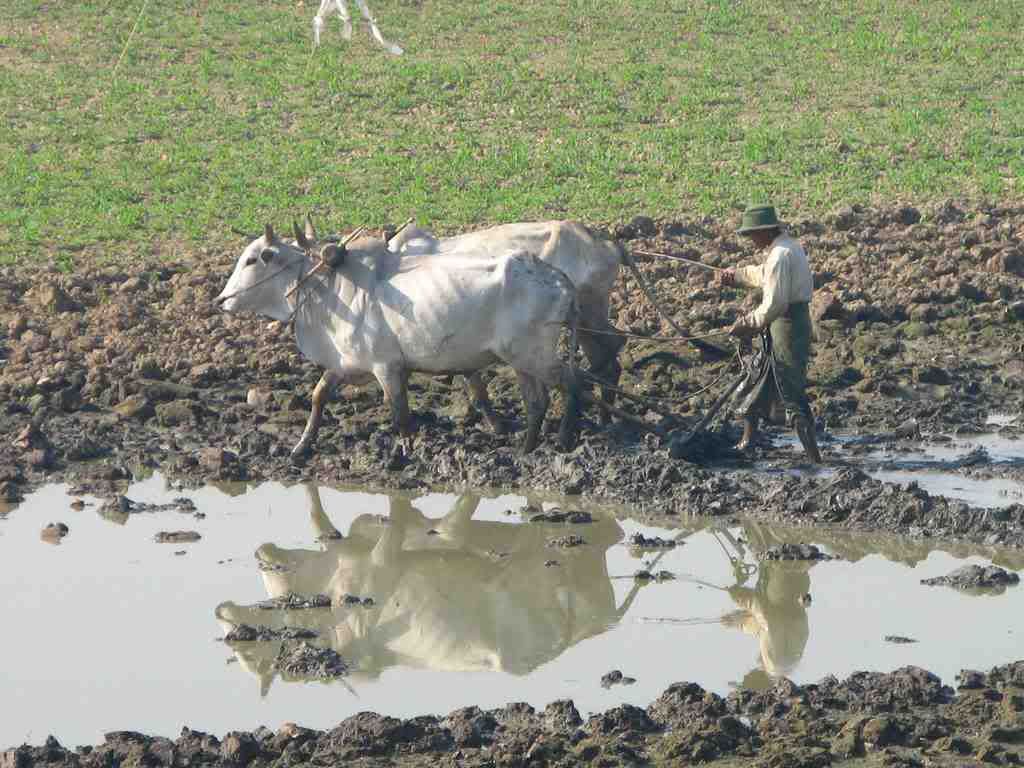
Most Myanmar villagers farm the way their grandfathers did – using plows drawn by oxen or water buffaloes, and fertilizing their fields with manure. Nevertheless, the country produces more rice than it needs, and has exported its surplus rice for many years.

A farmer and his water buffaloes plowing a rice paddy somewhere between Yangon and Bago


This rice farmer near Mandalay prefers oxen

Rice paddies are normally flooded during the early part of the crop cycle. But this storm struck the delta during the worst possible time – the winter crop harvest period. Fields like the ones shown above are now completely under water. What hasn't been destroyed by flood waters has been polluted by dead bodies – both human and animal.

The region to the southeast of Yangon received a double-whammy. In addition to damage caused by the cyclone's winds and rain, a 12-foot high storm surge inundated the coastal region with sea water.

Rice farmers in Louisiana learned first-hand in 2005 about the long-term damage a storm surge can bring. The storm surge that accompanied Hurricane Rita contaminated Vermilion Parish's rice fields with sea water. The resulting high salt levels put most of the fields out of commission for a year or more.

Under normal conditions, rice farmers in the Ayeyarwaddy Delta produce two – sometimes even three – crops each year. The country had been planning to expand rice acreage to 8.26 million hectares (20.4 million acres) from 8.1 million hectares (20 million acres) this year – an increase of just under 2%. Instead, the arable acreage in the delta will shrink dramatically.

The International Impact
In 2003, Myanmar produced 27 million tons* (24.6 metric tonnes) of rice. Only Bangladesh, China, India, Indonesia and Vietnam grew more rice that year. Between April 2004 and March 2006, the country exported 180,000 tons of rice annually. Its rice exports fell to just 14,500 tons in fiscal year 2006/07, but rebounded in 2007/08.

Myanmar had been able to take advantage of recent shortages and high prices to expand its sales of rice to Bangladesh (~198,000 tons), Singapore (385 tons) and Sri Lanka (5,500 tons). The country was expected to export 660,000 tons of rice in 2008/09. This will no longer be possible, thanks to Cyclone Nargis.

As recently as May 5th, The Wall Street Journal (WSJ) carried a story with the headline "Softening Rice Prices Suggest Market Peak Has Come, Gone." According to the article by Tom Polansek, Thailand – the world's largest rice exporter – had begun to release into the market 2.1 million tonnes (2.3 million tons) of rice that it had stockpiled.

But this story was out-of-date even before it was published. On May 6th, Bangladesh announced a virtual ban on rice exports. The following day, BBC reported that rice prices had risen for the fourth day in a row at the Chicago Board of Trade.

Myanmar's exports are little more than a drop in the world's rice bucket. The WSJ article mentioned that world rice "ending" stocks (the rice left over after taking supply and demand into account) surpassed 77 million tonnes (85 million tons) in April. Now some of that excess rice will be needed to feed Myanmar's displaced farmers and city dwellers.

The annual rice consumption by Myanmar's people in normal times is approximately 17 million tons, all of which is grown domestically. With the fields that produce 65% of the rice crop unusable, possibly for a year or more, the country may need to import as much as 11 million tons of rice – roughly 13% of the world's surplus – to feed its people.

Inevitably, Myanmar's unanticipated need to import large amounts of rice and other foodstuffs will force the international price of rice even higher than ever. We have already seen riots in Bangladesh, Haiti, Egypt and Somalia, among others, as their people rebelled against food shortages and high prices. Watch for more violence as prices spike even higher and as countries compound the problem by hoarding their surpluses for internal consumption.

Cyclone Nargis made its landfall in Myanmar. But its impact will be felt around the world.

*Please note. For consistency of presentation and for the convenience of readers, I have converted metric tonnes into US tons.