Showing posts with label SE Asia. Show all posts

Wednesday, July 2, 2008

Revisiting Myanmar: Eyewitness Report, Part Two

Yesterday, I posted the first paragraphs of an eyewitness report that was written by a native of Myanmar now living in the United States. This courageous and compassionate person, who I refer to here as "U", traveled to Myanmar with two suitcases full of aid supplies and spent three weeks delivering assistance to villagers in the disaster area.

Here is the rest of U's trip report:
The Burmese government’s response to the storm has left a lot to be desired and can be described as neglect. Their reaction afterwards was even worse. The first to help those who had suffered, to clear roads and debris so that people who needed help could be reached, and to provide shelter for those in need, was not the government, but those living in the cyclone-hit regions who were fortunate enough to have something left to help others.

Many aid workers and experts with the experience, knowledge and skills necessary to help rebuild the lives of the victims and prevent the death toll from rising higher and higher were subject to bureaucratic delays or denied access altogether. The longer aid supplies and relief workers were kept waiting, the higher the chance that the death toll would continue to climb. While people were suffering and at risk of disease and death, the junta chose to give priority to the referendum it wished to see passed. While the world debated what to do about the situation, the government continued to value its own political goals over the needs of the victims.

While I was relieved to know that my own family was safe, I could not just stay in [deleted] while people were suffering in Burma. The government banned visas to many foreign aid workers who wanted to help the victims of the cyclone. Only Westerners with Burmese citizenship were allowed into the country. As a Burmese citizen, I was able to take that advantage and go back to Burma with two suitcases full of water purification tablets, other medical supplies and some donations from friends.

I spent three weeks in Burma and it was an unforgettable experience. Together with my neighbors, we went to seven villages and distributed about 1400 food bags/supplies to victims of the cyclone. We were not alone: in the absence of an organized relief effort by the government, many Burmese volunteers organized their own deliveries to the delta to help people who had not received any aid.

Life is slowly returning to normal in Rangoon. The streets, once filled with beautiful, green trees, today are littered with torn and twisted tree limbs, but most of the fallen trunks have been pushed to one side, so traffic is flowing. Some shops and offices are open again.

In the Irrawaddy delta, half a day's journey from Rangoon, life is far from normal. This is a desperately poor region where hundreds of thousands of people live in tiny settlements scattered amongst low-lying islands.

Instead of welcoming help and granting improved access to the Irrawaddy Delta area, the Burmese military government is still using red tape to obstruct some relief efforts. At each checkpoint on the way to delta areas, we encountered not only police, but also immigration officers searching out any foreigners who might be coming in with locals. Even Burmese citizens are being restricted by the security forces. At some checkpoints, the officials wanted us to leave our supplies with them for distribution. We refused, since we knew that, if we had done so, the supplies would not get to the victims, and might even end up on the black market. Then they asked if we wanted to distribute aid ourselves. We said yes, so they asked us to give them money.

I wanted to use my small video camera to make a record of our aid distribution to show my friends; in some places we were allowed to do so, but not in others, where we were requested not to take pictures. In [deleted] village, my video camera was taken by the check point officer. After talking with him for about 30 minutes, explaining it was just for my family to see, and after offering him money, he agreed to gave me back the camera—but without the tape.

On our way to [deleted village name], we saw dead buffalo and cows floating. There is still a bad smell swirling around. Villagers in that area said that there were still bloated bodies lying uncollected near their villages.

Cyclone victims from villages between Kunchangone in Rangoon Division and Irrawaddy's Dadaye Township are keeping a daily roadside vigil in the hope of receiving aid. Villagers continued to flock to the main highways because aid workers had not been able to access the more remote villages. The villagers go back to their villages in boats at the end of the day, after they have received food for their family from the aid workers. Their buffaloes and cows were killed by the storm, so it is very unlikely that they will be able to resume their routine jobs this year.

As for living conditions, they don’t even have enough plastic sheets to make roofs for their shacks. They are using coconut leaves for roofs. After distributing food supplies in [deleted village name], we came back in the heavy rain and saw many, many people crouched by the side of the road, holding their children in their arms and covering themselves with plastic sheets.

A week before I came back to [deleted], the Myanmar Jewish community hosted an interfaith prayer ceremony for the victims of the cyclone at the Rangoon Synagogue. Leaders from the Muslim, Christian, Buddhist, Bahai’ and Hindu communities were invited to attend. About 100 people assembled for the ceremony and it was beautiful to see all the different religions gather together for a common cause affecting all of our people, regardless of their individual faiths.

Wherever we went to distribute food bags, plastic shelters and clothing, I could see the faces of the cyclone victims light up. It was very rewarding to see smiles on the faces of people who had suffered so much. And in every cyclone-hit region I went to in Burma, I shared with the victims I met there that there are passionate people in the outside world who care about the Burmese people and whose hearts go out to them during this very difficult time.

Tuesday, July 1, 2008

Revisiting Myanmar: Eyewitness Report, Part One

We haven't been hearing much about Myanmar recently. Its tragedy has been replaced by other – more recent – news: the electoral sham in Zimbabwe, China's preparation for the 2008 Olympics, world food shortages, and escalating petroleum prices.

But lack of media attention doesn't equate to an absence of news – or mean that Myanmar's problems have disappeared in some magical way. The status quo is still very much in place.

The difficulties encountered by the United Nations, international aid organizations, and foreign governments who wanted to assist survivors of Cyclone Nargis have been reported in great detail. The military junta, which rules Myanmar, first denied needing outside help, then welcomed foreign aid supplies, but insisted on distributing the aid itself.

In spite of predictions of a public health disaster – published elsewhere as well as on this blog – major outbreaks of dysentery and cholera appear to have been averted. Or, any spike in illnesses following the Cyclone might have been masked by the normal level of diarrheal disease in that region.

But some of the credit for staving off sickness and starvation must go to the citizens of Myanmar who banded together – in the face of government disapproval and obstruction – to assemble and deliver aid to their compatriots in the Ayeyarwaddy Delta. These volunteers returned from their visits to the Delta with tales of homeless storm victims, rotten rice, and confiscated aid supplies.

The Myanmar government has denied all of the reports of mismanagement and malfeasance that have emanated from the cyclone-stricken area, saying in one article that "...the rumours are invented and spread by certain Western countries with negative attitude towards our country."

This statement, however, is belied by eyewitness reports from aid workers and others who have visited the Ayeyarwaddy Delta and seen the misery that remains. I have been corresponding with one such eyewitness, whom I shall call "U" – a Myanmar honorific, which is roughly equivalent to the Japanese "San".

U recently returned from a three-week visit to Myanmar. He has consented to sharing his observations with eFoodAlert readers. His report is dated 6/12/2008. I have deleted all references that might identify him or his family, some of whom still live in Myanmar. My deletions are shown in red.

On May 2, 2008, Cyclone Nargis hit Burma, first attacking the southern part of Irrawaddy Division, then passing through Rangoon (Yangon) and the delta areas. In its wake, the cyclone left 133,000 people dead or missing. According to the United Nations, 2.4 million people required emergency aid, but five weeks after the storm, there are still one million people who have yet to receive any help at all.

Fortunately for me, I was living in [deleted], working for [deleted]. My family in Rangoon was not so fortunate, and they had to endure several hours of intense rain and wind as the storm made its way across Burma. As it was, I was out of [deleted] at a conference, and I wasn’t even aware that a cyclone had hit Burma until the morning of May 4th, when I received many phone calls from my friends in the United States, all enquiring about my family. I was shocked to hear the news and it took me a while to absorb the fact that my family could be in danger.

Even in normal times, communications between the U.S. and Burma can be difficult, with email and telephone calls not easy to get through. This time, it took two days, until May 6th, with the help of the [deleted] Embassy and the [deleted] Embassy in Rangoon, I finally received the news that my family had survived and our house suffered only minor damage to the roof, but it had been quickly repaired. While many were equally fortunate, a great number more suffered far worse conditions and had nothing left but the clothes on their backs. Some did not even have that: the storm blew them off while they clung to trees for survival as the cyclone tore away their homes and their families.

This completes the introductory part of U's report. Please watch for the balance of the report, which will appear tomorrow.

Monday, May 19, 2008

Myanmar After The Storm: Honoring The Victims

The government of Myanmar has borrowed a page from China's playbook and has declared three days of mourning for the victims of Cyclone Nargis. In honor of those victims – the dead and the still-living – here are some pictures of Myanmar people in slightly happier times.


FACES OF MYANMAR - JANUARY 2008

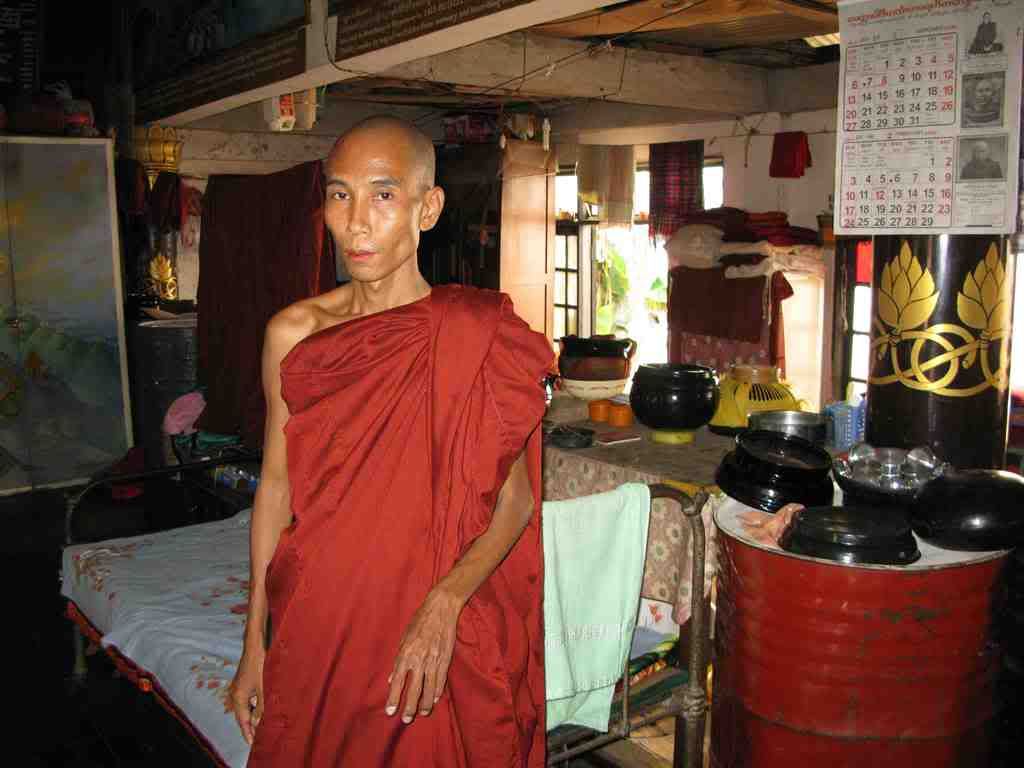
A monk at home in his monastery in Yangon, near the Reclining Buddha statue


The senior monk at the same monastery


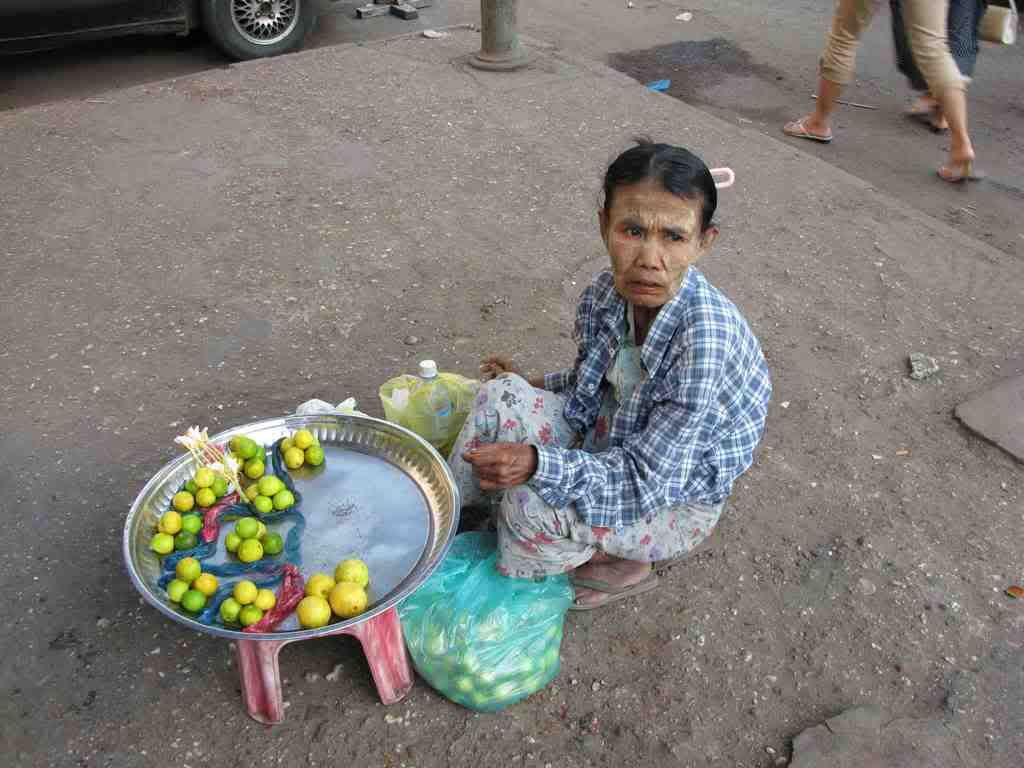
Sidewalk fruit seller in Yangon's city center


Volunteers cleaning the stone pavement of the Shwedagon Pagoda in Yangon


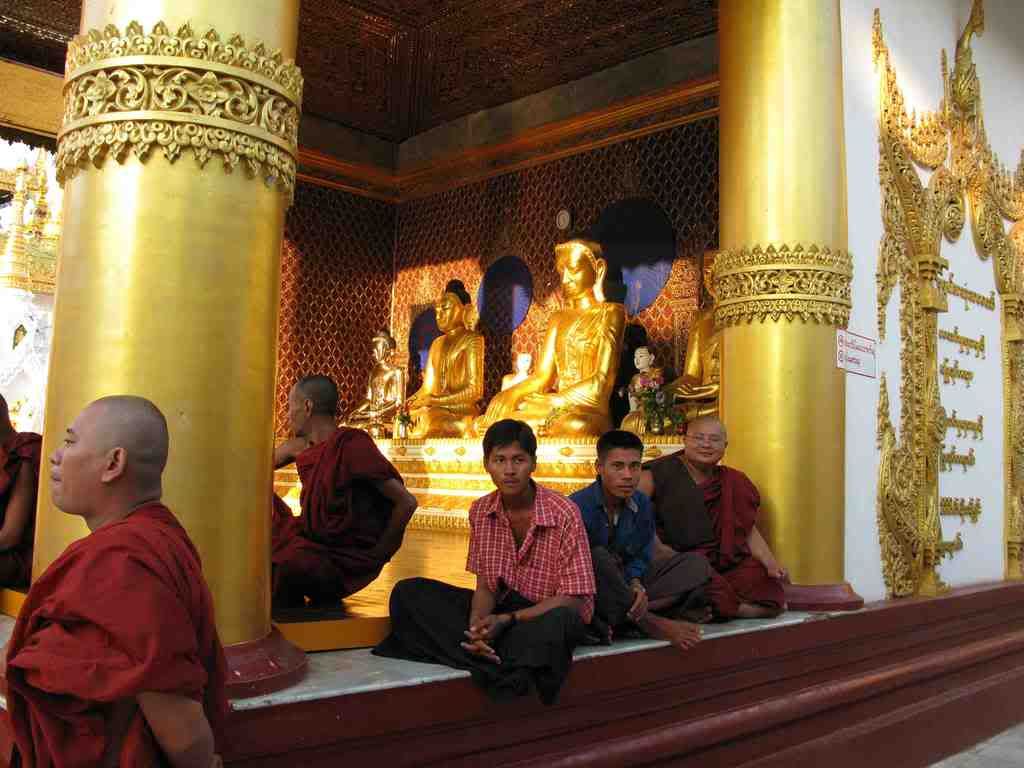
Visitors relaxing at the Shwedagon Pagoda


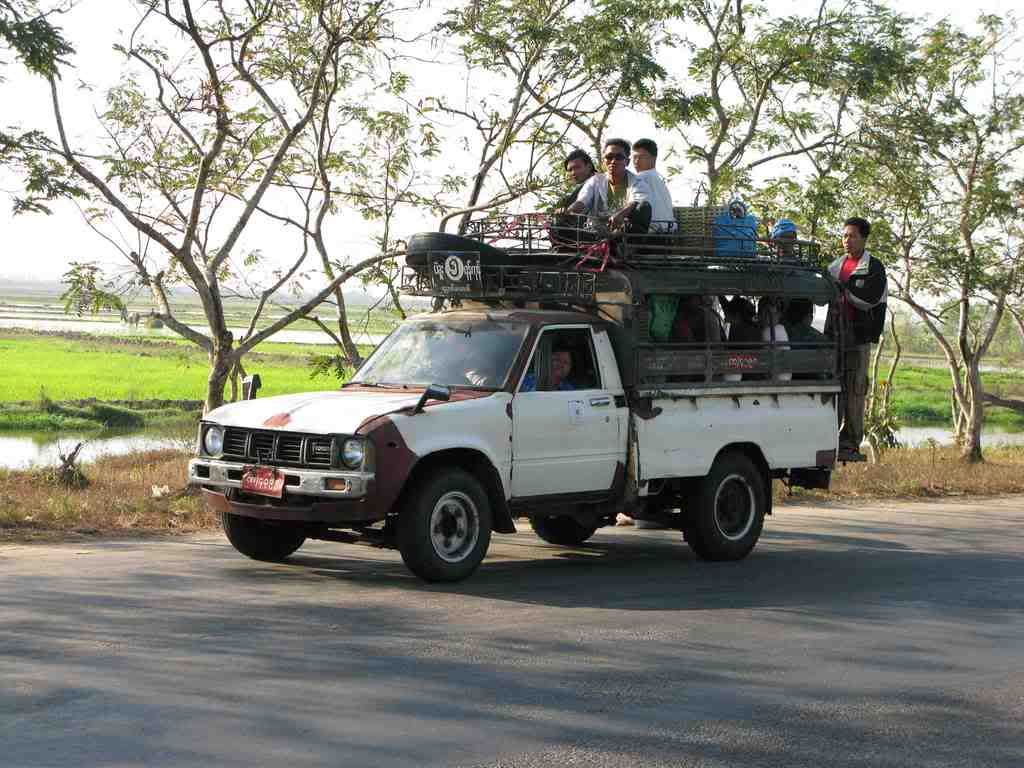
Public bus service on the road outside of Yangon


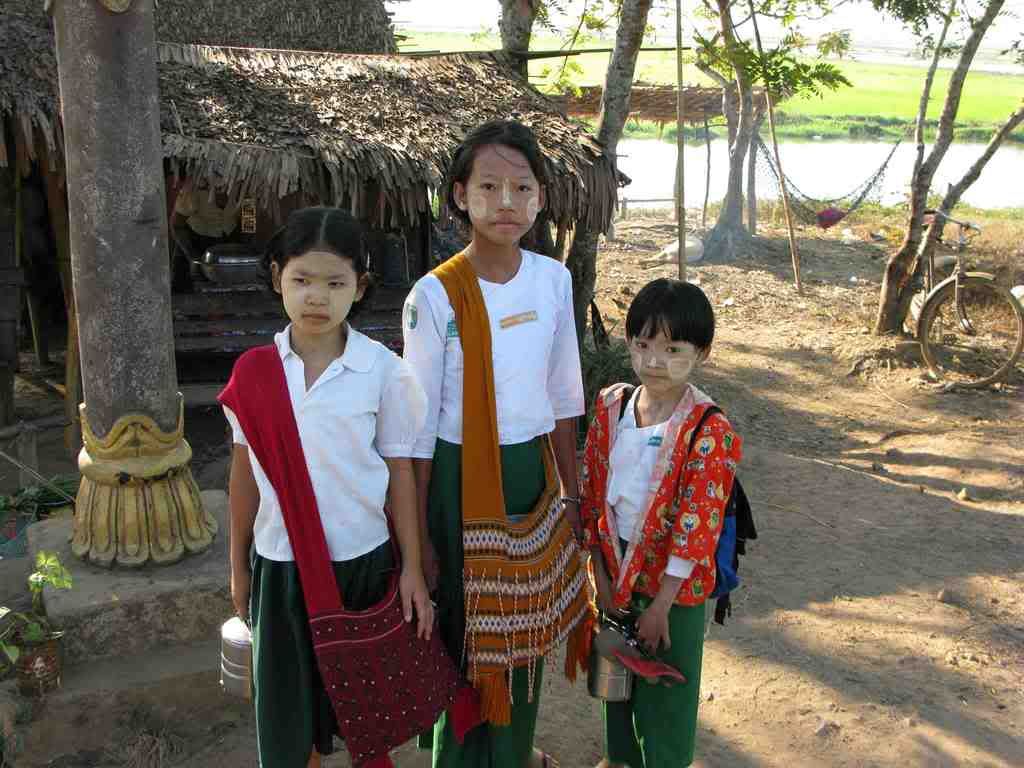
A group of children on their way to school


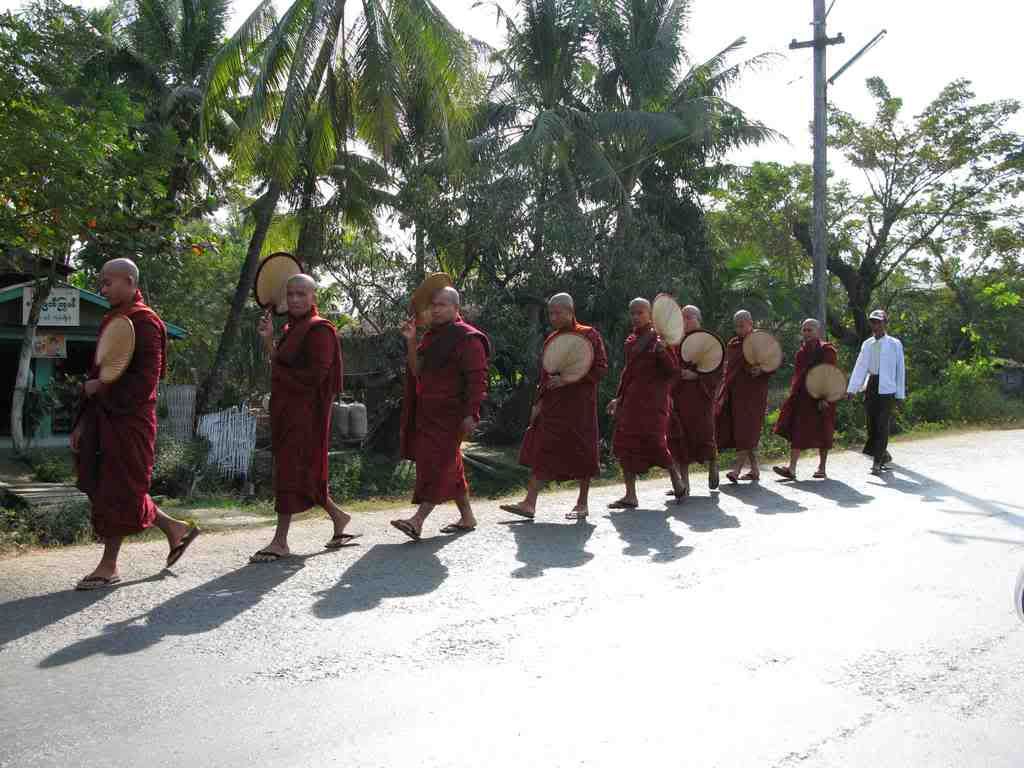
Daily procession of monks near Bago


Solitary man - Bago


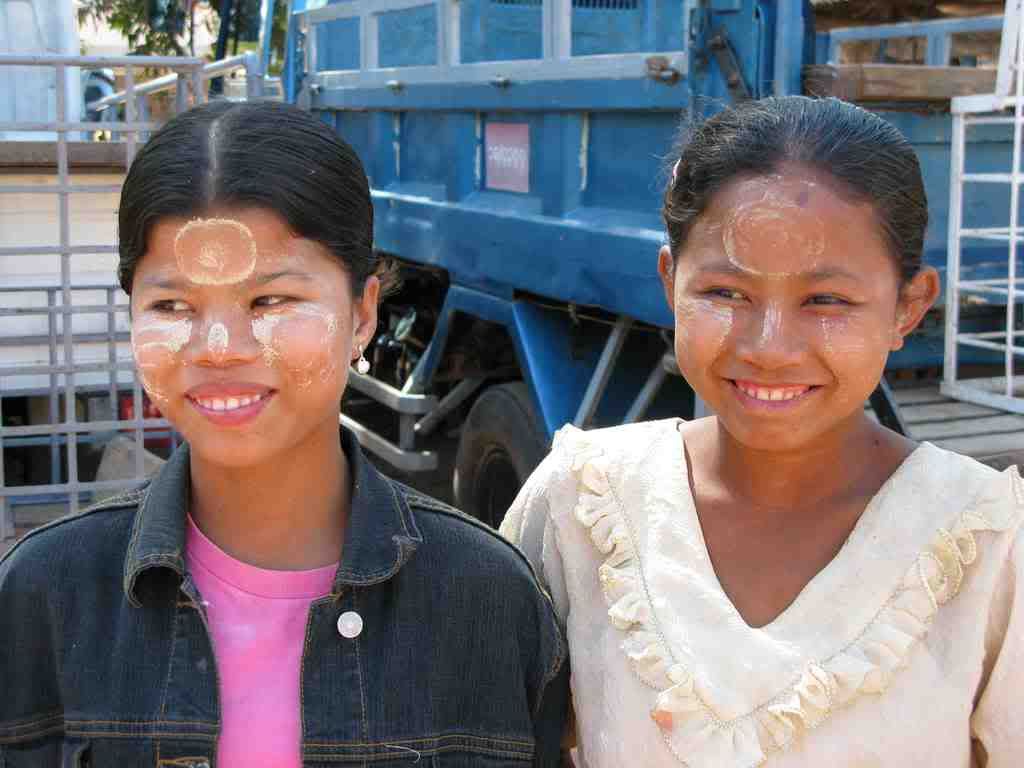
Young women at the Golden Rock Pagoda "base camp"


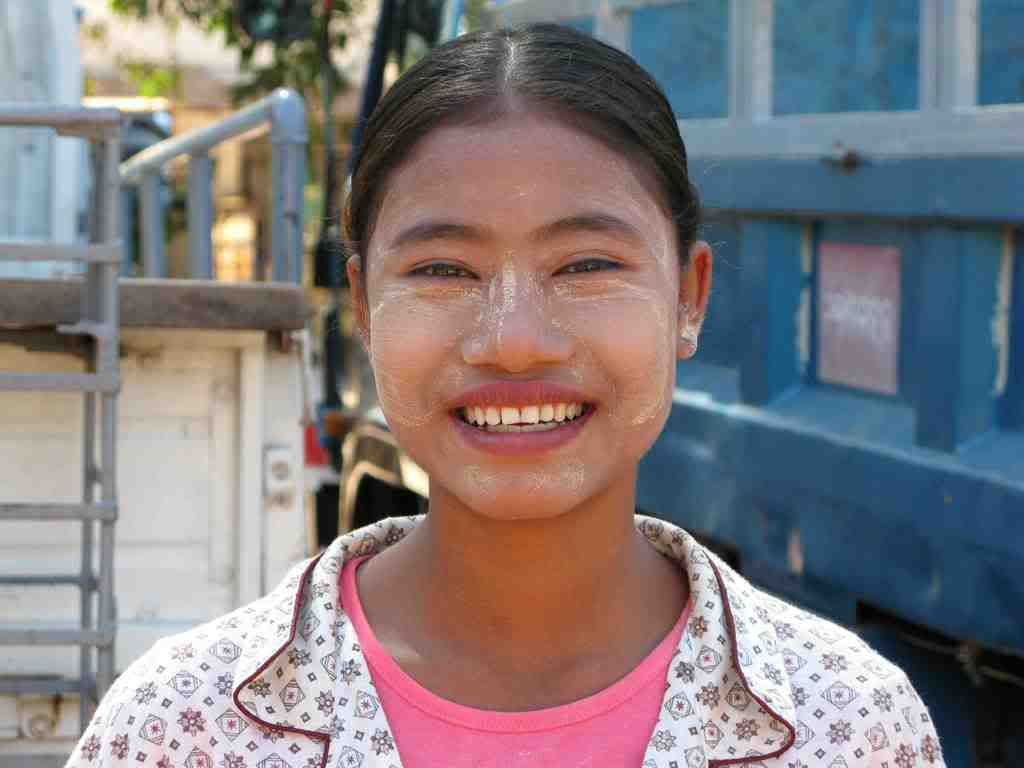
Myanmar's future rests here

Sunday, May 18, 2008

Myanmar After The Storm: Part 6

The official toll of dead and missing in the aftermath of Cyclone Nargis has increased to more than 133,000. Nearly 78,000 people have died, according to the Myanmar government, and more than 55,000 are still unaccounted for.

Estimates of the total number of people affected by the cyclone are as high as 3.2 million, based on a computer model of the population distribution in the area. And the International Red Cross has warned repeatedly and urgently that clean water is needed to avert a public health disaster.

But we need not worry, because the Myanmar government has announced that there is no outbreak of infectious diseases in the region hit by Cyclone Nargis. And that makes it so.

The World Health Organization, however, has confirmed some cases of cholera, but it reports that the number of cases seen so far don't exceed the usual pattern for this time of year. That could change at any moment.

Fortunately, more supplies – and more aid workers – are being permitted to enter Myanmar than before. And the government has shown a bit less reluctance in recent days to allow some foreign aid workers access to the Ayeyarwaddy Delta. A deal has evolved that would have foreign aid efforts coordinated by Myanmar's neighbors and members of the ASEAN group of countries, all of whom are on better terms with the Myanmar government than are the United States, Britain and the European Union.

General Than Shwe, the head of the Myanmar government has finally stirred from his isolated capital of Naypyitaw to visit two relief camps in suburban Yangon.

The cyclone has ended, but the misery lingers on.

Wednesday, May 14, 2008

Myanmar After The Storm: Part 5


It's time to put the needs of the people first.


Ever since Cyclone Nargis struck Myanmar on May 3rd and decimated the population of the Ayeyarwaddy River Delta, the international community has been trying to help the cyclone victims.

And in the aftermath of the storm, the military junta in control of that unfortunate country has responded:
Meanwhile, heavy rain is continuing to soak the already-saturated delta and another cyclone may be forming in the region.

The United Nations, in order to avert what it is describing as a "second catastrophe", is calling for an air and sea corridor to funnel supplies and personnel directly into the stricken region. France, Britain and Germany have gone even further.

These three countries plan to propose to the Security Council that the UN invoke its humanitarian 'responsibility to protect' and deliver assistance to the storm victims without the agreement or cooperation of the Myanmar government. Not all EU countries approve of this approach, and there is no indication when France, Britain and Germany plan to make this proposal – or whether China and Russia, who are both against the idea, would veto such action.

As aid shipments pile up waiting for clearance to enter Myanmar via Yangon Airport, as aid workers sit impatiently on the sidelines waiting for permission to enter the disaster areas, and as Myanmar's senior general, Than Shwe, dodges telephone calls from UN Secretary General Ban Ki-Moon, people are dying needlessly.

France, Britain and Germany have it right. Protecting the lives and health of the Myanmar people is far more important than protecting the national sovereignty of Myanmar's military regime.
Sunday, May 11, 2008

Myanmar After The Storm: Part 4

The sky has fallen on the people of Myanmar, and there is no relief in view. It has been raining all day in the hardest-hit part of the Ayeyarwaddy River delta; heavy thunderstorms are predicted to continue for the next three days.

Now that the ruling junta has secured – through intimidation and intrigue – a "victory" in its referendum, it has grudgingly inched open the front door of the country to a few aid workers. Supplies have begun clearing through the Yangon airport with greater efficiency, and some boats, trucks and fuel have become available to transport food, medicines and shelters to the victims.

At best, however, only a trickle of aid is reaching victims. Part of the problem is the lack of decent roads. Driving in Myanmar is a challenge even under good conditions, and the massive flooding produced by Cyclone Nargis has washed out or blocked many roads. Even the waterways are treacherous. One boatload of supplies struck a submerged tree and sank.

Meanwhile, the disease clock is ticking. With decomposing human bodies and animal carcasses floating in the floodwater, and with no source of clean water for drinking or washing, victims desperately need the supplies of drinking water and disinfectant tablets that are being caught up in the Yangon airport bottleneck.

UNICEF, one of the few aid agencies that has managed to maintain a presence in Myanmar in recent years, reports that hospitals in Bogalay Township – one of the hardest hit parts of the delta – are receiving 6,000 patients each day. Approximately 20,000 people from this township have lost their homes and are living in 50 refugee camps. In Pyapon Township, also located in the Ayeyarwaddy delta, 16,000 people are living in 35 camps. One of these camps, which houses 3,500 people, has only 5 latrines.

As bad as the situation is for the displaced adults, it is far more precarious for the children. Even before the cyclone struck, roughly one-third of Myanmar's children were malnourished and, therefore, susceptible to disease. Already, about 20% of the children in the flooded areas are suffering from diarrhea and dehydration. Their future is becoming increasingly bleak as time passes.

Myanmar's neighbors – especially Thailand and China – and other countries around the world are responding generously with pledges of money, food and aid workers. Now it's up to the Myanmar government to unlock its doors and allow aid to flow as quickly as possible to those who need it.

Friday, May 9, 2008

Myanmar After The Storm: Crisis Mismanagement

The military government of Myanmar should be congratulated. They are writing the ultimate case study of how to turn a disastrous situation into a complete catastrophe.

With more than 1 million of its people homeless, hungry, thirsty and in dire risk of infectious diseases, the military cabal that controls this country has said to the world, "Give us your money, your food, your water, and your medical supplies – but STAY OUT."

The United Nations World Food Programme took the unprecedented step of halting aid flights to Myanmar temporarily after the UN was forced to transfer the supplies into government warehouses. The country's leaders denied impounding the supplies, claiming that the government simply wanted to control the distribution of food itself. The UN has since announced that it will resume aid flights on Saturday.

Myanmar has been under pressure to allow aid workers into the country ever since the magnitude of the disaster became apparent. The Prime Minister of Thailand, Samak Sundaravej, canceled a planned visit to Myanmar earlier today. He had hoped to persuade the country's leaders to allow in aid workers, but decided that this would be a fool's errand.

Fortunately for the residents of the storm-ravaged Ayeyarwaddy Delta, the International Red Cross, the United Nations and many individual countries are sending money and supplies despite the attitude of the Myanmar government. Seven Red Cross workers have finally received visas to enter the country, and more are expected to follow soon.

According to Michael Annear, the regional disaster response coordinator for the Red Cross effort, 1.5 million Myanmar people have been left homeless by Cyclone Nargis; the estimated death toll has climbed to 66,000.

The relief efforts will not be helped by the weather. The town of Labutta, almost completely destroyed by the recent cyclone, is expected to receive an additional 16 inches of rain during the next week. Yangon will receive slightly less – about 14 inches in the next seven days.

The additional monsoonal rainfall will not only hamper relief efforts. It will exacerbate the spread of enteric diseases such as cholera and dysentery throughout the delta.

Let's hope that Myanmar's ruling military junta will realize before it's too late that they need outside assistance to cope with this disaster, and that they and will open the country's doors to those who are trying to help the Myanmar people to survive.

Thursday, May 8, 2008

Myanmar After The Storm: Cholera Erupts

"The (feared) cholera epidemic has begun," according to a doctor quoted today in The First Post.

As I predicted in Myanmar After The Storm: Part 1, cholera – always endemic in this region – has spread in two areas of the Ayeyarwaddy (Irrawaddy) Delta. The lack of clean water, fresh food, and even rudimentary sanitary facilities will make this epidemic extremely difficult to contain.

The flooded rice paddies are strewn with the dead bodies of people and oxen, contributing further to the spread of enteric diseases. I expect that dysentery, acute watery diarrhea, and hepatitis will follow on the heels of the cholera.

Every day that aid workers are delayed from entering the flood zones will exacerbate the health crisis. But even once the workers and their supplies arrive, it will be months before life in the delta can even begin to return to normal.

Myanmar After The Storm: Part 3

Based on the latest "unofficial" numbers, the death toll from Cyclone Nargis is likely to climb into the hundreds of thousands – as many as 80,000 just in the area surrounding the Ayeyarwaddy (Irrawaddy) Delta town of Labutta. The "official" tally is lagging far behind, at 22,980 dead and 42,119 missing.

The cyclone and its accompanying storm surge devastated the low-lying Ayeyarwaddy Delta, the source of 65% of the country's rice production. The damage caused by the storm, and its impact on the delta's rice paddies, will reverberate through the entire region.

What This Means For Myanmar
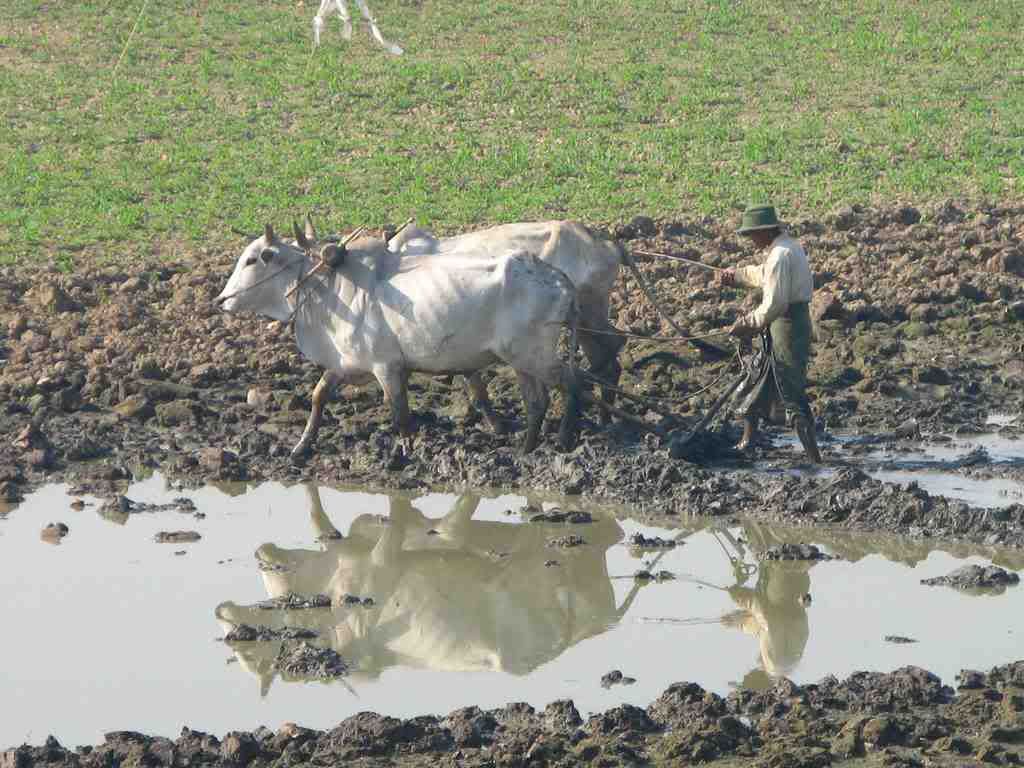
Most Myanmar villagers farm the way their grandfathers did – using plows drawn by oxen or water buffaloes, and fertilizing their fields with manure. Nevertheless, the country produces more rice than it needs, and has exported its surplus rice for many years.

A farmer and his water buffaloes plowing a rice paddy somewhere between Yangon and Bago


This rice farmer near Mandalay prefers oxen


Rice paddies are normally flooded during the early part of the crop cycle. But this storm struck the delta during the worst possible time – the winter crop harvest period. Fields like the ones shown above are now completely under water. What hasn't been destroyed by flood waters has been polluted by dead bodies – both human and animal.

The region to the southeast of Yangon received a double-whammy. In addition to damage caused by the cyclone's winds and rain, a 12-foot high storm surge inundated the coastal region with sea water.

Rice farmers in Louisiana learned first-hand in 2005 about the long-term damage a storm surge can bring. The storm surge that accompanied Hurricane Rita contaminated Vermilion Parish's rice fields with sea water. The resulting high salt levels put most of the fields out of commission for a year or more.

Under normal conditions, rice farmers in the Ayeyarwaddy Delta produce two – sometimes even three – crops each year. The country had been planning to expand rice acreage to 8.26 million hectares (20.4 million acres) from 8.1 million hectares (20 million acres) this year – an increase of just under 2%. Instead, the arable acreage in the delta will shrink dramatically.

The International Impact
In 2003, Myanmar produced 27 million tons* (24.6 metric tonnes) of rice. Only Bangladesh, China, India, Indonesia and Vietnam grew more rice that year. Between April 2004 and March 2006, the country exported 180,000 tons of rice annually. Its rice exports fell to just 14,500 tons in fiscal year 2006/07, but rebounded in 2007/08.

Myanmar had been able to take advantage of recent shortages and high prices to expand its sales of rice to Bangladesh (~198,000 tons), Singapore (385 tons) and Sri Lanka (5,500 tons). The country was expected to export 660,000 tons of rice in 2008/09. This will no longer be possible, thanks to Cyclone Nargis.

As recently as May 5th, The Wall Street Journal (WSJ) carried a story with the headline "Softening Rice Prices Suggest Market Peak Has Come, Gone." According to the article by Tom Polansek, Thailand – the world's largest rice exporter – had begun to release into the market 2.1 million tonnes (2.3 million tons) of rice that it had stockpiled.

But this story was out-of-date even before it was published. On May 6th, Bangladesh announced a virtual ban on rice exports. The following day, BBC reported that rice prices had risen for the fourth day in a row at the Chicago Board of Trade.

Myanmar's exports are little more than a drop in the world's rice bucket. The WSJ article mentioned that world rice "ending" stocks (the rice left over after taking supply and demand into account) surpassed 77 million tonnes (85 million tons) in April. Now some of that excess rice will be needed to feed Myanmar's displaced farmers and city dwellers.

The annual rice consumption by Myanmar's people in normal times is approximately 17 million tons, all of which is grown domestically. With the fields that produce 65% of the rice crop unusable, possibly for a year or more, the country may need to import as much as 11 million tons of rice – roughly 13% of the world's surplus – to feed its people.

Inevitably, Myanmar's unanticipated need to import large amounts of rice and other foodstuffs will force the international price of rice even higher than ever. We have already seen riots in Bangladesh, Haiti, Egypt and Somalia, among others, as their people rebelled against food shortages and high prices. Watch for more violence as prices spike even higher and as countries compound the problem by hoarding their surpluses for internal consumption.

Cyclone Nargis made its landfall in Myanmar. But its impact will be felt around the world.

*Please note. For consistency of presentation and for the convenience of readers, I have converted metric tonnes into US tons.

Wednesday, May 7, 2008

Myanmar After The Storm: Part 2

Myanmar's "official" death toll from Cyclone Nargis still stands at 22,000 this morning. According to the United Nations, more than one million people are homeless, and 5,000 square kilometers of the Ayeyarwaddy (Irrawaddy) River delta are still under water.

The United Nations and several of Myanmar's neighbors – Thailand, India and China – have flown shipments of food and other aid supplies into the country. The United States has also offered assistance, but Myanmar's ruling military junta has not yet authorized entry visas for foreign aid workers.

As I mentioned in Part 1 of this series, the risk of disease outbreaks is extremely high. Mosquito-borne diseases such as malaria and dengue are endemic in Myanmar, as are cholera and dysentery.

Yangon's Special Problems
As residents of Yangon struggle to reclaim their city, they face a different – though no less difficult – set of challenges from those being experienced by their rural compatriots.

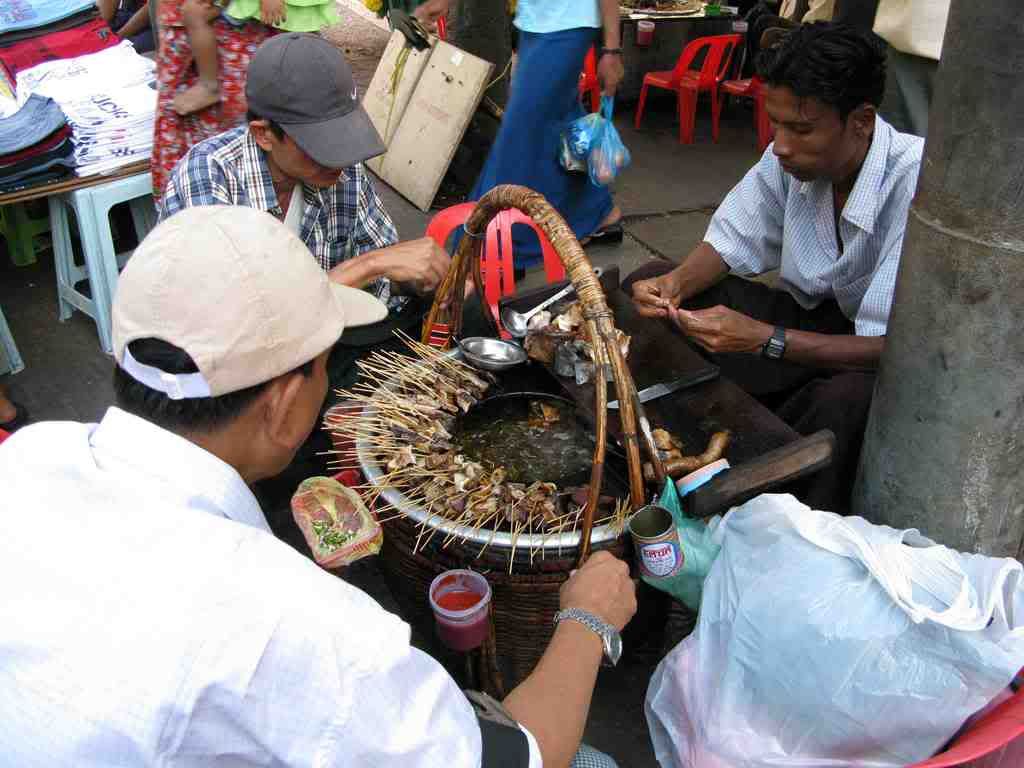
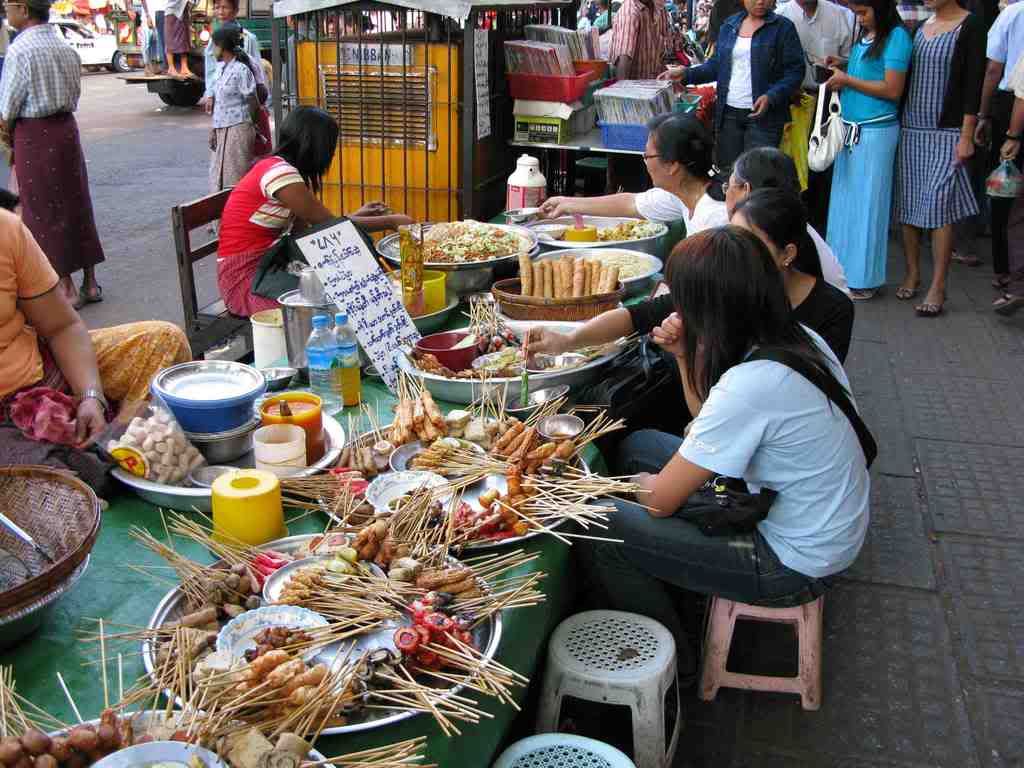
When we visited Yangon in January of this year, we were shown the "usual" tourist spots – the City Centre, the Shwedagon Pagoda, the immense reclining Buddha, and so forth. We also took some roads less traveled, at least by tourists. We walked the side streets where local residents buy their food supplies for the day and where they stop for a bite of Myanmar style fast food.

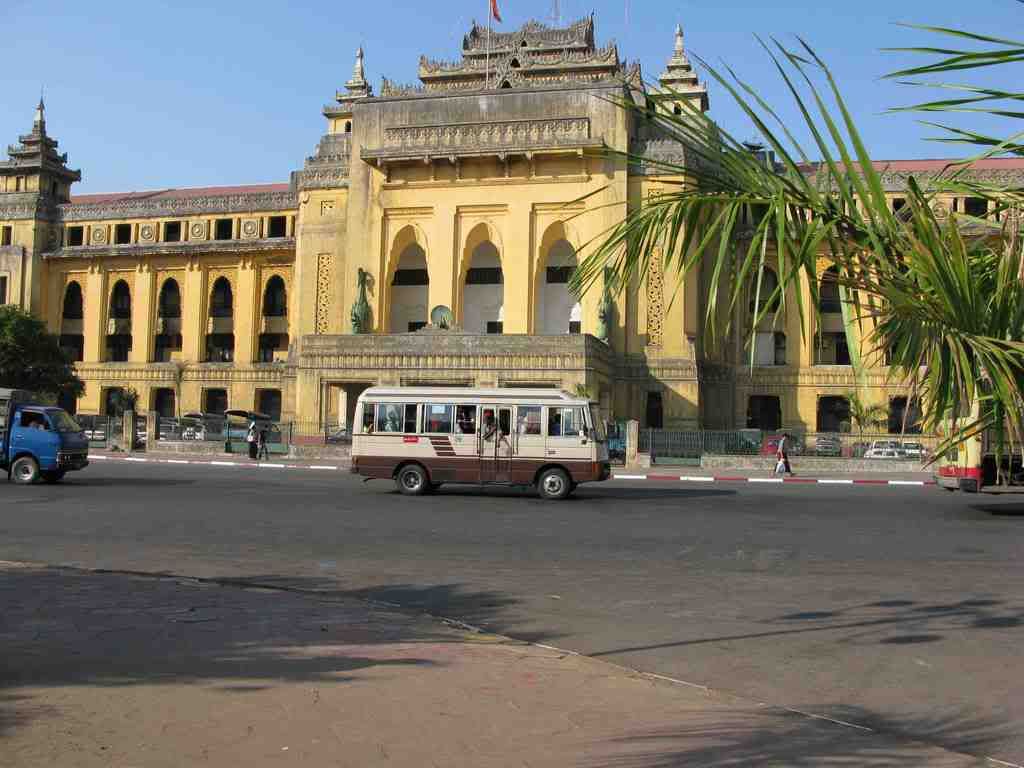
We were struck by the aging beauty of some of Yangon's buildings in the city centre.


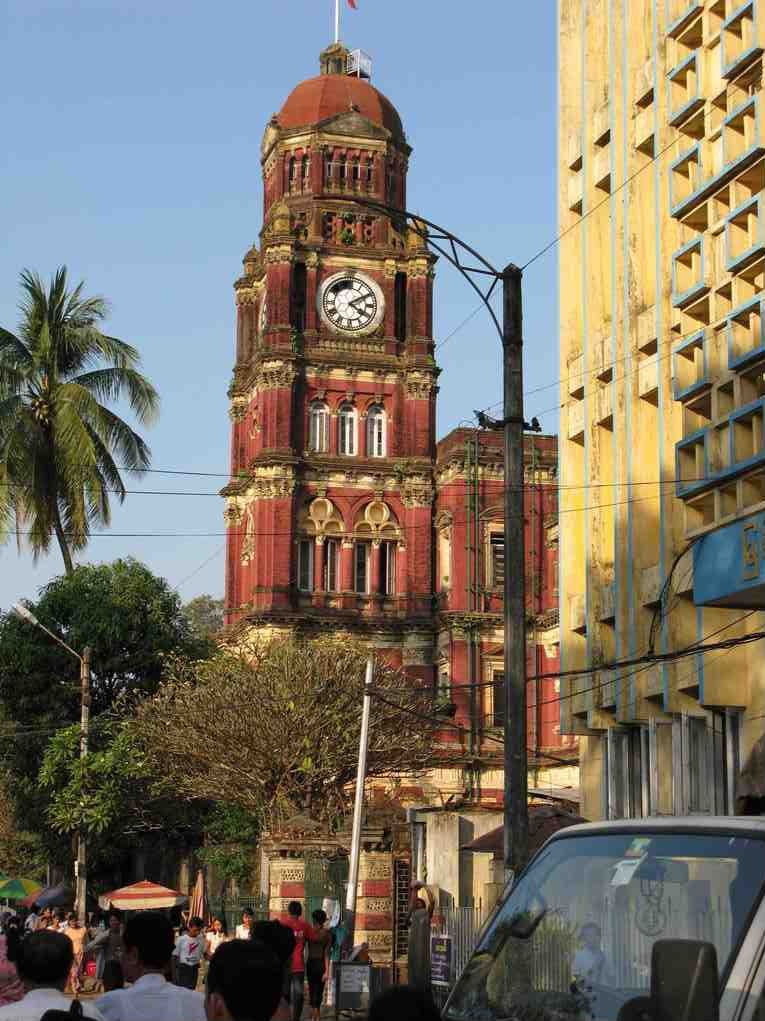
The red brick High Court building is a Yangon landmark, easily recognized by its clock tower.


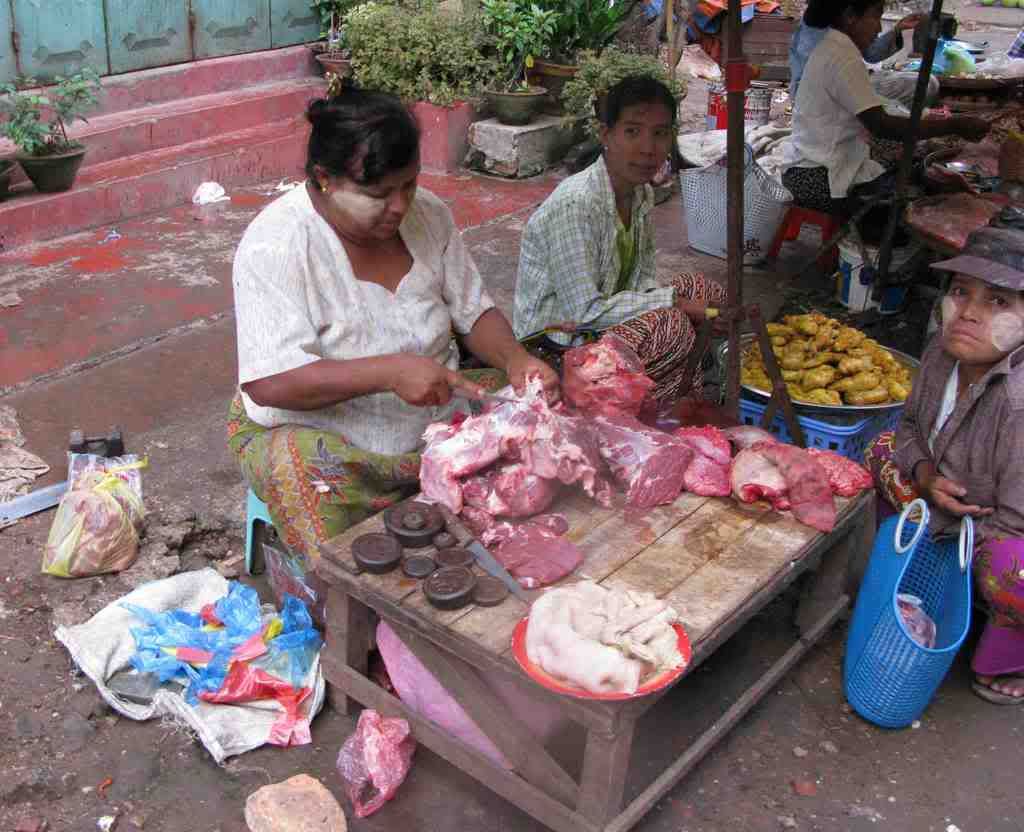
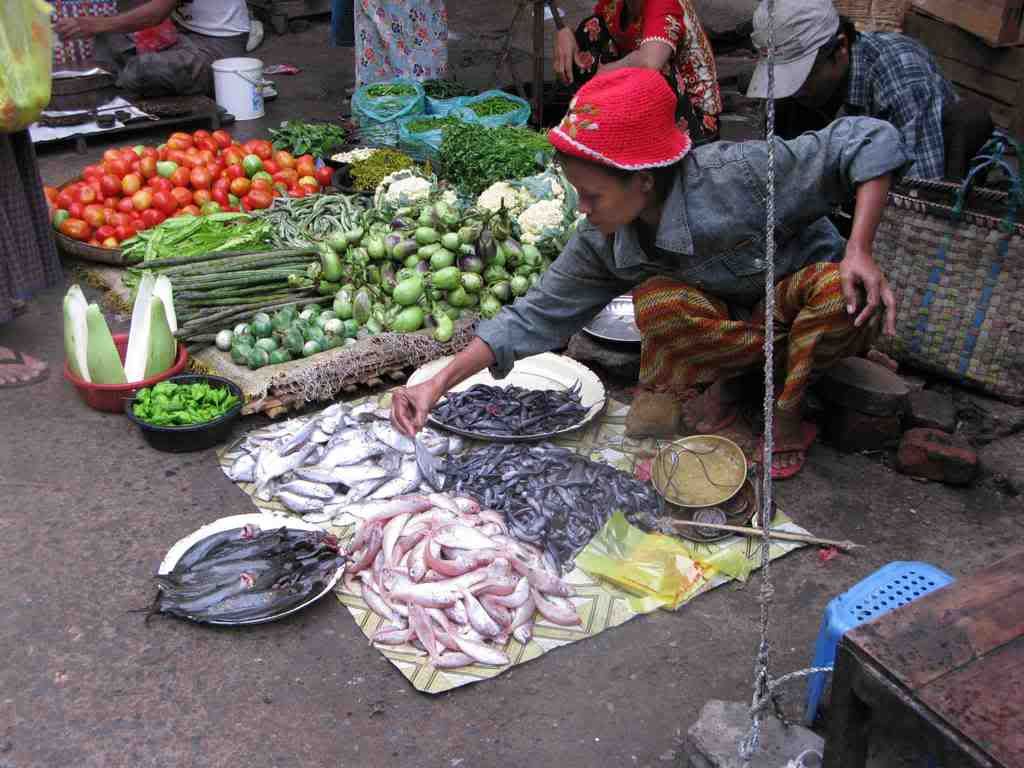
We learned that, even in this city of more than 5 million, most people cannot afford to run a refrigerator. Shopping for food is a daily chore. The morning markets were crowded, rain or shine, including this one – held every morning in the side streets and lanes of the City Centre.

One of the many meat vendors


Fish and produce displayed on sheets laid directly on the pavement


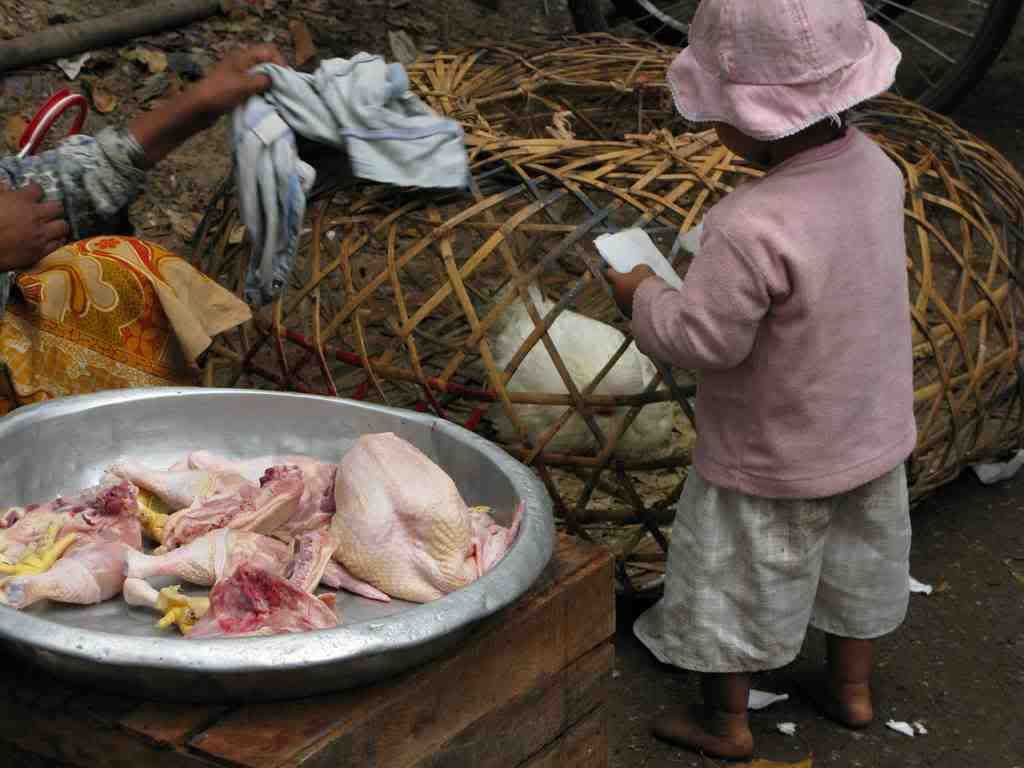
Fresh poultry for sale


The side streets – and the sidewalks of some main thoroughfares in downtown Yangon – were lined with vendors, who never seemed to lack for customers.


With the extensive damage to Yangon's buildings, and with downed trees and power lines blocking roads, these markets will not be able to function for some time to come. There are a few supermarkets in the city, but they cater to the wealthy. The average Yangon family cannot afford to shop there – even if the food is available.
There will be a lot of hungry people in Yangon over the next several weeks. And hungry people can easily become angry people. Look for reports of unrest and repression in and around Yangon as food supplies and tempers get short.

For more background on Myanmar, click on "Southeast Asia" under "Series and Topics"

Tuesday, May 6, 2008

Myanmar After The Storm: Part 1

According to the BBC, Myanmar's death toll from Cyclone Nargis has already surpassed 22,000, with at least 41,000 people still missing. Tens of thousands more have been left homeless. In Yangon – the country's largest city and its former capital – clean drinking water and electricity, already in limited supply before the storm, are more difficult to obtain than ever. Five regions with a combined population of 24 million – roughly half of the country's total population – have been declared disaster areas.

But as devastating as the immediate consequences of the storm have been, the longer term repercussions are potentially even more severe – both for the Myanmar people and for other countries in the region.

On The Political Front
Myanmar's constitutional referendum was scheduled to take place on May 10th. Long touted by the military junta that rules this country as a "pathway to democracy", the referendum – and the constitution it is supposed to ratify – has been viewed with disdain by most observers outside Myanmar. The junta declared yesterday that the referendum would proceed as planned in spite of the devastation caused by Cyclone Nargis. They have since announced that voting in the hardest hit areas would be delayed until May 24th.

Given the extent of the storm damage, it is difficult to imagine how residents of Yangon and of the Ayeyarwaddy (Irrawaddy) River Delta would be able to vote, even with the two-week delay. This will skew the voter turnout in favor of the northern half of the country, including the new capital city of Naypyidaw. Perhaps, that is what the junta hopes will happen. After all, Naypyidaw is heavily populated with government officials and civil servants, all of whom are dependent on the junta for their livelihood.

Public Health
According to the World Health Organization, cholera, dysentery and watery diarrhea are among the diseases endemic to Myanmar. Any of these water-borne diseases may run rampant in the aftermath of a natural disaster, where safe drinking water is scarce and sanitary toilet facilities even more so.

Last summer and fall, Iraq suffered an outbreak of cholera and acute watery diarrhea that sickened more than 30,000 people (3,315 confirmed to be infected with Vibrio cholerae) and claimed 14 lives. It was only due to adequate and timely treatment of the victims that the loss of lives was relatively small.

Ready access to treatment is critical for victims of cholera and acute watery diarrhea. Victims of Sudan's 2006 outbreak were not as fortunate as the Iraqis. Northern Sudan reported 2,007 cases of acute watery diarrhea between mid-June and mid-April that year. Seventy-seven of the victims died. The southern part of the country was affected even more severely. In the first half of 2006, southern Sudan recorded 16,187 cases of acute watery diarrhea – 476 of them fatal.

Sanitary toilet facilities and clean drinking water are rare commodities in rural Myanmar at the best of times. The tragic loss of life caused by Cyclone Nargis probably will be amplified by the typical "diseases of disaster" – cholera, dysentery and diarrhea – that follow so often in the wake of storms, floods and earthquakes in much of Asia and Africa.

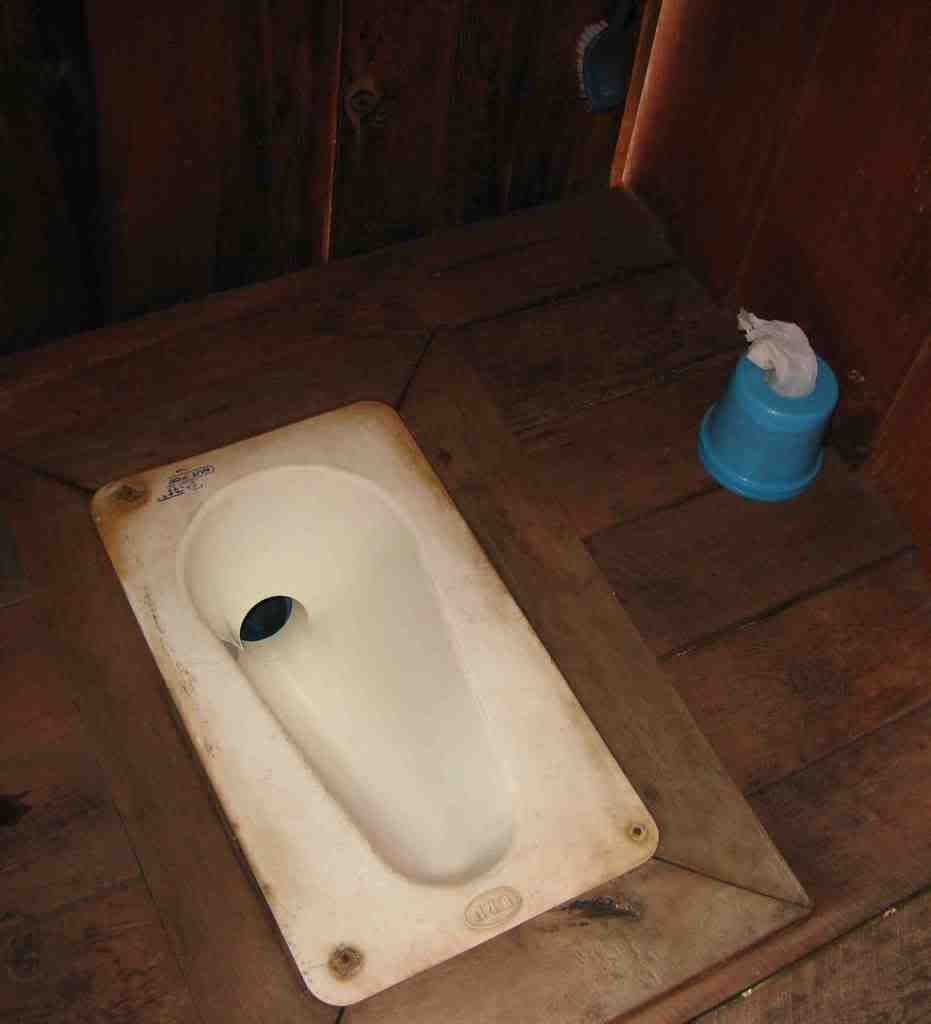
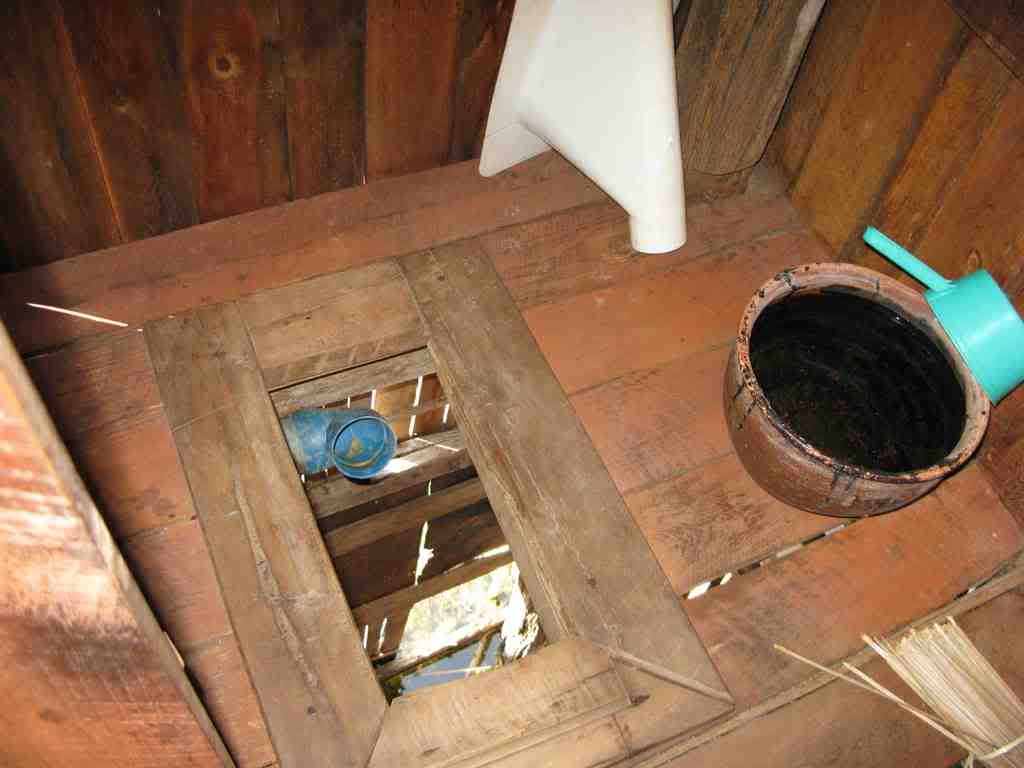
The following photos were taken in January 2008 and illustrate the sanitation problems that rural residents of Myanmar confront even at the best of times.

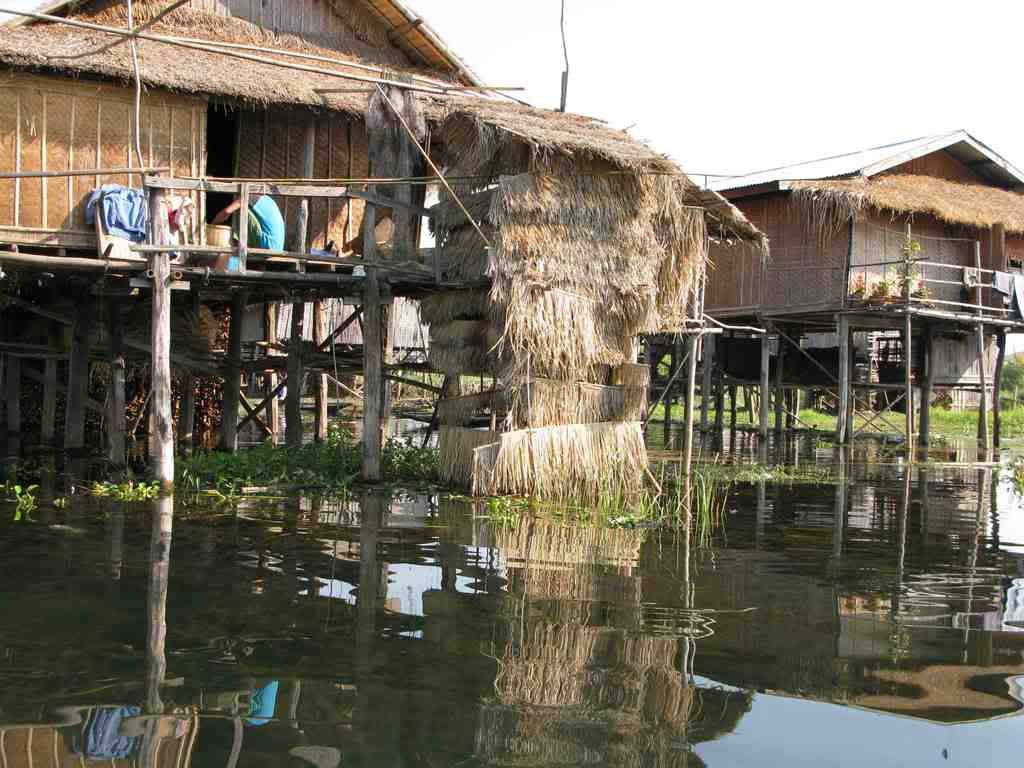
This is the exterior of an outhouse in an Inle Lake village.


The outhouse "commode"


An empty slot waiting to receive its commode (leaning against the wall). Human waste from these outhouses drops directly into Inle Lake.


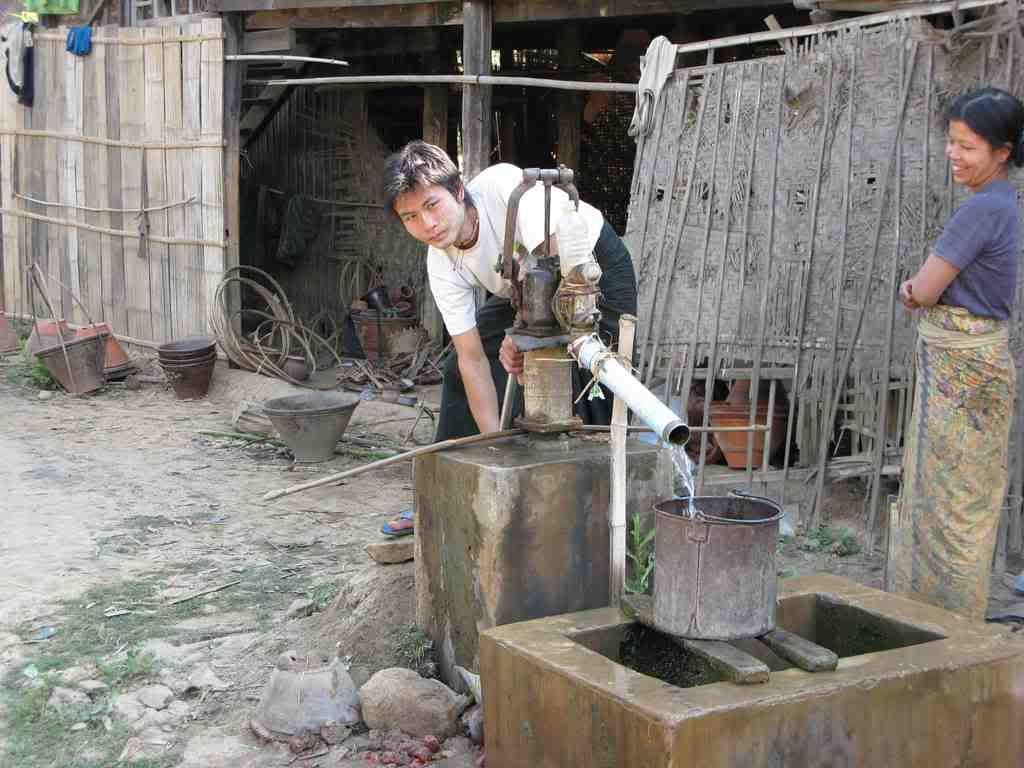
Community well belonging to a "dry land" village on the shore of Inle Lake.


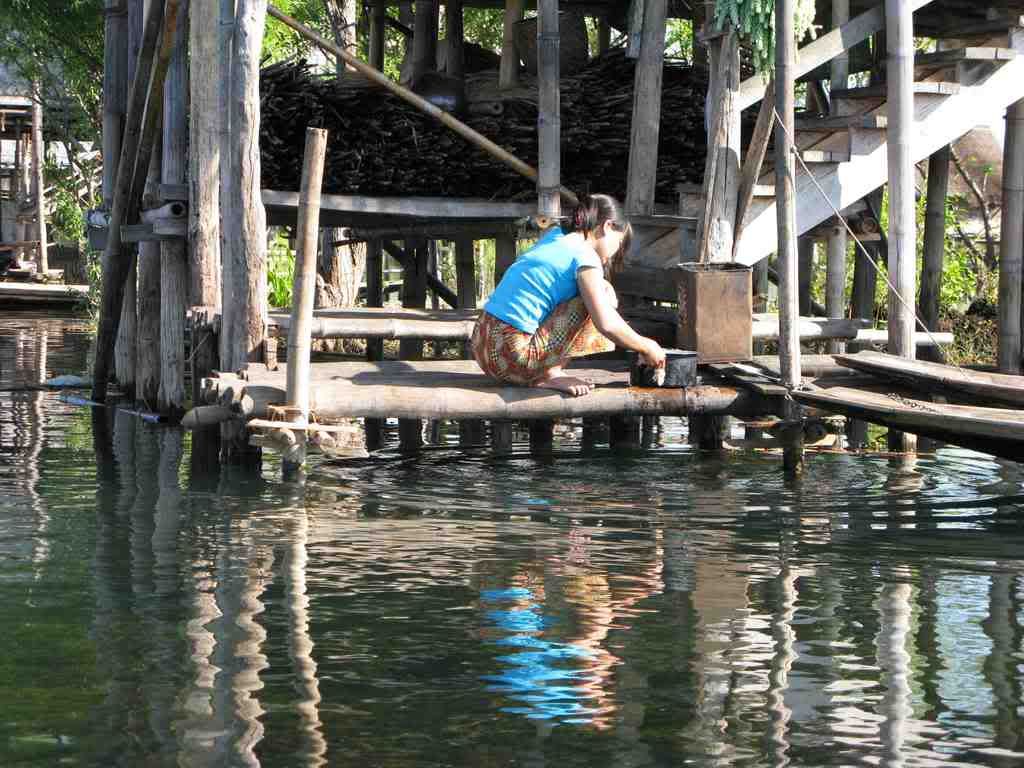
The waters of Inle Lake also serve as the kitchen sink for washing pots and pans


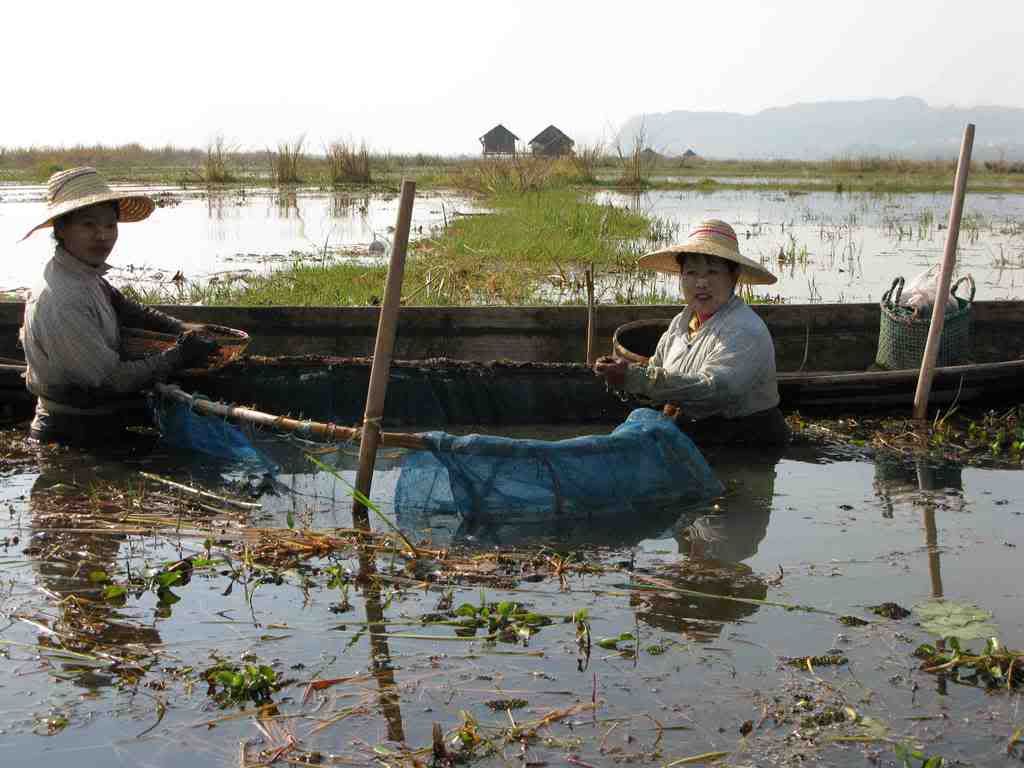
And when the rice paddies along the shore are flooded by water from the lake, they become a source of fresh-water shrimp.


Unfortunately, Myanmar's longer-term travails are just beginning. And the entire region will suffer the consequences.


For more background on Myanmar, click on "Southeast Asia" under "Series and Topics"

Monday, April 21, 2008

Vietnam's Cholera Outbreak - A Structural Problem

It's no secret that Vietnam is suffering from a serious, and spreading outbreak of cholera. According to the latest report, the outbreak now has spread to 19 cities and provinces – mainly, but not exclusively in the northern part of the country. Of the more than 1,800 people who have fallen ill from diarrheal diseases since March 5th, 326 have been confirmed to be infected with cholera.

Vietnam's health agencies blame the outbreak on contaminated or unhygienic food – dog meat, shrimp paste, uncooked vegetables – and water. Lakes and ponds have been dredged and disinfected in an attempt to contain the spread of cholera and other acute diarrheal diseases.

But a report presented last Friday at a conference held in Hanoi on "Clean Vegetable Growth in the Red River Delta" illustrated the magnitude of the problem. Produce grown in many areas of northern Vietnam, including supposedly "safe" areas, is often contaminated with heavy metals, toxins, and E. coli. Irrigation water used on crops contains E. coli more often than not.

The problem goes beyond water. Fecal pathogens such as E. coli also find their way into the soil when farmers use fresh manure as fertilizer. Proper composting greatly reduces the pathogen content of manure, but Vietnam does not provide its farmers with clear guidelines for fertilizing with compost.

On our recent trip to Southeast Asia, we had a chance to visit local farming villages in Myanmar and to see how manure is composted. The process is simple – it's collected in a heap until it is needed. There is no method or timetable to its accumulation or use.


A chicken foraging for it's midday snack at the edge of a manure heap in a typical village

Southeast Asia's food and water safety issues are well-entrenched, and they will only be solved when the countries in the region manage to put the necessary infrastructure in place, including a reliable supply of clean drinking water, adequate facilities for handling human waste, basic education and training for farmers in how to fertilize cropland safely.

Sunday, April 13, 2008

Vietnam's Cholera Epidemic

Vietnam has been struggling with a major outbreak of acute diarrheal disease since March 5th. As of April 11th, more than 1,300 individuals have been hospitalized as a result of acute diarrhea, according to a report in today's Thanh Nien Daily. Of those, 136 people – 44 of them in Hanoi – have been diagnosed with cholera.

According to a Ministry spokesperson, most of the victims have fallen ill after eating contaminated foods, including items such as dog meat, shrimp paste, uncooked vegetables and raw blood soup.

The Ministry of Health has been working to contain the epidemic, but their efforts are hampered by a lack of clean water – samples from 18 rivers and canals and other waterways in northern Vietnam contained high levels of Vibrio cholerae – and by an abundance of unregulated food stands.

The government has ordered that more than 30 lakes be dredged or decontaminated, and has suspended the licenses of 15 food stalls in the Hanoi area after they failed to meet hygiene standards.

While this outbreak has been confined mostly to the north of the country, cholera has also made an appearance in Ho Chi Minh City (formerly Saigon). A 71 year-old woman complained of diarrhea after eating food purchased from a street vendor in the city. She has since been diagnosed with cholera and has been hospitalized. Ho Chi Minh City health officials are warning citizens to maintain high standards of hygiene and to avoid eating shrimp paste.

But practicing good hygiene is near impossible in the absence of adequate toilet facilities. Ho Chi Minh City's residents have been complaining for years about the lack of public restrooms. These facilities are few and far between. They usually are dirty, foul-smelling, closed after 6pm, and expensive to use. The fee is more than many workers are prepared to pay. As a result, the city streets often become the latrines of last resort.

The 8 million residents of Ho Chi Minh City had better hope that the Ministry of Health succeeds in preventing the cholera epidemic from spreading. Otherwise, the city will be in for a very long, very hot, and extremely unhealthy summer.

Friday, April 4, 2008

Food Poisoning Around The World - The Next Leg

This leg of our tour of food poisoning venues takes us back to New Zealand and Vietnam. We'll also make brief stops in Malaysia and a few African countries. All aboard!

Vietnam
The cholera outbreak we visited a couple of stops ago has continued to expand. It has now spread to 10 areas in the north of the country; 85 people have fallen ill so far. Most of the illnesses have been blamed on foods such as raw shrimp paste, seafood salad and puddings.


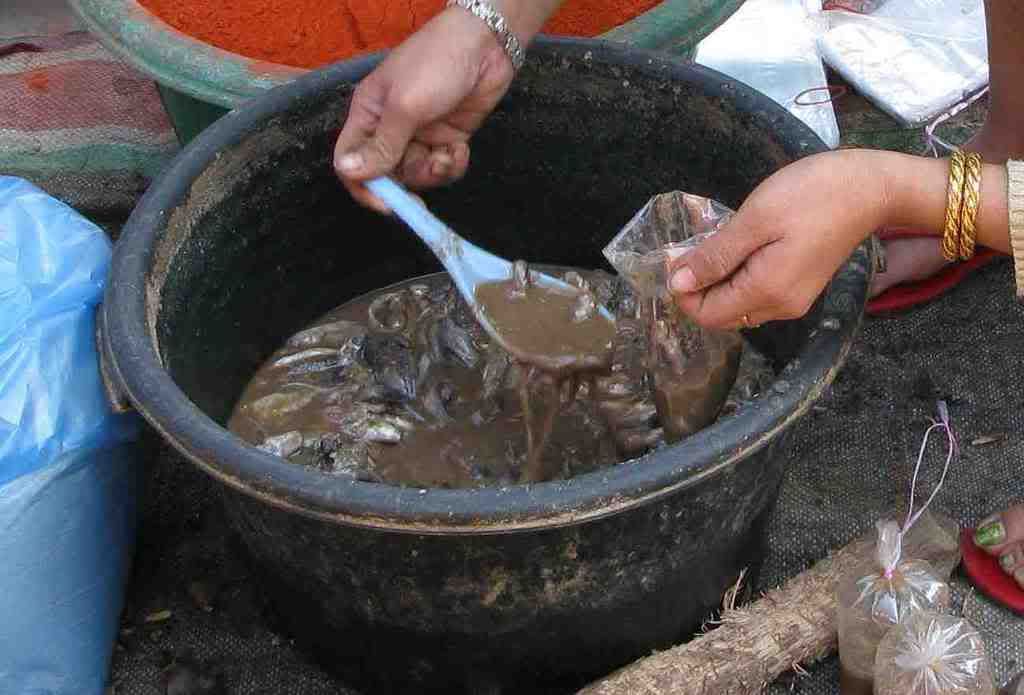
Seafood paste for sale in Laos, Vietnam's next door neighbor.


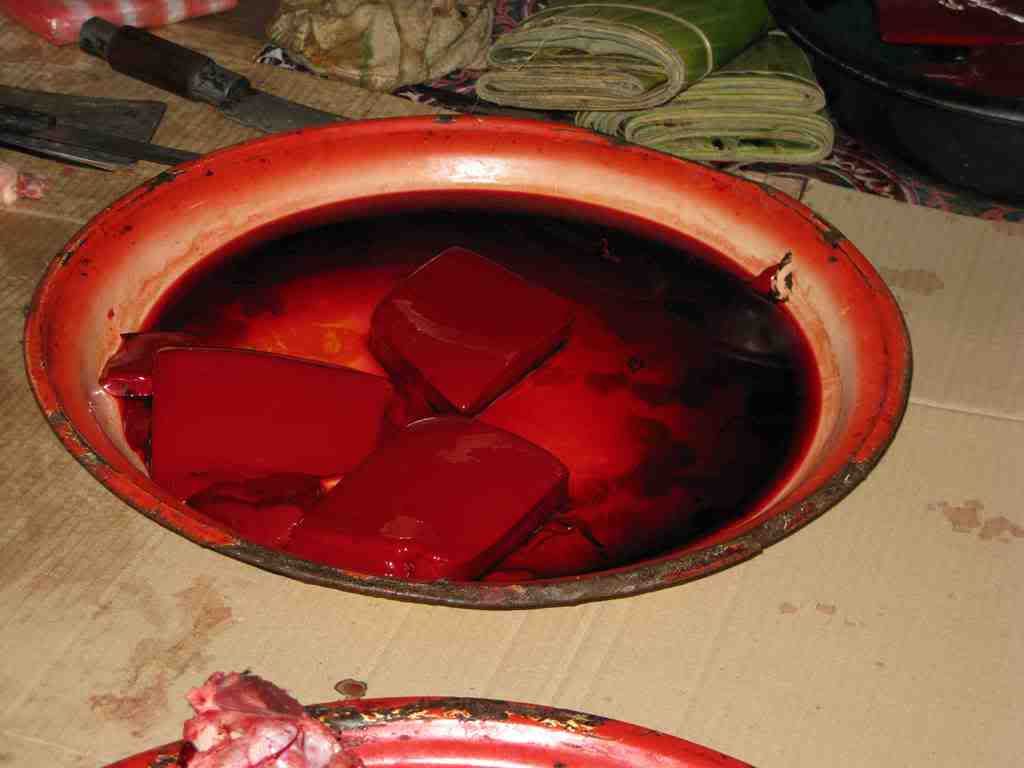
Fresh clotted blood in Laos


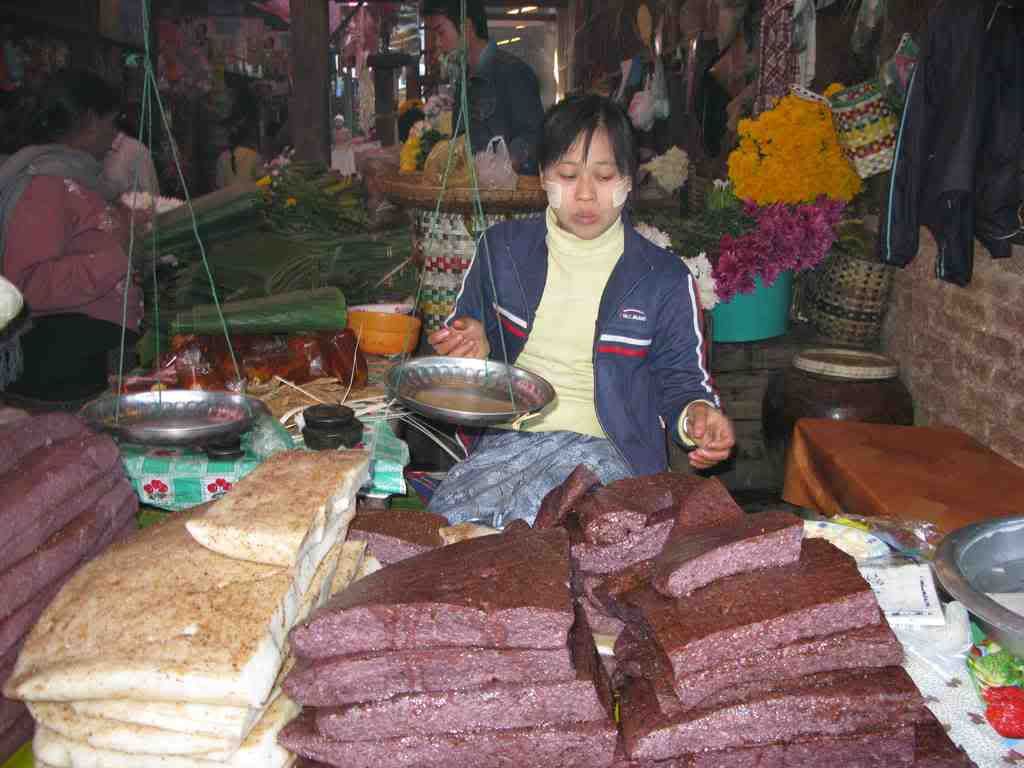
Bean curd puddings in Maymyo, Myanmar


Cholera is spread through contaminated food and water. There is concern that the outbreak will spill over into the central and southern parts of the country, especially as the temperatures and humidity rise with the onset of summer.

Malaysia
Sixty-eight students from two different schools were examined at district hospitals as a result of separate food poisoning outbreaks last Thursday in the
Serang Pram Utara district of Malaysia. The students, who complained of stomach aches after eating in the cafeterias of the two schools, were treated and released.

New Zealand
There is a Salmonella
Mbandaka outbreak in New Zealand, and no one knows how the microbe is being spread. The outbreak has killed one victim so far, and 28 cases have been confirmed across the country. The Ministry of Health has established that the Salmonella isolates from at least 14 of the victims are genetically identical. An epidemiological investigation is underway to try and find the common link – perhaps a contaminated food.

Africa
Cholera outbreaks have claimed the lives of at least 42 people in western Kenya, 4 in Namibia and 8 in Ethiopia. More than 700 cases of cholera have been reported in Kenya. Angola experienced 590 new cases in the week ending March 31st; Namibia has reported 858 new cases in just over a month, and Ethiopians were hit with 97 cases in the two months ending March 15th.

In all four countries, the cholera outbreaks are blamed on breakdowns in sanitation and a lack of availability of safe water for drinking, cooking and washing.

Thursday, April 3, 2008

Food Poisoning Around The World (cont'd)

In a continuation of the world tour we began on April 1st, here are some additional stops on our Food Poisoning itinerary.

Bangkok, Thailand
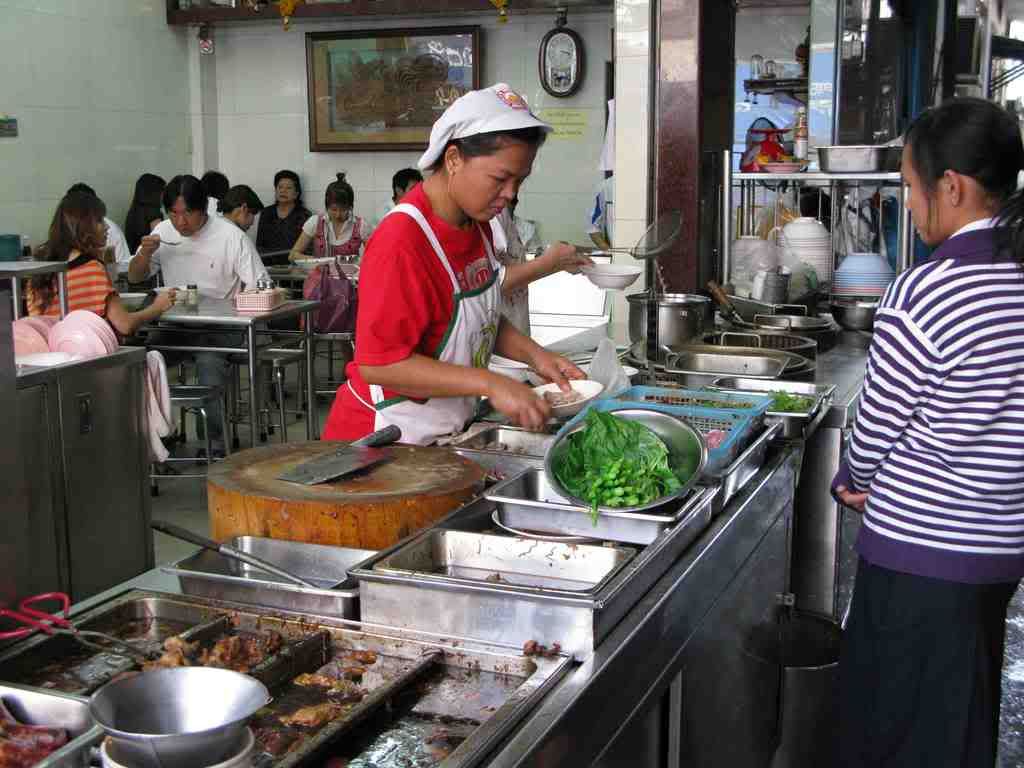
The Thai Public Health Minister has warned consumers about eating a local popular dish, "kway teow." This noodle dish is made traditionally using semi-cooked pork blood, putting consumers at risk of infection from Streptococcus.

The warning didn't mention watching out for bare-handed food handlers.


Seoul, South Korea
A professional soccer team was forced to postpone a match this week after team members succumbed to food poisoning. The team bus had stopped at a diner en route back home, and the soccer players shared a meal of rice mixed with raw beef and vegetables. Afterwards, 19 players complained of diarrhea and nausea. Three were hospitalized briefly.

Janakpuri, India
Customers of the State Bank of India might have experienced unusual delays in service from the Bank's credit card call center last week. Sixty employees of Om Innovation Call Services complained of a stomach ache and began vomiting after eating a lunch provided by their employer. The victims were hospitalized for observation. Most have been released, but a few remain in hospital. The owner of the catering company has been detained and is expected to be arrested.

Hawke's Bay, New Zealand
A fruit picker from the Solomon Islands was diagnosed with Hepatitis A after complaining of nausea and jaundice, and has been sent home. Twenty three people who worked or lived in close contact with the infected orchard worker have been screened and have received an injection of gamma globulin as a precaution. The report makes no mention of what type of fruit the infected worker was harvesting or whether any of the fruit he contacted has been destroyed.

Monday, March 17, 2008

Myanmar Sushi, Anyone?

According to this week's edition of The Myanmar Times, Yangon visitors and residents can now indulge in their craving for sushi and sashimi Thursdays through Sundays. The Shiki Tei restaurant, located in Yangon's Parkroyal Hotel, is offering an all-you-can-eat buffet for US$22.00.

If you want to take full advantage, though, you might want to avoid taking a walk through Yangon's city center fish market before you go.


Saturday, March 8, 2008

Meandering Through Myanmar Markets

As we walked through markets in the different towns and cities, we were struck by both the similarities and the regional differences in the selection of food. Here are a few of the things we encountered.


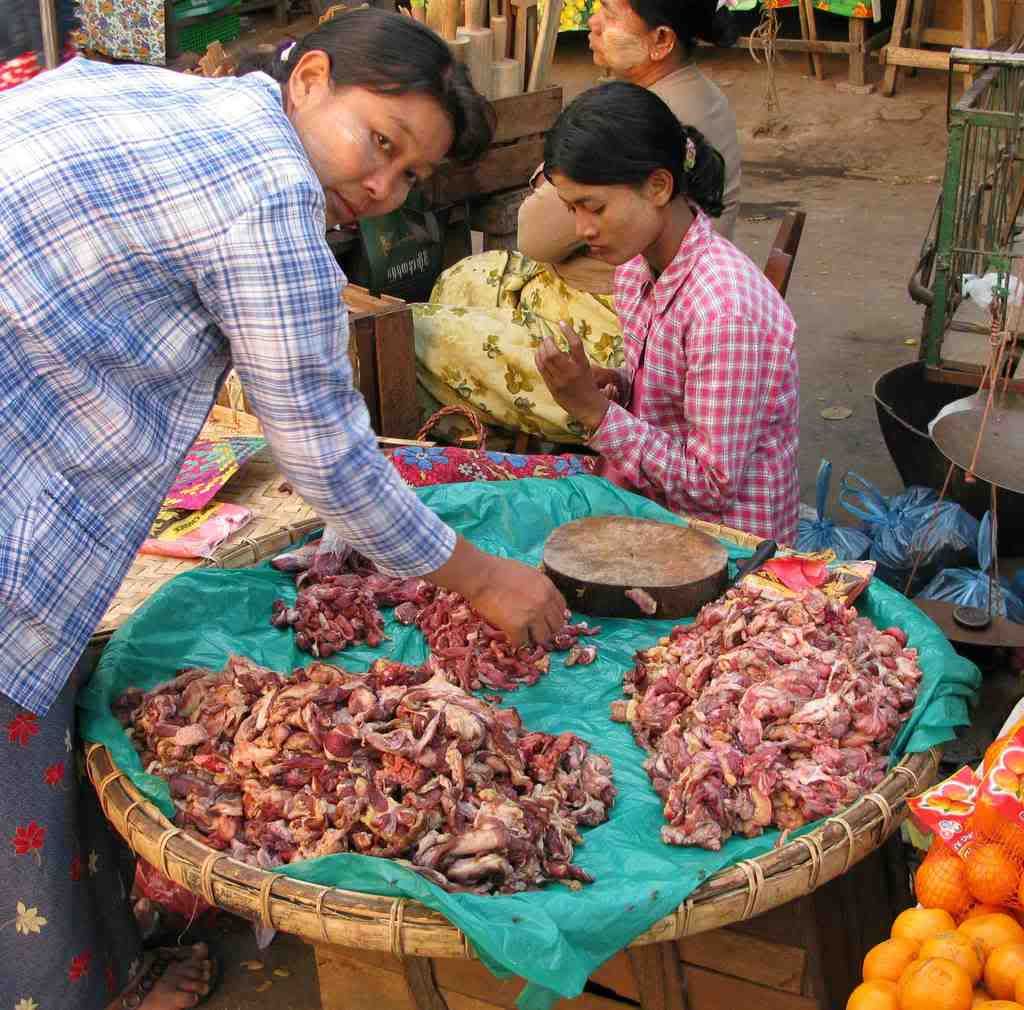
We saw meat trimmings in just about every market. They are used in soups, stews and curries.


We only saw this blood sausage in Mandalay


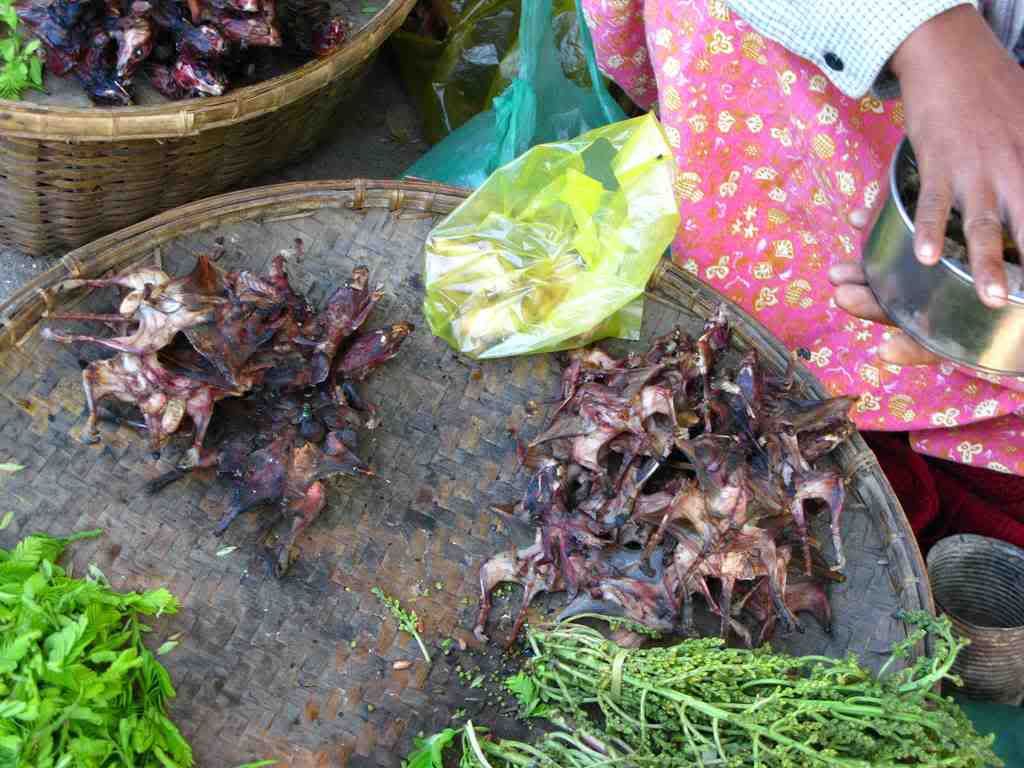
I'm happy to report that the only market where dried rat was on sale was in Bagan. Once was enough!


These young monks, begging for their daily food in the Bagan market, were happy to receive whatever was offered.


I'll leave this Bagan image to your imagination. Would anyone care to hazard a guess?


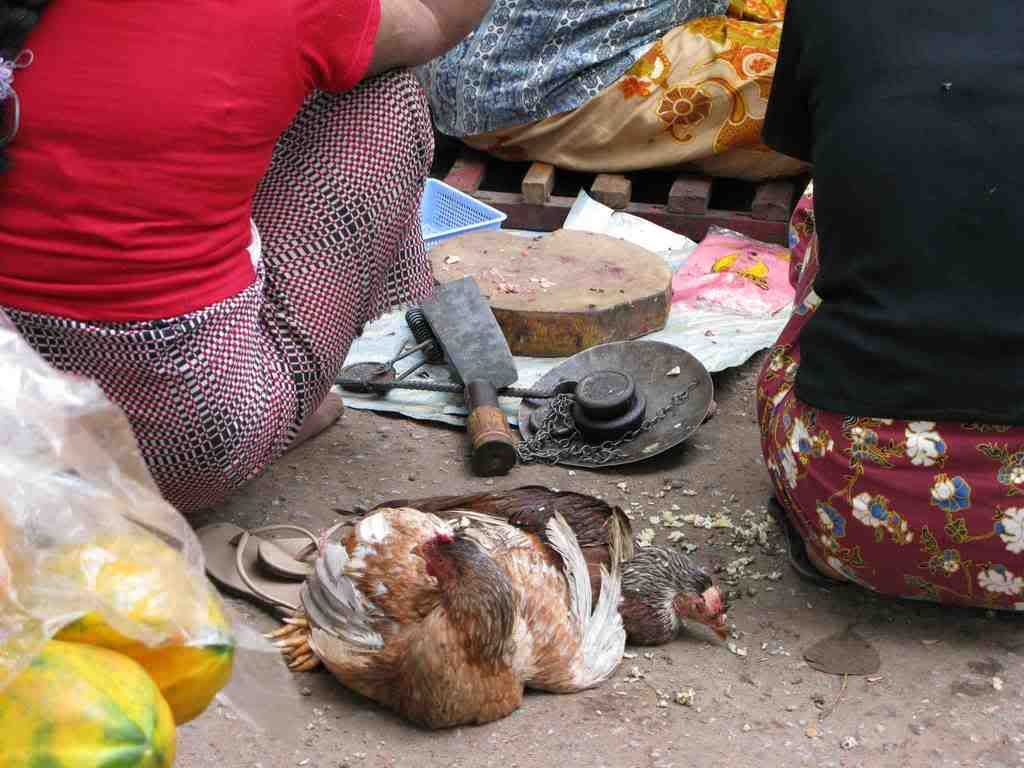
The Yangon city center market was the only place we saw live poultry.


Did these chickens have any premonition of their fate?

Thursday, March 6, 2008

Myanmar Village Scenes

The first village that we visited in Bagan was on the "tourist trail". In fact, we encountered two groups of tourists arriving at this village as we were leaving. Villagers make at least part of their income demonstrating local crafts.


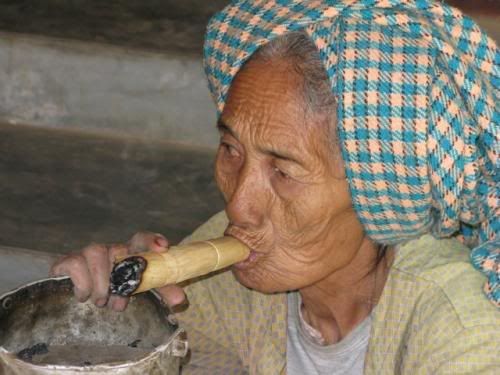
This young woman makes cheroots and demonstrates their use. Notice the deft use of the ashtray.


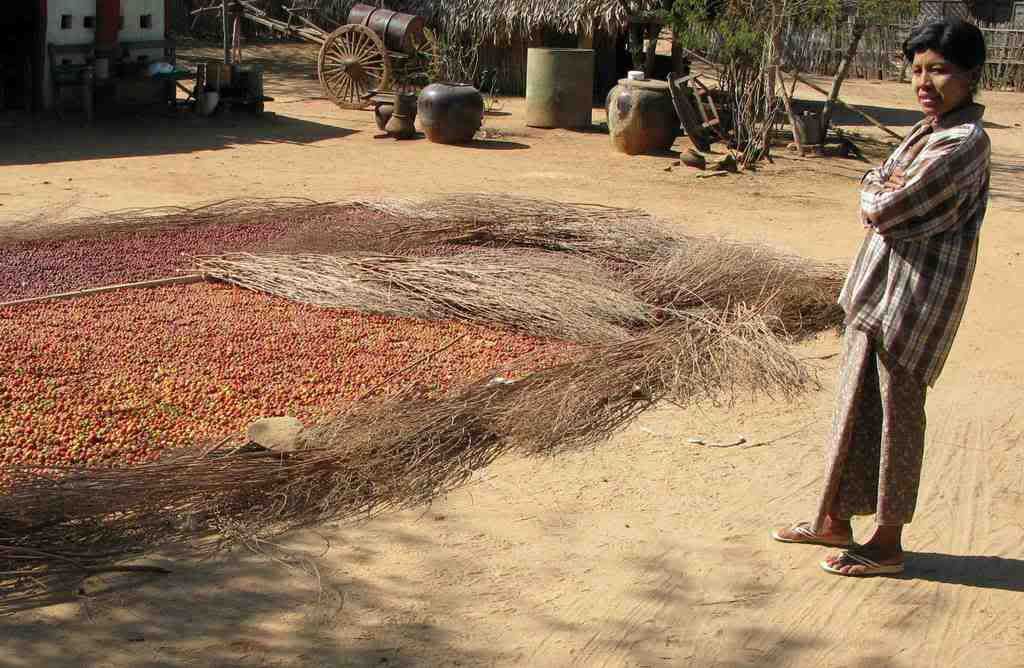
Villagers dry fruit such as these small plums in the sun, and sell them in the local market.


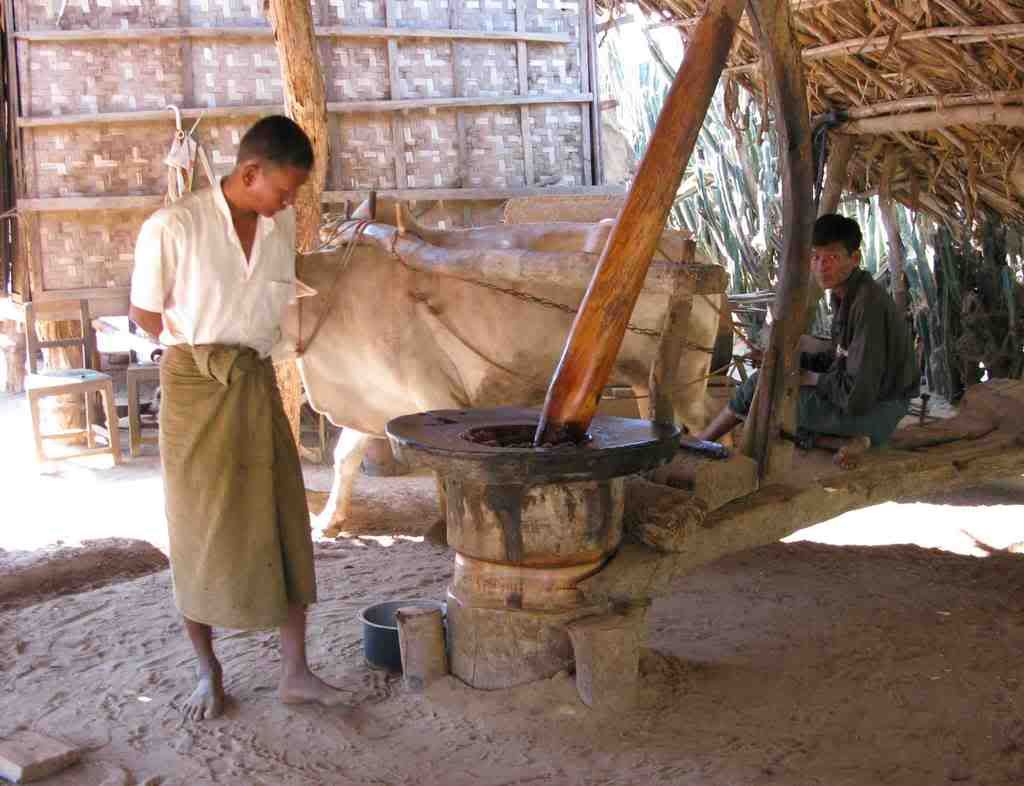
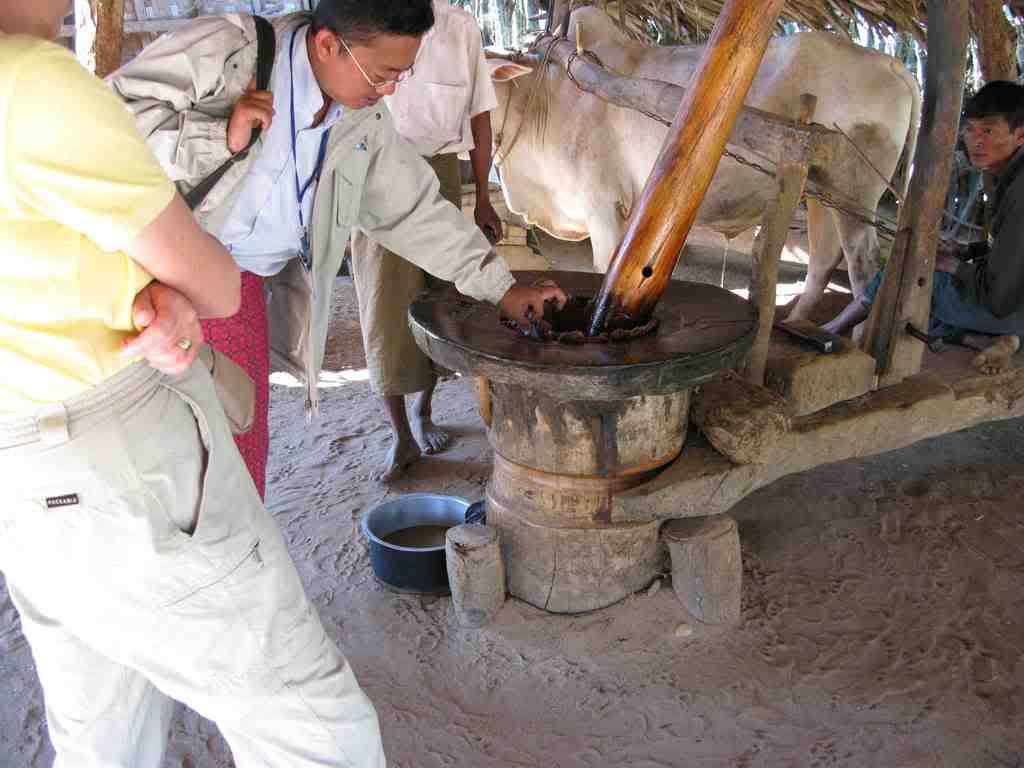
Peanuts and sesame seeds are also sun-dried, and then pressed to extract cooking oil. The oil press is turned using a "one-ox-power" engine, which was happy to pose for this picture.


The day we visited, peanut oil was on the production schedule.


The oil drizzles out of the bottom of the press and collects in the small container just beside the mill operator's left foot. The peanut meal that remains after grinding is fed to the chickens and oxen.

Peanut oil wasn't the only liquid being produced while we watched. The ox took advantage of a break in the action to engage in some production of its own.


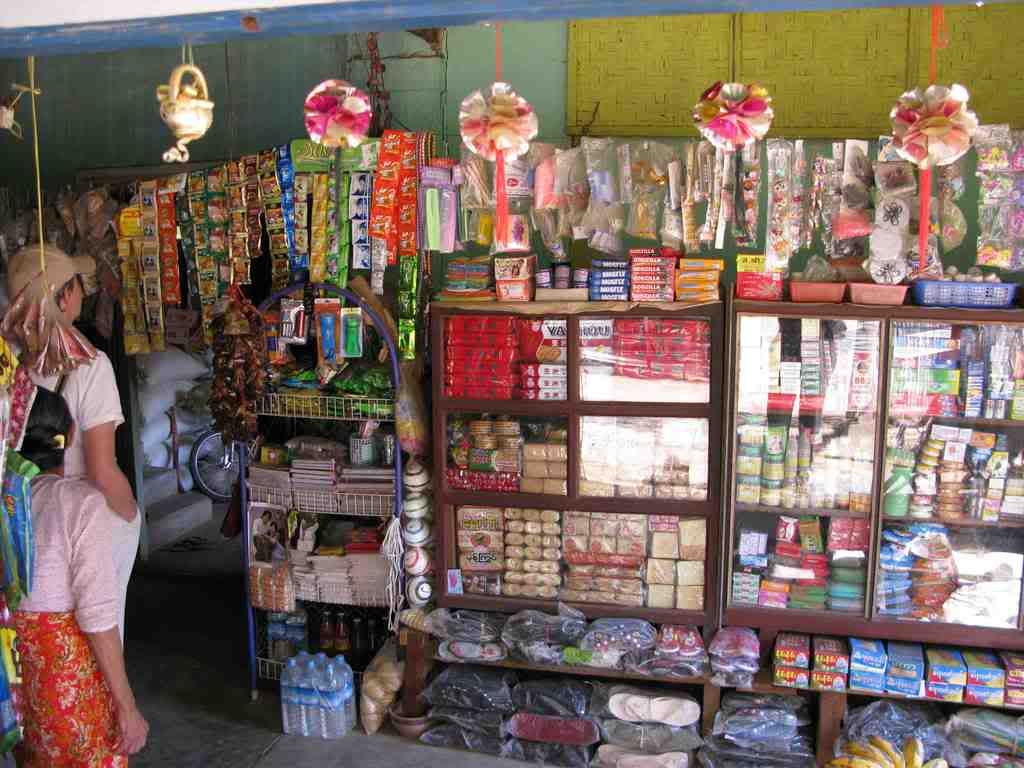
The second village we visited in the area didn't have an oil press, but it boasted both a primary school and a general store. The family that owns the general store is considered "middle class" by Bagan standards, and is the wealthiest family in the village.

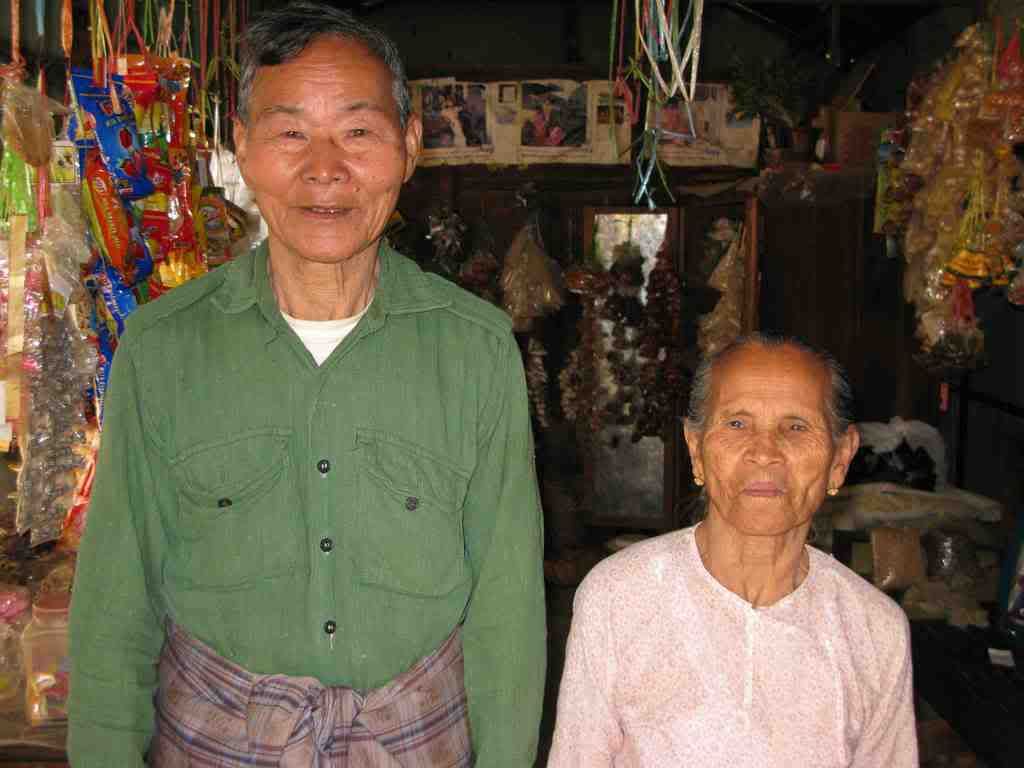
We met the proprietor and his wife.


The shelves were well-stocked with a wide variety of packaged foods and other goods.


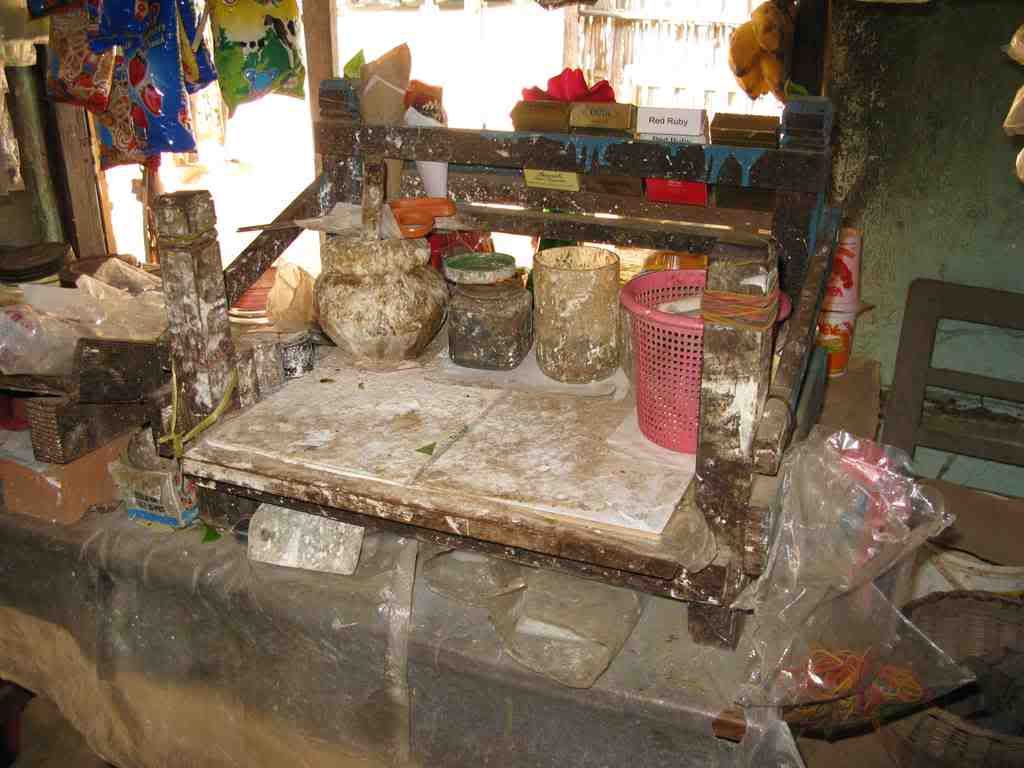
This was a full-service store. It even had a paint department.


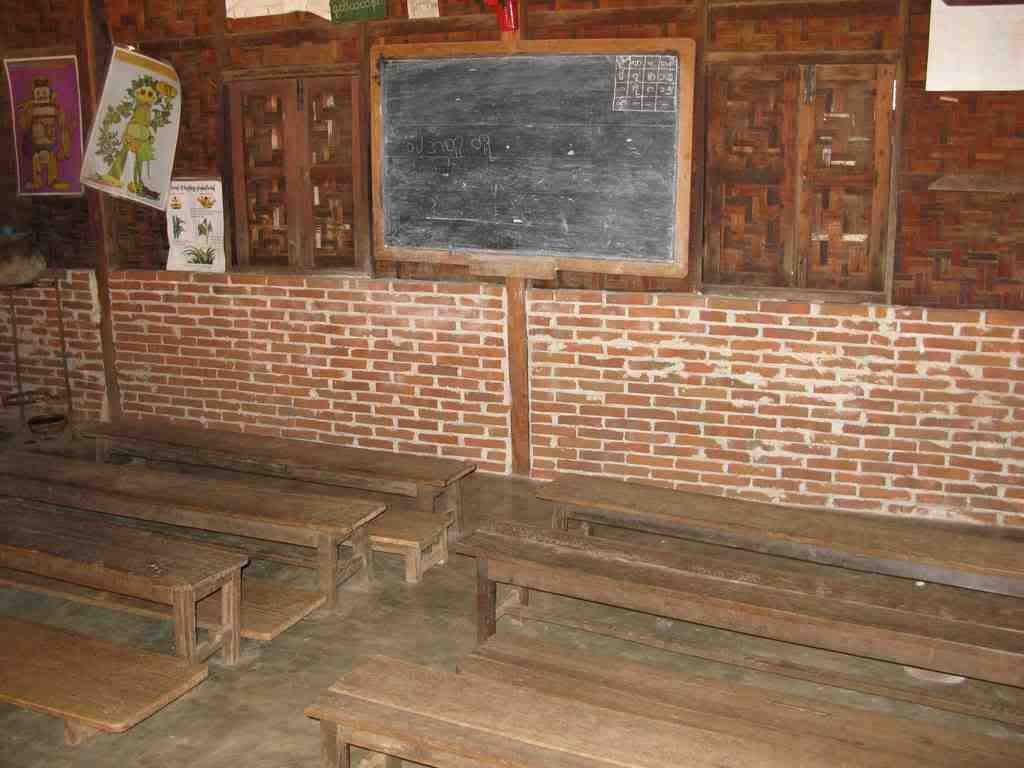
In Myanmar, tourists are not usually permitted to visit the schools. But the day we stopped by this village was a "festival" day and school wasn't in session. We were able to tour the school house, which is divided into five open classrooms. There is just one teacher, and she is responsible for the entire student body (grades one through five).


This is one of the classrooms.


The Myanmar government provides the school building and pays the teacher's (small) salary. It's up to the villagers to pay for school supplies and to find the money to maintain the building. When we visited, the village was gradually accumulating a supply of bricks to repair and enlarge the school.