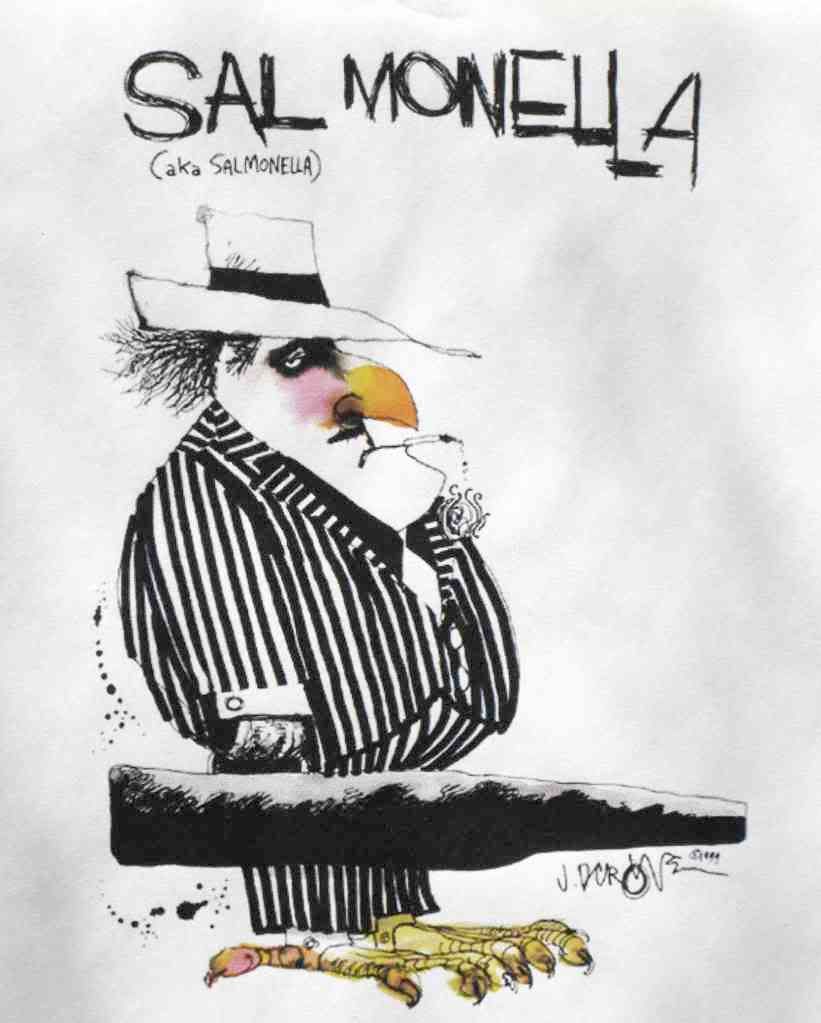
Wednesday, February 18, 2009

Atlantic Smoked Salmon Recalled: Listeria monocytogenes

February 18, 2009

The Canadian Food Inspection Agency warned consumers yesterday that certain packages of Kanata Smoke House brand Smoked Atlantic Salmon may be contaminated with Listeria monocytogenes and have been recalled.

The recall is limited to:

  • Kanata Smoke House brand Smoked Atlantic Salmon (500g pkg): UPC #8 19269 00350 5; Product code 3001; Best Before 2009FE 27

The smoked salmon was sold in CostCo stores in the province of Québec.

Listeria monocytogenes can cause serious – sometimes fatal – illness in susceptible individuals. Individuals who purchased the recalled item should return it to their local CostCo store for a refund.

Listeria-Contaminated Egg Salad Recalled In Canada

February 18, 2009

The Canadian Food Inspection Agency is warning consumers that certain products containing egg salad manufactured  by Plaisirs Gastronomique Inc. may be contaminated with Listeria monocytogenes and have been recalled by the manufacturer.

The recall affects the following egg salad sandwich products, distributed in Québec and Ontario.

  • Ziggy's brand Egg Salad on Whole Wheat Bread (160g): UPC #0 60383 97957 7; Best Before date up to and including February 17
  • Ziggy's brand Egg Salad on White Bread (160g): UPC #0 60383 97956 0; Best Before date up to and including February 17

Egg salad and egg salad sandwiches sold between February 2nd and February 17th, inclusive, at the following chain stores, independent retailers and delis in Ontario and Quebec:

  • Loblaws – Quebec
  • Provigo- Quebec
  • Metro – Quebec
  • IGA – Quebec
  • Bonichoix – Quebec
  • Boni-soir – Quebec
  • Voisin - Quebec
  • Marché Richelieu - Quebec
  • L’intermarché - Quebec
  • IGA Extra – Quebec
  • Omni – Quebec
  • Loeb – Ontario
  • Axep – Quebec
  • Ultramar - Quebec
  • Tradition – Quebec
  • Le dépanneur – Quebec
Listeria monocytogenes can cause serious illness in susceptible individuals. CFIA is urging consumers to check their refrigerators for – and discard – these recalled items.

Salmonella Typhimurium Outbreak: Plainview Probable Second Source

February 18, 2009

CDC reported yesterday evening that foods containing peanuts or peanut products supplied by Peanut Corporation of America have sickened at least 642 US residents, one Canadian, and one dog. The death toll remained unchanged at nine victims.

In its latest update, CDC warned that – although the pace of new cases has dropped from peak levels – new cases are still being reported. This outbreak will not be declared at an end until at least 2-3 weeks pass without any new cases.

With the massive recalls that have taken place over the last month, what is the source of all of these new cases? Delays in issuing recall notices? Recalled foods still in consumers' pantries? Or is there another source?

We reported on February 10th that Peanut Corporation of America had closed its Plainview, TX plant after Salmonella was found in several product samples. Even before Plainview closed, Colorado Natural Grocers by Vitamin Cottage that three outbreak victims had reported consuming the Company's in-store freshly ground peanut butter. Vitamin Cottage issued a precautionary recall notice, even though the link had not been confirmed.

Yesterday, according to CIDRAP, FDA reported having found the outbreak strain of Salmonella Typhimurium in an opened jar of Vitamin Cottage peanut butter taken from the home of one of the Colorado outbreak victims. FDA did not find any contamination on the Company's peanut grinding machines or in fresh samples of peanut butter.

Vitamin Cottage, in a press release issued this morning, confirmed that it had been advised of FDA's findings. And, in an eerie reminder of the early reaction from Peanut Corporation of America, underlined the fact that the Salmonella was recovered from a jar of peanut butter that already had been opened by a consumer. 

In addition to its earlier, precautionary recall, Vitamin Cottage has posted flier in its stores and emailed its 20,000+ subscribers to make sure that its customers are aware of the recall. The Company also has initiated new testing of all bulk products and has stepped up its routine testing.

Other companies already have begun to announce recalls of foods that contain peanuts from the Plainview facility. eFoodAlert is continuing to monitor those recall announcements and update the consolidated recall lists on this site.


Tuesday, February 17, 2009

Allergy Alert: Osem Soup Recalled

Updated February 17, 2009
Original article posted February 15, 2009

Osem Investments, Ltd., an Israeli company controlled by Nestlé, has recalled all date codes of the following product, due to the presence of undeclared milk protein.

  • Osem Meals-on-the-Go, Creamy Pasta Chicken Flavor Noodles (1.94 oz): UPC 0-77455-15580-0

Individuals who are allergic to milk proteins may experience a severe allergic reaction shortly after consuming this product. One individual in Israel with a known allergy to milk protein has reported an adverse reaction to this product.

The recalled item was sold in ShopRiteGiant and Stop & Shop supermarkets in the United States, and may also have been available in other grocery stores.

Allergy Alert: Cole Slaw Recalled in Québec

February 17, 2009

The Québec Ministry of Agriculture, Fisheries and Food has alerted consumers to a recall of salade de choux (cole slaw) that contains undeclared egg protein. 

The cole slaw was packaged by Marché Universel Inc. (d.b.a. Intermarché) at 89, avenue Mont-Royal Est, Montréal, and was sold in variable weight containers bearing the description "Salade de choux crémeuse Tx" (Creamy TX Cole Slaw), and an expiration ("meilleur avant") date up to and including 20 février 2009 (February 20, 2009).

Individuals who are allergic to egg protein may experience a severe allergic reaction upon consuming this cole slaw. Anyone who purchased this product is urged to return it to the retailer for a refund.

Monday, February 16, 2009

Allergy Alert: ShopRite Chocolate Chip Cookies

February 16, 2009

ShopRite has recalled store-baked Chocolate Chip Cookies (24/pkg) due to the presence of undeclared milk. Only those cookies sold in ShopRite of Derby are affected by this recall.

The cookies are labeled with UPC #295735-00000 and bear a Sell by Date on or before February 20, 2009.

Individuals who are allergic to milk protein may suffer a severe allergic reaction shortly after consuming these cookies.

Customer who purchased the cookies should return them to ShopRite of Derby for a refund, or contact ShopRite's Customer Care Center at 1-800-746-7748.

Allergy Alert: 'Dairy-Free' Chocolate Cookies

February 16, 2009

Rakusen's Ltd. has recalled one batch of 'Dairy-Free' Chocolate Chip Cookies, due to the presence of undeclared milk protein, according to the UK Food Standards Agency.

The recalled product is described as follows:

  • Chocolate Chip Cookies (200g): Batch code 8345; Best Before end December 2009

Rakusen has indicated that the presence of milk protein in the batch was due to cross-contamination, and the amount is very low (2 ppm). Nevertheless, an individual who is allergic to milk protein may experience symptoms after consuming the cookies.

Consumers should return the recalled cookies to the place of purchase for a refund.

Saturday, February 14, 2009

Allergy Alert: Frozen Prepared Meals Recalled in Québec

February 14, 2009

The Québec Ministry of Agriculture, Fisheries and Food (MAPAQ) has alerted customers to a recall of the following frozen prepared dishes that contain undeclared allergens.

  • Pâté au Poulet / Chicken Paté (700g): Soy and sulfites
  • Mini Pâté au Poulet / Mini Chicken Paté (300g): Soy and sulfites
  • Pâté au Saumon / Salmon Paté (700g): Soy and sulfites
  • Tourtière (700g): Soy and sulfites
  • Riz Frit au Poulet / Chicken Fried Rice (350g): Milk proteins

The frozen meals were sold under the "Boucherie des Trembles" brand at Boucherie des Trembles, 3870 deMontigny, Montreal, Quebec. All packages bearing a date of 3 février 2009 or before are affected by the recall.

Individuals who are sensitive to soy protein, milk protein or sulfites may experience a severe allergic reaction upon consuming even a small quantity of these recalled products. Consumers who purchased the recalled items should either discard them or return them to Boucherie des Trembles for a refund.

Anatomy of a Peanut Butter Outbreak: The Aftermath

February 14, 2009

One month after Peanut Corporation of America issued the first in a series of four recall notices, and three months after CDC detected the first hint that a multi-state Salmonella outbreak was underway, the fallout from this incident is still expanding in ever-widening ripples across the United States and around the world.


The Victims
As of 9PM (EST) Wednesday, February 11th, CDC reports that nine victims of the Salmonella Typhimurium outbreak have died.

At least 637 cases of salmonellosis have been confirmed to be part of the outbreak. The most recent victim became ill on January 28th. Twenty-three percent of the confirmed outbreak victims have been hospitalized, and the outbreak strain has been recovered from patients in 44 states. One Canadian who traveled to the United States also has been infected.

Ohio has been the hardest hit state in this outbreak with 92 victims, two of whom have died. Both of the dead victims were elderly women. California has reported the second highest total – 76 victims, all of whom have survived. Other states reporting large numbers of outbreak victims include Massachusetts (48 victims), Minnesota (39 victims; 3 deaths), Michigan (35 victims), New York (28 victims) and Virginia (21 victims; 2 deaths). Idaho and North Carolina each have reported one death linked to the outbreak.


The Recalls
Peanut Corporation of America, the source of the contamination, issued a total of three "voluntary" product recalls – on January 13th, January 18th and January 28th  – after FDA and state investigators documented numerous deficiencies at the company's Blakely, Georgia production facility. PCA also was instructed by the State of Texas to recall all products that were shipped from the company's Plainview, Texas facility after numerous sanitary violations were discovered at that location.

Each recall notice that PCA issued prompted a wave of recalls on the part of the company's many customers – not to mention other companies and distributors supplied by those customers.  The recalls have extended beyond the borders of the United States to include Canada, Mexico and New Zealand, as well as countries in Asia and Europe. Even pet treats have been recalled.


The Legal Fallout
At least four victims or their families already have filed lawsuits against Peanut Corporation of America. But the company won't be paying a penny. Yesterday, PCA declared itself insolvent and filed a petition for Chapter 7 bankruptcy. 

Victims seeking compensation for their suffering will have to turn to PCA's insurer, Hartford Casualty Insurance Company. The insurer, however, has filed its own lawsuit in federal court seeking a Declaratory Judgement from the court as to whether or not claims arising out of this outbreak are covered under the liability and umbrella insurance policies that Hartford issued to PCA. Hartford asserts in its petition that,

"An actual controversy exists between Hartford and PCA with respect to one or more issues regarding the coverage afforded to PCA under the Policies with respect to the Salmonella Claims."

While the petition has not mentioned the specific grounds for dispute, logic dictates that Hartford will contend that PCA's own negligence was the source of the contamination and that this outbreak, therefore, is not an insurable incident.

Where can outbreak victims go for relief? The list is shrinking rapidly. The outbreak strain was isolated from samples of King Nut peanut butter and from at least one Kellogg product. Victims who consumed those products may be able to obtain compensation from King Nut or Kellogg – or their insurers. But outbreak victims who became infected as a result of eating some other contaminated peanut product will be out of luck.


The Regulatory Fallout
Certain members of Congress have been trying for many years to push for reforms of FDA, USDA and the country's food safety system. The last serious effort to reform the food safety system occurred during the Clinton era. That efforts foundered in the sea of deregulatory sentiment that prevailed in Washington during the Bush administration. 

President Obama has said that food safety will be a priority in his administration, and Tom Vilsack, the new Secretary of Agriculture, has pronounced his support for a single food agency. It would be nice to see some progress in this area, but any changes must be carefully thought out. 


What Next?
Further increases in the number of confirmed outbreak victims, possibly including more deaths. This outbreak is far from over.

More recalls, as a result of the mandated recall of peanut products from PCA's Plainview, Texas facility.

More calls from regulators, food safety activists – and even from the food industry – for a review of the country's food safety system.

Depressed sales of all peanut butter and peanut butter products until the memory of this outbreak fades.

More outbreaks. Summer – peak season for hamburgers and fresh salads – is around the corner.
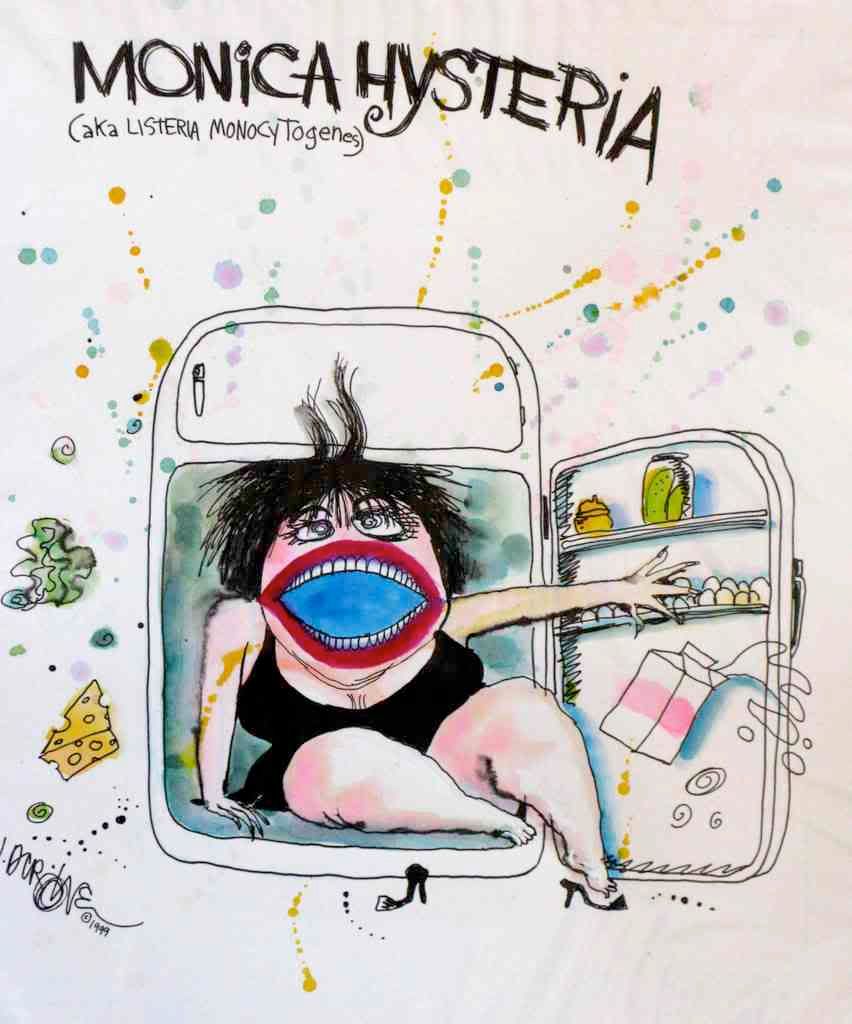
Bits & Pieces: Glass in Ground Beef

February 14, 2009

Real Canadian Superstores has recalled ground beef sold in a Kelowna Superstore after learning that the ground beef may contain pieces of glass, according to a Health Hazard Alert issued by the Canadian Food Inspection Agency.

The recall affects only the following item, sold at the Real Canadian Superstore, 2280 Baron Road, Kelowna, BC:

  • Westfair Foods brand fresh Lean Ground Beef Club Pack (2.5kg tray): UPC #283460913732; Best Before date Feb 12, 09

Consumers in need of additional information can contact Loblaws customer relations at 866-999-9890.

Friday, February 13, 2009

Bits & Pieces: Malaysian Sports Drinks Recalled in Singapore

February 13, 2009

Singapore's Agri-Food and Veterinary Authority has alerted consumers to the presence of unspecified foreign matter in the following sports drinks imported from Malaysia.

  • "18" Sports Drink – Blueberry plus Vit C, B6 & B12 Flavour (600 mL): Expiry dates 24 Oct 2009, 11 Nov 2009 & 11 Dec 2009
  • "18" Sports Drink – Grape plus Vit C, B6 & B12 Flavour (600 mL): Expiry dates 25 Oct 2009 & 12 Dec 2009
  • "18" Sports Drink – Lemon Lime plus Vit C, B6 & B12 Flavour (600 mL): Expiry dates 28 Oct 2009, 9 Dec 2009 & 27 Dec 2009
  • "18" Sports Drink – Original plus Vit C, B6 & B12 Flavour (600 mL): Expiry dates 23 Oct 2009 & 10 Dec 2009

AVA has instructed that importers and retailers of these items recall the contaminated products, and recommends that consumers discard them.

Luigi's Ham Recalled In New Zealand

February 13, 2009

The New Zealand Food Safety Authority has alerted consumers to the recall of several Luigi's Ham products that may be contaminated with Listeria monocytogenes.

The following recalled items, identified with Use By Dates from 09 February 2009 to 04 March 2009, have been recalled.

  • Luigi's Ham Steaks 6-pack
  • Luigi's Ham Steaks 12-pack
  • Luigi's Ham Steaks Random Pack (5kg)
  • Luigi's Gourmet Thick Cuts 2's
  • Luigi's Gourmet Thick Cuts 3's

The recalled ham products were distributed in Pak N Save and New World supermarkets in lower North Island.

No illnesses have been associated with the recalled products. Nevertheless, Listeria monocytogenes can cause dangerous illness in the elderly, the very young and those with weakened immune systems. A pregnant woman who is infected with Listeria monocytogenes may pass the infection to her unborn child, resulting in stillbirth, miscarriage or the birth of a seriously ill infant. 

Consumers are advised to return the recalled ham products to their retailer for a refund.

Thursday, February 12, 2009

Let The Next Wave of Peanut Recalls Begin

February 12, 2009

The Texas Department of State Health Services has ordered Peanut Corporation of America to recall all products ever shipped from the Company's Plainview facility. This decision was NOT contingent on a confirmation of the previously reported possible Salmonella isolation from several Plainview peanut product samples.

Here is the entire text of the Texas DSHS news release, dated February 12, 2009.

DSHS Orders PCA Plainview Plant to Recall All Products

The Texas Department of State Health Services today ordered Peanut Corporation of America to recall all products ever shipped from its Plainview plant. The order was issued after dead rodents, rodent excrement and bird feathers were discovered yesterday in a crawl space above a production area during an in-depth DSHS inspection.

The inspection also found that the plant’s air handling system was not completely sealed and was pulling debris from the infested crawl space into production areas of the plant resulting in the adulteration of exposed food products.

DSHS also ordered the plant, which began operations in March 2005, to stop producing and distributing food products. Though plant officials voluntarily stopped operations Monday night, the DSHS order prohibits the plant from reopening without DSHS approval.

State law allows DSHS to issue such orders when conditions exist that pose “... an immediate and serious threat to human life or health.”

Laboratory tests are being done on food and environmental samples from the plant, but DSHS officials said today’s orders are not contingent on finding Salmonella or other illness-causing organisms.

The orders were signed by DSHS Commissioner David Lakey, M.D.


The consumer-level recalls, no doubt, will begin in the next few days.

Peanut Corporation of America Takes the Fifth

February 12, 2009

Yesterday, the House Subcommittee on Oversight and Investigations held a hearing titled The Salmonella Outbreak: The Continued Failure to Protect the Food Supply

The Subcommittee invited the testimony of several witnesses:
  • Jeffrey Almer, Lou Tousignant and Peter K. Hurley (outbreak victims and their family members)
  • Stephen Sundlof, D.V.M., Ph.D (Director of CFSAN, FDA)
  • Oscar Garrison (Georgia Dept. of Agriculture)
  • Darlene Cowart (President, J. Leek Associates. Inc)
  • Charles Deibel (President, Deibel Laboratories)
  • Sammy Lightsey (Plant Manager, Blakely PCA plant)
  • Stewart Parnell (President, Peanut Corporation of America)
The Subcommittee found it necessary to issue a subpoena to require the attendance of Mr. Parnell.

While the subpoena ensured the presence of Stewart Parnell at the witness table, it could not command his cooperation. Mr. Parnell "took the fifth" and declined to answer all questions put to him. As did Sammy Lightsey, the Plant Manager of PCA's Blakely facility.

But the written record – and the testimony of other witnesses – spoke for them. And exposed the untruths contained in the Company's previous statements.

On January 10, 2009, Peanut Corporation of America released its initial response to the finding of Salmonella Typhimurium in an opened jar of King Nut Peanut Butter. This statement – no longer is listed on the PCA Media Inquiries web page – said, in part,

"PCA's facility and products are frequently and rigorously tested for salmonella and other microbiological contamination, including hourly sampling during processing and subsequent analysis by an outside, independent laboratory. No salmonella has ever been found in any of PCA's product."

This statement was a lie.
  • Company records, obtained by FDA during their two week inspection of the Blakely production facility, documented a dozen Salmonella-positive test reports during 2007 and 2008. PCA arranged for a retest of the Salmonella-positive production lots and shipped product from those lots – sometimes even before having received the test results.
  • Written testimony furnished by Darlene Cowart and Charles Deibel (on behalf of J. Leek Associates Inc. and Deibel Laboratories, respectively) confirmed that both laboratories had, on various occasions, detected Salmonella in samples submitted by PCA.

In the January 13, 2009 press release announcing the initial PCA peanut butter recall, the Company had this to say about itself:
"We are taking these actions with the safety of our consumers as our first priority."
and
"PCA is continuing to work closely and cooperating with the Food and Drug Administration (FDA) and Centers for Disease Control and Prevention (CDC), as well as state officials as part of this ongoing investigation."
and
"The company prides itself on the quality and freshness of its products and strives constantly to maintain an environment in compliance with federal, state and local regulations and guidelines to provide a clean, safe product."

But the January 13th recall included NONE of the lot numbers that had been reported Salmonella-positive. PCA took five additional days – on January 18th – before adding a few of those lots to the recall list. And the rest of the products KNOWN BY PCA TO BE SALMONELLA-POSITIVE were only recalled on January 28th.

Two days ago, Peanut Corporation of America announced the temporary suspension of production at its Plainview, Texas plant in order to "... cooperate with the TDSHS..." while the FDA and the Texas Department of State Health Services "... complete their investigation of the plant's procedures and records of food safety." The regulatory agencies requested the suspension after lab tests found possible Salmonella in some products.

In January 2009 – after the Company's products were linked epidemiologically to the outbreak, and with the FDA inspection already in progress – PCA shipped a truckload of raw peanuts from Blakely to Plainview.

That shipment, according to an email sent by Stewart Parnell to Robert Neligan (an FDA Investigator who was involved in the agency's extensive inspection of the Blakely plant), purportedly was initiated on a verbal "OK" from "Jan" (probably Janet Gray, another member of the FDA investigation team) before the Georgia Department of Agriculture put a "Hold" on the entire Blakely inventory. 

Somehow, it seems unlikely that an FDA Investigator would have agreed to such a request. But the statement in Parnell's email has neither been confirmed nor denied by FDA. Indeed, as far as eFoodAlert can tell, no one has asked FDA to confirm or refute the report.

The full story of this outbreak investigation eventually will be made public – with or without the cooperation of Stewart Parnell and Peanut Corporation of America. Whether or not the Company survives the public washing of its dirty peanuts, however, is a question that remains to be answered.


Wednesday, February 11, 2009

Salmonella Typhimurium Outbreak: Ninth Victim Dies

February 11, 2009

Two days after CDC published its most recent epidemiological update, Ohio has reported the death of a second outbreak victim in the state. The latest victim, an elderly woman, was a resident of Medina County. The other Ohio victim – also an elderly woman – lived in Summit County.

The two neighboring counties are located in the northeast quadrant of the state.

Ohio also reported a total of 92 outbreak victims – 12 more than the number shown in CDC's last update. Onset dates for the state's 92 victims ranged between October 10, 2008 and January 24, 2009. The latest onset date reported by CDC was January 23, 2009, indicating that new infections are still occurring.

With Ohio's latest report included, we can expect CDC's next outbreak tally to rise to at least 612 victims.

CDC will be reported its next epidemiological snapshot late tomorrow (February 12th).

Sausage Products Recalled by Alaska Company

Updated February 11, 2009 with retail distribution list
Original article posted February 8, 2009

Alaska Sausage Company, Inc. has recalled 872 pounds of sausage products that may be contaminated with Listeria monocytogenes.

The recall was initiated after the company's internal testing revealed the presence of Listeria monocytogenes. Only sausages manufactured on January 27, 2009 are included in the recall.

Specifically, Alaska Sausage has recalled the following products:

  • 3-pound packages of "ALASKAN SAUSAGE LINKS WITH REINDEER MEAT." Each package bears a package code of "02709," a sell by date of "03/22/09" as well as the establishment number "EST. 17866" inside the USDA mark of inspection.
  • " 1- and 3-pound packages of "GERMAN BRAND COOKED BRATWURST." Each package bears a package code of "02709," a sell by date of "03/02/09" as well as the establishment number "EST. 17866" inside the USDA mark of inspection.

The recalled sausages were distributed to institutions and retail establishments in Alaska, including Fred Meyer stores (a Kroger supermarket chain).

Consumers who purchased the recalled sausage products should return them to the store for a refund.

Tuesday, February 10, 2009

PCA Closes Plainview (Texas) Plant After Salmonella Found

February 10, 2009

Peanut Corporation of America announced today that the company had suspended operations at its Plainview, Texas plant pending completion of a review of the facility's procedures and food safety records by FDA and the Texas Department of State Health Services.

The decision to suspend operations came after a private lab detected possible Salmonella contamination in samples of peanut meal, granulated peanuts and dry roasted peanuts. It's unclear whether or not the Salmonella finding has been confirmed. Additional testing to determine the genetic strain will take several days. 

According to a press released issued today by the Texas DSHS, the company advised state regulators of their finding. Production in Plainview was suspended at the request of the State. 

The potentially contaminated peanut products have not reached consumers. The peanut meal and granulated peanuts are still in the Plainview facility warehouse; the dry roasted peanuts were shipped to a distributor, but have been detained and recalled.

We reported three days ago that the Plainview plant, although registered with FDA, was operating without a license from – or inspection by – the Texas DSHS. Texas is one of the states with which FDA has contractual arrangements to inspect food processing facilities on behalf of the federal agency. Georgia – the home of PCA's shuttered Blakely plant – is another.

While the Texas DSHS news release indicates that the state is unaware of any illnesses associated with peanuts from Plainview, this status might change. A Colorado-based company, Vitamin Cottage Natural Food Markets, Inc., has recalled fresh-ground peanut butter that was made using peanuts supplied from PCA's Plainview facility. 

Vitamin Cottage took this action after being advised that three outbreak victims in Colorado reported having consumed the company's peanut butter, in addition to other products. There have been no other reports of illness associated with peanuts from Plainview.

Although FDA's focus appears to be shifting to Plainview for the moment, this does not mean that the Blakely investigation is over. According to Associated Press, FBI agents raided both the Georgia plant and the Lynchburg, VA headquarters of Peanut Corporation of America, executing search warrants and removing boxes of documents and other materials.

In addition to the actions being taken by federal and state agencies, the families of at least four outbreak victims have initiated lawsuits against PCA. 

Meanwhile, the number of confirmed victims in this outbreak continues to rise, with additional recent cases being reported – the newest victim fell ill on January 23rd. According to the CDC, at least 600 people in 44 states have been infected with the outbreak strain of Salmonella Typhimurium, as of 9 PM (EST) on February 8th. The death toll remains unchanged at eight.

It will probably take 2-3 weeks for FDA and Texas investigators to complete their review of the Plainview plant. If they uncover similar problems to those found in Blakely, we can expect  yet another tsunami wave of peanut product recalls.

Monday, February 9, 2009

Salmonella Pops Up Again In Alfalfa Sprouts

February 9, 2009

For the second time in less than two months, a Wisconsin producer of alfalfa sprouts has been faced with recalling sprouts that were contaminated with Salmonella

Last December, Sunrise Farms was on the receiving end of the bad news. This time, it's the turn of Jack & the Green Sprouts, Inc. (River Falls, WI).

The River Falls company has recalled alfalfa sprouts and alfalfa onion sprout mix from retail stores and wholesalers in Minnesota and Wisconsin. The sprouts were sold in 5-ounce clamshell packages prior to February 5, 2009. 

The contamination was detected by the Minnesota Department of Agriculture during routine testing. According to Jim Mahoney, the owner of Jack & the Green Sprouts, pre-shipment Salmonella testing of the sprouts was negative, and no Salmonella has been found in the production facility or in other sprout varieties. Mahoney told the River Falls Journal that the sprouts tested by Minnesota already had exceeded their recommended shelf life.

This latest recall is a reminder to regulators, producers and consumers alike that seed sprouts– even in the hands of reputable and conscientious producers – are susceptible to contamination by bacterial pathogens, including Salmonella and E. coli O157:H7.

Consumers who purchased one of the recalled sprout varieties prior to February 5, 2009 should discard any remaining sprouts, and submit a proof of purchase receipt to the retailer for credit or refund.

The Hidden Time Bomb In Queso Fresco Cheeses

February 9, 2009

Late last month, three pregnant Illinois women developed listeriosis after consuming different types of soft cheeses made from raw milk. The three women all were infected with the same strain of Listeria monocytogenes, suggesting that the various cheeses all were made from the same milk source.

All three women transmitted their infection to their infants during their pregnancy. Two of the women miscarried; the third gave birth to a baby that was infected with Listeria monocytogenes.

Coincidentally, the New York State Department of Agriculture and Markets warned the public last week against consuming a specific batch code of Queso Fresco produced by Peregrina Cheese Corp. (342 Ten Eyck St., Brooklyn, NY 11206) after detecting Listeria monocytogenes in a sample of the cheese.

As a result of the State's finding, Peregrina Cheese has agreed to recall 14-ounce packages identified with batch code 4461.

This is the second time in 15 months that Peregrina has recalled Queso Fresco after New York State found Listeria monocytogenes in a sample. The previous recall, which took place in December 2007, also involved just a single batch code.

Listeria monocytogenes typically causes no more than mild gastrointestinal or flu-like illness in most individuals. But people with weakened immune systems, the elderly, and the very young are at risk of suffering life-threatening symptoms. 

Pregnant women, while often only suffering mild symptoms, often pass the Listeria monocytogenes infection to their infants in utero. Too often – as happened in Illinois – this results in premature birth, a stillbirth, or the birth of a seriously ill baby.

To minimize the risk of contracting an infection with Listeria monocytogenes, pregnant women should avoid foods – notably soft cheeses, raw milk, other unpasteurized dairy products, ready-to-eat deli meats and smoked fish – that are especially likely to be contaminated with this pathogen. 


Sunday, February 8, 2009

Allergy Alert: Aqua Star Recalls Shrimp Appetizers

February 8, 2009

Aqua Star has recalled the following Shrimp Appetizers, which contain undeclared peanuts. 

  • Shrimp Appetizers (13.5 oz): Lot codes 010 08254, 010 08255, 010 08256, 010 08257, 010 08282 and 010 08283

An individual who is allergic to peanuts may suffer a severe – possibly life-threatening – reaction shortly after consuming even a small portion of the recalled product. One illness has been reported. 

The recalled Shrimp Appetizers were sold nationwide through retail grocery stores.

Florida: The 44th State

February 8, 2009

The number of states reporting victims in the Salmonella Typhimuium outbreak has risen to 44. 

The Florida Department of Health reported on February 4th that the state had confirmed the outbreak strain of Salmonella Typhimurium in a resident of Bradford County, FL.

The victim was hospitalized briefly, but has been discharged.

The state is still investigating to determine what product(s) the Florida outbreak victim might have consumed.


Saturday, February 7, 2009

Emergency Relief Supplies Recalled: Adding Insult to Injury

February 7, 2009

The Arkansas Department of Health and the Texas Department of State Health Services are warning residents in both states that some of the relief supplies distributed by FEMA contain peanut butter packets that have been recalled.

At least two different suppliers of emergency meals have notified FEMA of the problem.

On January 19th, Red Cloud Food Services recalled three production lots of Standing Rock brand "Commercial Meal Kits". The shelf-stable meal kits bear production date codes of 092208, 092308 and 092508, and expiration dates of 092209, 092309 and 092509. 

According to the Texas DSHS web site, these meals may have been distributed to food banks in that state. The Arkansas Department of Health reports that the meals also were distributed to disaster survivors in Arkansas and Kentucky.

In a separate development, Valley Services, Inc. has recalled Traditions™ emergency shelf stable meal kits, sold to the Defense Supply Center between September 11, 2008 and September 26, 2008.

Peanut Corporation has now been suspended by USDA from participating in any government contracts, either as a contractor, agent or subcontractor for one year, effective immediately. The federal agency has initiated the process of debarring PCA from any government contracts for a three-year period. PCA management has 30 days to respond to these actions on the part of USDA.

Meanwhile, the recall tsunami continues unabated.

Salmonella Typhimurium Outbreak: Is PCA Texas Facility Involved?

February 7, 2009

The Associated Press reported 3 days ago that Peanut Corporation of America's Plainview, Texas facility was operating without a license from the state of Texas.

The plant was registered with FDA and with the Texas Comptroller of Public Accounts, but hadn't made it onto the radar screen of the Texas Department of State Health Services.

According to the AP report, the state health agency only became aware of the Plainview facility once the Salmonella Typhimurium outbreak had been linked to PCA's Blakely plant. 

FDA investigators inspected the Plainview plant in January as part of the Salmonella outbreak investigation, but did not detect any contamination at that time. 

A recall announced this past week by a Colorado company, however, suggests that all might not be well in Plainview.

Vitamin Cottage Natural Food Markets, Inc. has recalled its packed, fresh-ground peanut butter because the company is concerned that their peanut butter may be a source of Salmonella Typhimurium. The company took this action after being told by the Colorado Department of Public Health and Environment that three Colorado victims of the Salmonella Typhimurium outbreak had consumed the fresh-ground peanut butter.

In announcing its precautionary recall, Vitamin Cottage stated that its peanut butter was made using peanuts from PCA's Plainview, TX facility, and did not contain peanuts from Blakely, GA. The company also mentioned that the three victims in question may also have consumed other food items that contained peanuts or peanut products from the Blakely, GA plant. And Salmonella has not been recovered from Vitamin Cottage peanut butter.

Whether or not the connection with Plainview peanuts proves to be coincidental, Vitamin Cottage has acted responsibly to remove a potential source of Salmonella from the retail market.

Now it's up to FDA and state inspectors to revisit PCA's Plainview facility and carry out the same in-depth investigation that was pursued in Blakely.


Friday, February 6, 2009

Peanut Butter Outbreak Goes To The Dogs

February 6, 2009

The Oregon Department of Human Services reported today that it has confirmed the first US case of salmonellosis in a dog that may be linked to the national outbreak of Salmonella Typhimurium illnesses.

CDC had confirmed 575 cases, spread across 43 states as of 9PM (EDT) on February 4th. The most recent reported victim became ill on January 22nd.

Of the 575 victims, approximately 22% have been hospitalized. The Salmonella Typhimurium outbreak may have contributed to eight deaths. The number of new cases appears to be declining, but it is too soon to declare the outbreak over.

The Oregon report does not specifically state that the canine victim was infected with the outbreak strain of Salmonella Typhimurium. But the agency also found Salmonella in a package of dog biscuits in the household. The contaminated dog biscuits were identified in the Oregon report as "... a box of Happy Tails Multi-Flavor Dog Biscuits that was sold at an Albertsons in Roseburg."

Happy Tails is one of several brands of dog biscuits recalled after the manufacturer determined that they contained an ingredient manufactured in Peanut Corporation of America's Blakely, GA facility.

Dog owners should check the recall status of peanut butter-flavored dog treats and discard or return any recalled items to the store. 

Bits & Pieces: Customers Find Pebbles in Frozen Chili

Updated February 6, 2009 with link to retail distribution list
Original article posted February 3, 2009

Windsor Quality Food Co., Ltd. has recalled approximately 676,560 pounds of frozen chili beef products after receiving customer complaints about small stones or pebbles in the product.

The company received 16 complaints in all, and four of the customers reported injuries.

The recalled products include:

  • 5-pound bags of frozen “Whitey’s™ Chili with Beans, PREMIUM, No MSG.”: Product number “48359”; Code dates “4918311,” “4918318,” “4918322,” “4918325,” “4918329,” “4918336,” “4918339,” “4918346,” “4918347,” “4918353,” “4918357,” “4919006,” “4919008,” or “4919013” located on the back of the bag. Establishment number “Est. 7163” inside the USDA mark of inspection.
  • 20-pound cases of frozen “Whitey’s™ Chili with Beans, PREMIUM, No MSG.”: Product number of “48359”; Code dates “4918311,” “4918318,” “4918322,” “4918325,” “4918329,” “4918336,” “4918339,” “4918346,” “4918347,” “4918353,” “4918357,” “4919006,” “4919008,” or “4919013” located on the side of the case. Establishment number “Est. 7163” inside the USDA mark of inspection.

The frozen chili beef was processed on Nov. 6, 2008 through Jan. 13, 2009, and distributed mostly to food service establishments nationwide. There was also some limited retail distribution.

USDA has posted a list of all retail consignees for this recalled meat. Consumers also can obtain more information about this recall by calling the company's Senior Vice President, Lynn Hall, at (512) 249-3416.


Allergy Alert: Belgian Chocolate

February 6, 2009

Sweet Luxuries Ltd. has recalled has recalled one batch code of Belgian chocolate, due to the presence of undeclared milk protein, according to an Allergy Alert issued by the UK Food Standards Agency

Sweet Luxuries has withdrawn the following product from sale, and has arranged to relabel all future production to reflect the presence of milk protein.

  • Sugar Lessss Belgian Plain Chocolate (42 g): Best Before 02/2009; Batch Code L0022

Individuals who are allergic to milk protein may suffer a severe allergic reaction shortly after consuming even a small portion of this product. Consumers who purchased the withdrawn item should either discard it or return it to the store for refund.


Allergy Alert: British Bakeries Recalls Crumpets

February 6, 2009

The UK Food Standards Agency has alerted consumers that some crumpets produced by British Bakeries contains traces of casein (a milk protein), not declared on the product label.

The following affected crumpets, identified by code X73, are being withdrawn and relabeled:

  • ASDA ‘Smartprice’ 6 Crumpets
  • ASDA 8 Crumpets
  • ASDA 12 Crumpets
  • Sainsbury’s Basics 6 Crumpets
  • Morrisons 6 Crumpets
  • Morrisons 12 Crumpets
  • Mothers Pride 8 Crumpets

Individuals who are allergic to milk protein may experience a severe allergic reaction soon after consuming one of these products. 

Sainsbury's customers who purchased the recalled item should return their purchase to the store's customer service desk for a refund.

Thursday, February 5, 2009

Enoki Mushrooms Recalled: Possible Listeria monocytogenes

Updated February 5, 2009 with retail recall information
Original article posted February 2, 2009

Phillips Mushroom Farms (Kennett Square, PA) has recalled enoki mushrooms that may be contaminated with Listeria monocytogenes. The mushrooms were packaged under various brand names and distributed through retail and food service channels in the United States and Canada.

The following items, which were available for sale between 01/13/09 and 01/30/09, have been recalled:

  • PMF (3.5 oz green bag): UPC 33383 67540
  • Phillips Enoki (3.5 oz blue bag): UPC 33383 67540
  • Phillips Enoki (1 lb. bulk bag): Food Service Distribution only
  • Mr. Mushroom (4 oz Red & Green bags): UPC 33383 67543
  • Phillips Enoki (3.5 oz overwrapped pkg): UPC 33383 67541
  • Organic Phillips Enoki (3.5 oz overwrapped pkg): UPC 21706 67363
  • Publix Enoki (3.5 oz overwrapped pkg): UPC 41415 03186
  • Giorgio Enoki (3.5 oz overwrapped pkg): UPC 33383 67451
  • Moonlight Mushroom Enoki (3.5 oz overwrapped pkg): UPC 33383 67540
  • Pennsylvania Dutchman Enoki (3.5 oz overwrapped pkg): UPC 33383 67451
  • Fresh Obsession (3.5 oz overwrapped pkg): UPC 69200 00916
  • Country Fresh Enoki (3.5 oz overwrapped pkg): UPC 33383 67541
  • Monterey Gourmet Enoki (3.5 oz overwrapped pkg): UPC 37102 67820
  • Elite Enoki (3.5 oz overwrapped pkg): UPC 34635 41866

Phillips took this action after receiving a positive Listeria monocytogenes test result on a single sample during routine product testing. The company has ceased distribution of the product and is investigating the source of the contamination.

Listeria monocytogenes may cause life-threatening illness in susceptible individuals, including the elderly, very young children, people with weakened immune systems, and pregnant women. While no illnesses have been reported, consumers who purchased any of the recalled products are advised to return them to the place of purchase for a refund. Anyone with questions can contact Phillips Mushroom Farms directly at 1-800-722-8818.

The following retail supermarket chains have posted Enoki Mushroom recall notices:


The Canadian Food Inspection Agency reports that the following Enoki Mushrooms were distributed in Canada:

  • Fresh Obsessions brand Enoki Mushrooms (99g packages): UPC #0 69200-00916 9; sold in Metro stores in the province of Ontario


Tuesday, February 3, 2009

Allergy Alert: Lobster & Shrimp Dip

February 3, 2009

The Canadian Food Inspection Agency has issued an Allergy Alert for Summersweet Lobster & Shrimp Dip, due to the presence of undeclared milk in the dip.

The dip – manufactured by Charcuterie La Tour Eiffel, Inc., Blainville, Québec – was distributed in the provinces of New Brunswick and Québec.

Individuals who are allergic to milk may experience a severe allergic reaction shortly after consuming even a small portion of the following:

  • Summersweet Lobster & Shrimp Dip (227 g pkg): UPC #0 67950 00103 7; Lot code 751353; Best Before 09FE12 (February 12, 2009)

Consumers with questions about this recall can contact the company directly at 514-919-5986.

Allergy Alert: Heinz Australia Recalls Mustard Sauce

February 3, 2009

Heinz Australia has recalled a single batch of Heinz brand Dijon Mustard Sauce with Orange, due to the presence of undeclared egg and milk.

The recalled mustard sauce was sold nationwide in Woolworths stores only, and has been on store shelves for approximately two months.

The recall applies to:

  • Heinz Dijon Mustard Sauce with Orange (370mL plastic bottle): Batch Code 3248; Best Before 19/11/10

Individuals who are allergic to eggs or milk may experience a severe allergic reaction shortly after ingesting even a small quantity of the recalled product. Consumers are asked to return this item to the place of purchase for a refund. 

Saturday, January 31, 2009

UK Company Recalls Cheese Sold In USA

January 31, 2009

Cropwell Bishop Creamery Limited of England has recalled specific lot numbers and date codes of Blue Stilton and Shropshire Blue Cheese, because the cheese may contain Listeria monocytogenes.

The recall comes after earlier recalls announced by vendors of the cheese, both in the United States and Canada.

Cropwell has recalled the following products:

  • Ilchester Shropshire Blue (12 oz): Lot #3052822700; Exp date, 2/10/09
  • Ilchester Shropshire Blue (7 to 9 oz): Lot #3052828700; Exp date, 4/19/09
  • Ilchester Shropshire Blue (1/8 lb): Lot #3052835200; Exp date, 4/27/09
  • Ilchester Shropshire Blue (1/16 lb): Lot #3375821700; Exp date, julian code 8217
  • Ilchester BabyBlue Stilton (2/5 lb): Lot #3375834000 and 3375829500; Exp date, julian codes 8340 and 8295
  • Ilchester Blue Stilton (1/8 lb): Lot #3375828400; Exp date, julian code 8284
  • Ilchester Blue Stilton  (2/9 lb): Lot #3375828400, 3375821700, 3375833300, 3375829400, 3375827800, 3375824500 and 3357816400; Exp date, julian codes 8284, 8217, 8333 , 8294, 8278, 8245 and 8164
  • Ilchester Blue Stilton (1/9 lb): Lot #3375833600, 3375829400, 3375824500, 3758162000 and 3375825200; Exp date, julian codes 8336, 8294, 8245, 8162 and 8252
  • Ilchester Blue Stilton (1/16 lb): Lot #3375825400; Exp date, julian code 8254
  • Ilchester Blue Stilton (18/1 lb):  Lot #3052829500 and 3052830800; Exp dates, 4/19/09 and 5/2/09
  • Ilchester Blue Silton (6/3.5 oz crock): Lot #2216832300; Exp date, 3/26/09
  • Global Cheese Market Stilton (7 to 9 oz):  Lot #714568 and 714720; Exp dates, 3/22/09 and 3/29/09
  • Global Cheese Market Stilton (1/5 lb): Lot #713939, 715973 and 716368; Exp dates 3/9/09, 5/3/09 and 5/17/09
  • Trader Joe’s Blue Stilton: purchased on or before 12/31/08. Film-wrapped. 
  • Trader Joe’s Shropshire Blue Cheese: purchased on or before 1/4/09. Film-wrapped. 
  • Cropwell Bishop Creamery Blue Stilton: purchased on or before 12/31/08
  • Cropwell Bishop Creamery Shropshire Blue Cheese: purchased on or before 12/31/08

The cheeses were sold in grocery stores and retail stores across the United States, including the following. Please use the live links to navigate to the store web sites for details.

According to Cropwell, the decision to recall the cheese came as a result of "recent testing" that detected the potential for contamination. The first Canadian recall of Cropwell Blue Stilton was announced on December 10th, and affected cheese sold through Costco across Canada. UK authorities advised other countries in the European Union about the contamination on December 31, 2008.

Perhaps FDA was otherwise occupied with peanut butter, but it seems to have taken a very long time for this potentially contaminated cheese to be recalled from the US marketplace.

Allergy Alert: French-made Chocolate Recalled in UK

January 31, 2009

The UK Food Standards Agency advised consumers yesterday that a single date code of Bovetti Dark Chocolate with Cocoa Beans (100g) contains undeclared casein, a milk protein, and is being recalled.

The chocolate was made in France and imported into the UK by Trans Manche Food Ltd. The recalled bars were sold in Waitrose, and may also have been available in other retail stores in the UK.

The recalled item is described as:

  • Bovetti Dark Chocolate with Cocoa Beans, 100g: Best before 30 September 2009; Product code: L246

Individuals who are allergic to milk protein may experience severe symptoms shortly after consuming the recalled chocolate. Consumers should return the recalled Bovetti chocolate to the store for a refund.

The UK Food Standards Agency is working with its French counterpart to determine whether any additional actions are needed.