Showing posts with label raw milk. Show all posts

Thursday, December 9, 2010

Outbreaks and Alerts: December 9, 2010

A daily digest of international outbreaks, alerts and food safety news

If you would like to receive automatic email alerts for all new articles posted on eFoodAlert, please click here or submit your request using the sidebar link. Please include "subscribe eFoodAlert" in the subject line.


United States
  • Midland, TX. December 2nd: The Midland Health Department reported Thursday it has observed more than 10 times the typical number of Shigella diarrhea cases since October – 53 versus the expected incidence of 3-4 per month.
  • Gibbon, MN. December 7th: State Agriculture Department investigators have seized several hundred gallons of raw milk and other food produced by Mark Hartmann's dairy farm in defiance of a state order to halt production at the farm. Raw milk produced at Hartmann's farm was the source of eight cases of E. coli O157:H7 in May and several other instances of gastroenteritis in July and August.
  • Boise, ID. December 8th: Health officials have found evidence of E. coli at a privately run prison south of Boise after five inmates at the Idaho Correctional Center became ill around December 1st.
  • Bellaire, MI. December 8th: The Northwest Michigan Health Department has issued a norovirus advisory for the region. Health workers suspect that norovirus was behind two outbreaks of gastroenteritis in Grand Traverse County in October - one linked to a company luncheon and the other at a day care center.
  • Maine. December 9th: The Maine Center for Disease Control and Prevention (Maine CDC has issued a norovirus health advisory after receiving reports of five outbreaks from four counties in the last 10 days. Four of the outbreaks occurred in long term care facilities, and the fifth was in a school setting.
  • Washington, DC. December 9th: EPA has published a petition filed by 82 public health and environmental groups to ban the antibacterial agent triclosan for nonmedical use. A 60-day comment period has been announced.
  • Brown County, Kansas. December 9th: The Kansas Department of Health and Environment has issued a boil water advisory for the City of Willis and portions of the City of Horton after a loss of water pressure was reported in the public water system.


Canada
  • Peterborough, ON. December 8th: The Peterborough Regional Health Centre continues to restrict visitors to its B3 medical unit, due to an outbreak of Clostridium difficile, MRSA and vancomycin-resistant Enterococcus. No new cases have been identified.


Europe
  • Llandudno, Wales. December 8th: Badgers Café is facing five hygiene and cleanliness charges after an outbreak of Salmonella Enteritidis PT14b last year.
  • Wiltshire, UK. December 8th: Churchfields School remains closed as investigations continue into an illness outbreak, thought to be due to norovirus. Twenty-four staff members are absent with symptoms of vomiting and diarrhea.
  • Liverpool, UK. December 8th: Banks Road Primary School in Garston is experiencing an outbreak of viral gastroenteritis. About 55 of the 209 pupils are affected.
  • UK. December 9th: The Health Protection Agency has recorded 43 outbreaks of norovirus in hospitals since the beginning of November. Thirty-nine of the outbreaks have led to ward closures.
  • Saint-Michel, France. December 9th: A 14-year old student at Puygrelier College has been hospitalized and 143 are ill with food poisoning. A meal served to the students on Tuesday is suspected to be the source of the outbreak. Lab analyses are in progress.
  • Östersund, Sweden. December 9th: The municipality believes that it has found the source of the Campylobacter contamination in its municipal water system. The parasite is thought to have entered the system in a multi-family dwelling in the Odensala neighborhood of Östersund.


Asia, Africa and the Pacific Islands
  • Putrajaya, Malaysia. December 8th: The Health Ministry has ordered a probe of the waters of the Kenyir Lake to determine the extent to which it is contaminated with E. coli, following media reports of high levels of the bacteria having been found in the waters of the lake by a study undertaken by Universiti Malaysia Terengganu.
  • Morogoro, Tanzania. December 8th: Four people have died and 58 were hospitalized in a new outbreak of cholera. The first cases in the area were reported two weeks ago.
  • Singapore. December 9th: Cordial drinks and chicken frank rolls were suspected to have caused the mass food poisoning incident at the Singapore Sports School canteen last month which affected 106 students. A sample of chicken frank rolls was found to contain low levels of Bacillus cereus, and one of the food handlers also tested positive for Salmonella.
  • Cebu, Philippines. December 9th: The number of reported cases of typhoid fever continue to rise in two villages of Alegria. At least 30 residents have been hospitalized; 160 are experiencing symptoms of typhoid. Contaminated water is suspected to be the source of the outbreak.


Saturday, November 6, 2010

Rare E. coli Strain Behind Raw Milk Cheese Outbreak

Outbreak strain "...never been seen before in the PulseNet database."

A raw milk cheese manufactured by Bravo Farms (Traver, CA) is suspected to be the source of a five-state outbreak of E. coli O157:H7. The Dutch Style Gouda Cheese was among those offered for sampling and for sale in Costco stores in Arizona, California (San Diego), Colorado, Nevada and New Mexico – the same five states that have reported the illnesses. Twenty-five infections have been reported so far.

According to CDC, this particular outbreak strain is a rare one. It has never before been reported to the federal PulseNet database – the national subtyping network made up of state and local public health laboratories and federal food regulatory laboratories that performs molecular surveillance of foodborne infections.


What do we know about this outbreak?
  • 25 patients have been reported to be infected with this rare strain of E. coli O157:H7.
  • At least 9 people have been hospitalized – one of them with suspected hemolytic uremic syndrome.
  • The victims live in Arizona, California, Colorado, New Mexico and Nevada.
  • The youngest victim is 2 years old, and the oldest is 81 years old.
  • The earliest onset date in this outbreak was October 16th.
  • There is a good likelihood that more cases will be reported, since the suspect food was on the market until at least November 1st.
  • E. coli O157:H7 has been found in an opened package of Bravo Farms Dutch Style Gouda Cheese obtained from one of the 25 outbreak victims. The package was purchased at Costco.

What do we know about the outbreak victims?
Three of the affected states have released additional information that is not contained in the CDC report.
  • The lone California victim is a six-year old girl who lives in San Diego County. San Diego was the only Costco location in the state that carried the implicated cheese.
  • New Mexico's three victims include a 41-year-old man and 7-year-old girl from Bernalillo County and a 4-year-old boy from Valencia County.
  • Colorado has received a total of eight illness reports from three counties: Douglas (4), Arapahoe (3) and Boulder (1). All eight were Costco shoppers, most of whom sampled cheese during a “Cheese Road Show” at Costco Oct. 14-17.

What is the status of the outbreak investigation?
Based on the results of patient interviews and on the finding of the outbreak strain in an opened sample of cheese that had been purchased at Costco by one of the 25 victims, attention has been focused on Bravo Farms Dutch Style Gouda Cheese. This raw milk cheese is a product of Bravo Farms, a cheese factory that is located in Traver, California. The company manufactures eight varieties of aged raw milk cheeses, all of which can be purchased on-line via the Bravo Farms web site. The company is cooperating with FDA and state investigators, but has not yet issued a formal public recall notice.

No doubt, FDA and California investigators already are on-site at Bravo Farms, carrying out an intensive investigation and sampling. Testing for E. coli O157:H7 will not be limited to the specific variety of cheese that is thought to be the source of this outbreak; it will extend to all eight varieties, and will include extensive environmental testing, too. The herd of dairy cattle that supplies milk to the cheese factory most likely also will be examined for the outbreak strain. The goal is to determine both the source and the extent of the problem.


What should consumers do?
Based on the information collected so far, the source of the outbreak appears to be limited to cheese that was sold or available for taste-testing between October 5th and November 1st at Costco locations in the five states from which cases have been reported. Costco has removed the product from its stores and is contacting customers who purchased the product, in order to alert them to the situation and ask them to return the product to their Costco location for refund.

Consumers who purchased Dutch Style Gouda Cheese directly from Bravo Farms during the October 5th through November 1st time period should contact the company for more information. While Bravo Farms has not issued a formal public recall notice, the company is cooperating with Costco's recall activities and says that it has contacted by telephone those who purchased the product.

Anyone who has consumed any one of the eight varieties of Bravo Farms raw milk cheese that was purchased on or after October 5th – especially the Dutch Style Gouda – and who begins to experience symptoms of gastroenteritis (stomach ache, diarrhea, nausea, etc.) may be infected with E. coli O157:H7, and should consult a doctor immediately.

If you would like to receive automatic email alerts for all new articles posted on eFoodAlert, please click here or submit your request using the sidebar link. Please include "subscribe eFoodAlert" in the subject line.

Friday, November 5, 2010

Raw Milk Cheese May Be Source of New E. coli O157:H7 Outbreak

Cheese manufacturer cooperating in FDA/CDC/California outbreak investigation

FDA, CDC and Costco Wholesale Corporation have warned consumers that Bravo Dutch Style Raw Milk Gouda Cheese may be linked to an outbreak of E. coli O157:H7 infections. As of November 4th, cases of E. coli O157:H7 illnesses – all due to a single strain of the pathogen – have been reported in Arizona (11), California (1), Colorado (8), New Mexico (3) and Nevada (2). Nine people have been hospitalized, and one person may be suffering from hemolytic uremic syndrome.

The suspect cheese (Costco Item #40654) was offered for sale and in cheese sampling events at Costco locations in all five states (although only in the San Diego area in California) that have reported E. coli O157:H7 illnesses. The cheese was available for purchase and for tasting at these locations between October 5th and November 1st.

When invited by eFoodAlert to comment on the report, Jonathan Van Ryn of Bravo Farms Cheese issued the following statement:
"Recently the FDA has issued a warning that our Dutch style Gouda in Costco may be related to a foodborne disease. They have isolated a small percentage of this Gouda that may be suspect. The Gouda went to Costco stores in San Diego and some Costco’s outside California. It went to no other stores. We have reviewed all of our documentation and are working with the government agencies to assist them in their investigation. We at Bravo Farms work diligently to abide by all local and national safety requirements and hope to resolve this as quickly and safely as possible. We are working closely with Costco to voluntarily recall all Dutch style Gouda out of Costco stores, and a phone call was made to everyone who purchased this variety. We will continue to update on any progress."
The link between Bravo Farms Dutch Style Gouda and the E. coli O157:H7 outbreak is still characterized as "preliminary" by the federal agencies. Nevertheless, consumers are being advised by Costco to return any remaining Bravo Farms Dutch Style Gouda to the store for a full refund. Costco has removed the cheese from its stores and has used its card purchase records to identify and notify affected consumers by telephone.

FDA and CDC have promised to update the public on the status of this outbreak investigation as more information becomes available.

If you would like to receive automatic email alerts for all new articles posted on eFoodAlert, please click here or submit your request using the sidebar link. Please include "subscribe eFoodAlert" in the subject line.

Monday, November 1, 2010

It's Not About Raw Milk!

Listeria monocytogenes in cheese is a sanitation problem, not a raw milk problem

Listeria monocytogenes is all around us. It may be in floor drains. It may be in sinks and on faucets. It may be on counters, knives and cutting surfaces. But Listeria monocytogenes does not have to be in our food, if producers – including artisanal cheese manufacturers – follow proven sanitation practices.

An eFoodAlert reader posted this comment/question in response to one of my recent articles Estrella Family Creamery's run-in with FDA and Washington State Department of Agriculture:
"Why not label raw milk, aged cheese as a food to be avoided by certain people and let me take my risks and enjoy cheese with flavor? P.E., you want "food as safe as we can make it?" Sterilize it all? Do you have any information about LM deaths in France and/or their testing/monitoring protocols? I think it would add much to this discussion."

I've done some checking, and have found that the information available from France is limited, and not completely current. Fortunately, data from Canada and the USA are more accessible.

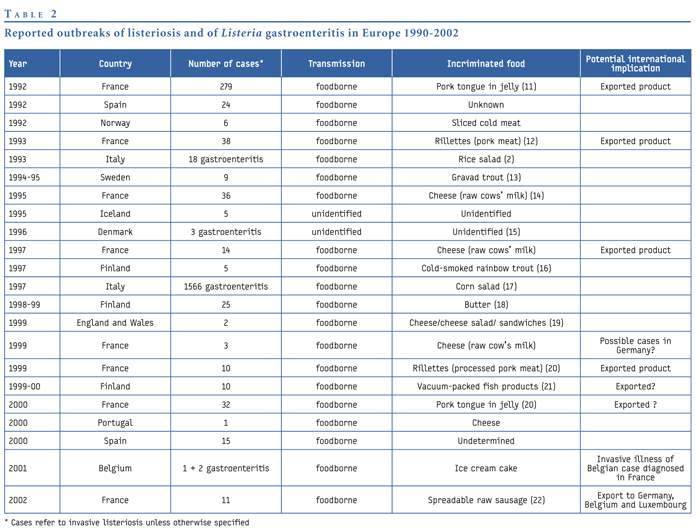
A 2005 article, which appeared in Eurosurveillance, reported eight outbreaks of Listeria monocytogenes in France between 1992 and 2002 – three of them linked to raw milk cheese. The cheese outbreaks involved a total of 53 illnesses (36 in 1995, 14 in 1997, and 3 in 1999). It does not appear that any deaths were reported.

In 2008, the Province of Québec (Canada) experienced a serious outbreak of Listeria monocytogenes that was traced to the consumption of contaminated cheeses. Twenty-two people, including three newborn infants, were infected with the pathogen. One person died. The cheese was distributed to hundreds of independent cheese shops, and spread Listeria monocytogenes to knives, counters and other areas in those shops. All cheese products – whether made from raw milk or pasteurized milk – that may have contacted the contaminated surfaces and implements were recalled from the public due to the risk of cross-contamination.

Cheese made using pasteurized milk is just as susceptible to Listeria contamination as is raw milk cheese. Marlerblog has posted a compilation of recent outbreaks, illnesses and recalls due to Listeria monocytogenes contamination of raw and/or pasteurized dairy products in the United States (2010 year-to-date). Three recalls, including one outbreak, were cheese-related. All three involved queso fresco cheeses that were made using pasteurized milk. None of the Listeria-contaminated cheeses were manufactured using raw milk.

The University of Vermont maintains an active research program in food microbiology, and hosts the Vermont Institute for Artisan Cheese. The Institute's research and education programs provide technical support to artisan cheese producers in Vermont and throughout the United States. Research carried out by Institute faculty members, including Dr. Catherine Donnelly and Dr. D.J. D'Amico, clearly demonstrates that the microbiological safety of artisanal cheeses depends on good sanitation and proper handling, rather than on whether or not the milk was pasteurized. Here are a few of the observations and conclusions published by D'Amico and Donnelly.

From Journal of Food Protection, vol. 71(8): pp. 1580-1589. 2008
"The findings of this study indicate that most raw milk intended for farmstead cheesemaking was of high microbiological quality according to current U.S. and EU standards and in comparison with quality reports from the state of Vermont, the United States as a whole, and other countries."

"The variation from farm to farm, regardless of species, indicates that some operations practice strict hygienic controls but that additional effort is needed at other operations."

From Journal of Food Protection, vol. 71(8): pp. 1563-1571. 2008
"Independent of the milk type, cheeses held for 60 days supported growth from very low initial levels of L. monocytogenes introduced as a post-process contaminant. The safety of cheeses of this type must be achieved through control strategies other than aging, and thus revision of current federal regulations is warranted."

From Journal of Food Protection, vol. 72(12): pp. 2499-2507. 2009
"Persistent contamination . . . is likely due to a combination of several factors. Areas that are difficult to clean or access, such as drains, also provide protection, giving cells time needed to establish. Persistent strains may possess increased resistance to sanitizers and disinfectants and thus survive the stress incurred through cleaning and disinfection, especially if these procedures are carried out insufficiently."

The bottom line, whether producing cheese or any other food, is that food safety depends on Good Manufacturing Practices and close attention to cleanliness and sanitation. Anything less is a recipe for product recalls and food-borne disease outbreaks.


If you would like to receive automatic email alerts for all new articles posted on eFoodAlert, please click here or submit your request using the sidebar link. Please include "subscribe eFoodAlert" in the subject line.

Friday, October 29, 2010

Outbreaks and Alerts: October 29, 2010

A daily digest of international outbreaks, alerts and food safety news

If you would like to receive automatic email alerts for all new articles posted on eFoodAlert, please click here or submit your request using the sidebar link. Please include "subscribe eFoodAlert" in the subject line.


For information on the US Salmonella Enteritidis outbreak and egg recalls, please click here.


United States
  • Tallahassee, FL. October 28th: Florida Department of Agriculture and Consumer Services Commissioner Charles H. Bronson today announced that two tomato vendors (Chavita's Produce and Parra Produce) at a private Immokalee farmers market have been served with misdemeanor violation notices for failing to comply with food safety rules involving the sanitizing and packing of tomatoes. In addition, seven Stop Sale Orders were issued for violation of F.S.S. 500.04, Selling of Misbranded Food.
  • St. Paul, MN. October 28th: Minnesota state health officials report that routine disease surveillance has detected seven additional illnesses linked to consumption of raw dairy products from the Hartmann dairy farm in Sibley County. Three of the individuals were infected with Campylobacter jejuni and four with Cryptosporidium. The microbes recovered from the infected individuals were genetic matches to microbes found in animal and environmental samples taken on the Hartmann farm this past summer. In addition, the state has identified 47 other people since Jan. 1, 2010 who became ill after drinking raw milk from a variety of sources throughout the state; none of these 47 cases was part of an identified outbreak (no two cases reported the same source). Most of the individual cases have been in children or young adults.


Canada
  • London, ON. October 29th: At least 25 people were taken ill with suspected norovirus after a Thanksgiving buffet at the Hunt and Country Club in London on October 11th. At least four more people became ill after attending an event for medical residents that was held at the same location on October 13th.


Europe
  • UK. October 28th: The Health Protection Agency's Centre for Infections (CFI) has identified 190 confirmed cases of Salmonella Bareilly in England (183), Wales (5) and Northern Ireland (2) since the beginning of August. Health Protection Scotland has identified 21 cases, bring the outbreak total to 211 confirmed cases so far. In an earlier update, CFI reported having recovered from a sample of bean sprouts a strain of Salmonella Bareilly identical to that found in the outbreak victims.
  • Kharkov, Ukraine. October 28th: Thirty-one people were hospitalized in Kharkov with salmonellosis after eating at the Café Angelica. Three of the 31 hospitalized victims have been released.
  • Ekibastuz, Russia. October 29th: Fifteen cases of hepatitis A have been reported among students attending Secondary School No. 11.


Asia, Africa and the Pacific Islands
  • Hong Kong. October 28th: The Centre for Health Protection is investigating an outbreak of acute gastroenteritis involving 25 students aged six to 11 and one staff member at a Kwun Tong primary school.
  • Hong Kong. October 29th: The Centre for Food Safety (CFS) reports that the test results of 115 samples of hairy crabs recently collected at import, wholesale and retail levels for chemical and microbiological tests in a seasonal food surveillance project were all found to be satisfactory.


Australia and New Zealand
  • New South Wales, Australia. October 29th: Authorities are broadening investigations into a range of additional products such as imported slimming tea, coffee and chocolates which have been previously implicated internationally as containing undeclared pharmaceuticals including sibutramine.

Friday, September 3, 2010

Recall Roundup: September 3, 2010

Here is today's list of food safety recalls, product withdrawals, allergy alerts and miscellaneous compliance issues. The live links will take you directly to the official recall notices and company news releases that contain detailed information for each recall and alert.

If you would like to receive automatic email alerts for all new articles posted on eFoodAlert, please click here or submit your request using the sidebar link. Please include "subscribe eFoodAlert" in the subject line.

For information on the US Salmonella Enteritidis outbreak and egg recalls, please click here.


United States
  • Food Safety Recall: Whole Foods Market's North Atlantic region recalls Morningland Dairy and Ozark Hills Farm Raw Goat Milk Mild Cheddar Cheese due to possible contamination by Listeria monocytogenes and Staphylococcus aureus. These cheeses were sold in three Whole Foods Market stores: West Hartford Center and Glastonbury, Connecticut; and Hadley, Massachusetts. The cheese is packaged in plastic labeled with a Whole Foods scale label and sold as random weight size retail packages in the cheese department.
  • Food Safety Recall: Good Taste Noodle Mfg. (Chicago, IL) recalls its "EGG NOODLES and WONTON SKINS, labeled with production date from June 19, 2010 to August 19, 2010", because they have the potential to be contaminated with Salmonella.
  • Food Recall: Food City advises its customers that C.F. Sauer has recalled Sauer's Pure Vanilla Extract, 2 oz. No reason is given for the recall.


Europe
  • Pet Food Safety Recall (Belgium): Naturis recalls fresh/frozen Naturis Rund/Kip Compleet (Naturis beef/chicken complete) after routine testing reveals Salmonella in a sample of the pet food. The pet food sausages are labeled with an expiration date of 04-08-2011 and a control ID of PET100581. The company advises that, as a result of this incident, Naturis will carry out its own Salmonella control tests in order to ensure the future safety of its products. The recalled product was manufactured in Belgium and distributed in Belgium and the Netherlands. Naturis recommends that consumers who choose not to return the recalled product to the store should cook the sausages thoroughly before feeding them to their companion animals.
  • Food Safety Recall (Denmark): Jørn A Rullepølser A/S recalls Cocktail Sausages (1kg; Best before 26th September 2010; Lot No. 103420), due to an abnormal acidic odor. The recalled product was sold to wholesale establishments, butchers and meat establishments in Zealand and to Reitan Indkøb A/S, Horsens.
  • Food Safety Recall (Denmark): ALDI K/S recalls Country Pleasure fresh turkey breast (Best Before 26-08-2010) after multi-drug resistant Salmonella was found in the product. The recalled turkey breasts were sold in Aldi stores in Denmark.
  • Food Withdrawal (Finland): Casa Gusto Ltd. withdraws several lots of Italian LatBri Lattice Brianza SPA's cheeses, due to a possible quality violation. The product withdrawal covers several varieties of mozzarella, as well as mascarpone and frescocolle ricotta cheeses.
  • Food Safety Notification (EU #2010.1196): Salmonella spp. in frozen broiler fillets from Argentina, via Denmark; distributed to Finland.
  • Food Safety Notification (EU #2010.1197): Procymidone in green table grapes from the former Yugoslav Republic of Macedonia; distributed to Lithuania.
  • Food Safety Notification (EU #2010.1198): Procymidone in grapes from the former Yugoslav Republic of Macedonia; distributed to Lithuania.
  • Food Safety Notification (EU #2010.1199): Salmonella in fuet (dried sausage) from Spain; distributed to Portugal.


Asia, Africa and the Pacific Islands
  • Food Safety Recall (China): Hunan Jinhao Camellia Oil Co Ltd has published an apology letter on its website to inform consumers that nine batches of the company's camellia oil (produced between December 2009 and March 2010) were found by authorities to contain excessive benzo(a)pyrene (a carcinogen) and were seized by local authorities and/or ordered recalled in March.


Australia and New Zealand
  • Food Safety Recall (Australia): Maggie Beer Products recalls Maggie Beer Beef Stock, Chicken Stock & Vegetable Stock (500mL pouches; all best before dates up to and including 03 Jun 2011) due to possible contamination with bacterial pathogens. The recalled products were distributed throughout Australia.


Some supermarket chains post recall notices on their web sites for the convenience of customers. To see whether a recalled food was carried by your favorite supermarket, follow the live link to the supermarket's recall web site.


*The Kroger umbrella encompasses numerous supermarket, marketplace and convenience store chains, listed on the Kroger corporate home page.


Wednesday, September 1, 2010

Recall Roundup: September 1, 2010

Here is today's list of food safety recalls, product withdrawals, allergy alerts and miscellaneous compliance issues. The live links will take you directly to the official recall notices and company news releases that contain detailed information for each recall and alert.

If you would like to receive automatic email alerts for all new articles posted on eFoodAlert, please click here or submit your request using the sidebar link. Please include "subscribe eFoodAlert" in the subject line.

For information on the US Salmonella Enteritidis outbreak and egg recalls, please click here.


United States
  • Allergy Alert: Torn & Glasser (Rancho Dominguez, CA) recalls its 3.75lb (#10) cans of "Mixed Nuts Fancy, No Peanuts" (lot numbers 0980 and 1940), due to undeclared peanuts. The recalled products were distributed in California, Washington State and Hawaii through a wholesale distribution outlet.
  • Food Safety Recall: Paleta California, Co. recalls its 4 oz. Mamey Supreme Cream Bar (frozen fruit bars also known as "paletas"; ) due to a potential health risk from Salmonella Typhi. Paleta's action follows a recall of frozen mamey pulp, which has been linked to an outbreal of typhoid fever in California and Nevada. The recalled Mamey Supreme Cream Bars were distributed only in Southern California.
  • Food Safety Recall: Morningland Dairy (Mountain View, MO) recalls 68,957 pounds of Morningland Dairy Raw Milk Cheese from cow milk (Colby, Hot Pepper Colby, Garlic Colby, Italian Colby, Dill Colby, No-Salt Added Mild Cheddar, Mild Cheddar, Medium Sharp Cheddar, Sharp Cheddar) and Ozark Hill Farms Raw Goat Milk Cheese (Colby, Hot Pepper Colby, Italian Colby, Garlic ‘N’ Chive Colby, Mild Cheddar, Medium Sharp Cheddar, Sharp Cheddar), because the cheeses may be contaminated with Listeria monocytogenes and also has the potential to be contaminated with Staphylococcus aureus. All lot codes ranging from A10 (January 1, 2010) through F250 (June 25, 2010) are affected. The recalled cheese were sold in the contiguous 48 states via mail order, retail stores, crop sharing associations, and direct delivery. The contamination was discovered as a result of regulatory sampling by the State of California.
  • Food Safety Recall (Retail Update): BJ's Wholesale Club, Inc. alerts its customers to the recall of ground beef 90/10 products initiated by Cargill Meat Solutions Corp. The recalled ground beef was sold in 14-pound tubes, full cases, and 5-pound trays in one or more BJ's locations in Connecticut, Maine, Maryland, Massachusetts, New Hampshire, New Jersey, New York and Virginia. The recalled meat may be contaminated with E. coli O26 and has been linked to reported illnesses in Maine and New York.
  • Pet Food Safety Recall: The Procter & Gamble Company recalls Iams Indoor Weight Control with Hair all Care dry cat food (6.8-pound bags; Code date 02304173 (B1-B6); UPC 1901403921) because the cat food may be contaminated with Salmonella. The recalled cat food was available only in Walmart stores in Illinois, New Mexico, Texas, Missouri, Iowa, Nebraska, Oklahoma, Kansas, Wisconsin, South Dakota, North Dakota, Montana, Wyoming and Colorado.


Europe


Some supermarket chains post recall notices on their web sites for the convenience of customers. To see whether a recalled food was carried by your favorite supermarket, follow the live link to the supermarket's recall web site.


*The Kroger umbrella encompasses numerous supermarket, marketplace and convenience store chains, listed on the Kroger corporate home page.


Saturday, August 7, 2010

Outbreaks and Alerts: August 7, 2010

A daily digest of international outbreaks, alerts and food safety news

If you would like to receive automatic email alerts for all new articles posted on eFoodAlert, please click here or submit your request using the sidebar link. Please include "subscribe eFoodAlert" in the subject line.


United States
  • Harrisburg, PA. August 6: The Pennsylvania Department of Agriculture has informed Aquila and Lydia Stoltzfus of Mill Hall, Clinton County, that the raw milk permit for Cedar Hollow Farm has been reinstated. The farm may once again sell raw milk after two samples taken on separate days tested negative for Campylobacter. Cedar Hollow Farm's raw milk permit had been suspended since May 2 after the department found potentially harmful levels of Campylobacter in milk samples taken on April 12. No illnesses were reported to the Pennsylvania Department of Health.
  • Harrisburg, PA. August 6: The Pennsylvania Department of Agriculture advises consumers who purchased raw milk from Norman Z. and Edith B. Sauder, of Jersey Hollow Farm in Kutztown, Berks County, to discard the product immediately because of potential bacterial contamination. A Department of Agriculture lab found Salmonella in a milk sample taken from the dairy on July 19, 2010. The department is moving to suspend Jersey Hollow Farm's raw milk permit until additional milk samples are tested and found to be free of Salmonella and other pathogens. The farm also must pass a state inspection before raw milk sales can resume.
  • Grants Pass, OR. August 6: Fifteen residents of Spring Village Assisted Living Community in Grants Pass have developed symptoms of Norovirus infection. The virus has been confirmed in four of the residents. Josephine County Public Health Department considers this an official disease outbreak, and is monitoring the situation.
  • Sacramento, CA. August 6: California Department of Public Health (CDPH), warns consumers not to eat ground beef products being recalled by Valley Meat Company of Modesto, because they may be contaminated with E. coli O157:H7, which can cause serious illness. The ground beef products were sold to small markets, grocery stores and food service facilities in California, Arizona, Oregon, Texas and internationally. Valley Meat Company initiated a voluntary recall on August 5th after CDPH notified it that laboratory results from a sample of their ground beef tested positive for E. coli O157:H7. CDPH has been investigating an outbreak of E. coli O157:H7 illnesses in Northern California, and had collected the sample from a patient’s freezer. At least seven California residents have been sickened by the outbreak strain of E. coli O157:H7 between February and June, 2010.


Canada
  • Ottawa, ON. August 6: Public Health Agency of Canada reports that the number of confirmed cases of Salmonella Chester infections in Canada has risen to 29. Twenty-six of the cases were reported by British Columbia; there is one case each in Alberta, Saskatchewan and Ontario. All 29 cases have been linked to the consumption of Freybe brand headcheeses.


Asia, Africa and the Pacific Islands
  • Beijing, China. August 7: Environmental authorities in east China's Anhui Province warn of the danger of a blue algae outbreak in Chaohu Lake, the country's fifth largest fresh water lake. The algae bloom has not yet affected drinking water supplies.


Friday, July 16, 2010

Outbreaks and Alerts: July 16, 2010

A daily digest of international outbreaks, alerts and food safety news

If you would like to receive automatic email alerts for all new articles posted on eFoodAlert, please click here or submit your request using the sidebar link. Please include "subscribe eFoodAlert" in the subject line.


United States
  • Longmont, CO. July 15: Billy Goat Dairy has been cleared to resume production and sale of raw goat milk under its herd-share program, according to a report in the Longmont Times.
  • Minneapolis, KS. July 15: Due to a water main break, the Kansas Department of Health and Environment (KDHE) has issued a boil water advisory for the City of Minneapolis, which is located in Ottawa County.
  • Washington, DC. July 16: The DC Department of Health announced that current health inspection notices, and notices from the past three years, are now available on its website, doh.dc.gov.
  • Durham, NC. July 16: The Durham County Health Department has determined that a spring outbreak of food poisoning among persons who ate food prepared at Bullock’s Bar-B-Que Restaurant was due to a Salmonella-contaminated commercially manufactured egg white food product, used to make meringue. The Centers for Disease Control and Prevention identified similar outbreaks of Salmonella enteritidis in other locations throughout the country. The epidemiologically implicated food item involved a common ingredient, commercially distributed pasteurized egg whites, sold by the same restaurant supplier, and manufactured in the same plant as the product delivered to Bullock’s Restaurant. However, testing conducted by the North Carolina Department of Agriculture and other laboratories of this product could not conclusively prove that this wholesale ingredient was definitively contaminated with Salmonella.
  • Silver Spring, MD. July 16: FDA warns the public that certain Advair Diskus inhalers stolen from a distribution warehouse in 2009 have been found in some pharmacies. The safety and effectiveness of the stolen inhalers cannot be assured and they should not be used.


Canada
  • Owen Sound, ON. July 16: Laboratory results have confirmed that a norovirus was responsible for making scores of people who visited Stone Tree Golf and Fitness Club ill earlier this month, according to a report in the Sun Times.

Europe
  • United Kingdom. July 16: Between March 2009 and April 2010, England and Wales reported a total of 25,604 cases of Clostridium difficile infections, down 29% from the previous year. Roughly one-half (52%) of the infections were acquired by patients during the same hospital stay when their symptoms first appeared.


Asia, Africa and the Pacific Islands
  • Taichung City, Taiwan. July 15: A prominent local sandwich maker Hong Ruei Jhen’s branch in Taichung City was fined NT$100,000 for restoring home delivery service during a three-day business suspension. One hundred eighty-seven (187) customers were reported to have developed food poisoning after eating the sandwiches, which had been held at an inappropriate temperature.
  • Orissa, India. July 15: Two children are dead and at least 10 other people have been taken ill after consuming wild mushrooms and leaves.
  • Shamshahabad, Punjab, India. July 15: A 12-year-old girl died and more than 83 people were taken ill Thursday after they drank contaminated water, according to local health officials.


Tuesday, July 13, 2010

Outbreaks and Alerts: July 13, 2010

A daily digest of international outbreaks, alerts and food safety news

If you would like to receive automatic email alerts for all new articles posted on eFoodAlert, please click here or submit your request using the sidebar link. Please include "subscribe eFoodAlert" in the subject line.


United States
  • Utah. July 9: During April 29--June 3, 2010, a total of 10 Salmonella Newport cases were reported to the Utah Department of Health; all 10 patients had consumed unpasteurized milk from one of two stores, supplied by the same raw milk producer. The patients ranged in age from 2 to 56 years (median: 21 years); six were female. One patient was hospitalized.Cultures of frozen, unpasteurized milk samples stored at the dairy from batches of milk sold during the outbreak period yielded S. Newport isolates indistinguishable from the outbreak strain.
  • Atlanta, GA. July 12: Nearly 1 out of every 25 restaurant-associated foodborne outbreaks with identified food sources between 1998 and 2008 can be traced back to contaminated salsa or guacamole, more than double the rate during the previous decade. Inappropriate storage times or temperatures of the salsa or guacamole were reported in 30 percent of the outbreaks in restaurants or delis, and may have contributed to the outbreaks. Food workers were reported as the source of contamination in 20 percent of the restaurant outbreaks.
  • Dallas County, IA. July 12: About 80 residents in the River Oaks Development are under a boil advisory after E. coli was found in their water supply last week.
  • Baton Rouge, LA. July 12: Two hundred and twenty-seven oil spill exposure-related cases have been reported to the Louisiana Department of Health and Hospitals (DHH) to date, according to its sixth surveillance report released today. One hundred and ninety-three of those cases involved workers on oil rigs or workers involved in the oil spill clean-up efforts, while 34 were reported by the general public.
  • St. Petersburg, FL. July 13: BP Oil Spill: NOAA modifies commercial and recreational fishing closure in the oil-affected portions of the Gulf of Mexico. The new closure measures 83,927 sq mi (217,371 sq km) and covers about 35% of the Gulf of Mexico exclusive economic zone. All commercial and recreational fishing including catch and release is prohibited in the closed area; however, transit through the area is allowed.
  • Battle Creek, MI. July 13: An aromatic hydrocarbon called methylnaphthalene in the packaging of some Kellogg's cereals was the source of the off-odors that resulted in the company's recall of 28 million boxes of breakfast cereals, according to a report in Food Safety News.


Europe
  • Zealand, Denmark. July 9: At least 79 Danes have been infected with Salmonella Typhimurium U323 since March 2010. Contaminated pork products from a single Zealand slaughterhouse is the source of the outbreak.
  • Paris, France. July 9: The Direction générale de la Santé has alerted physicians to be on the alert for possible cases of E. coli O157:H7 infections and associated hemolytic uremic syndrome, in conjunction with a recall last week of Carrefour and Casino fresh ground beef that was found to be contaminated with E. coli O157:H7.
  • Mainz, Germany. July 11: A children's camp in Homberg has been closed after an outbreak of Norovirus sickened 30 of the boys and girls attending the camp. Eleven children were hospitalized for rehydration.
  • Vladivostok, Russia. July 12: Scientists have found algal toxins in shellfish caught off the coast of Primorye.
  • Brussels, Belgium. July 13: Twenty-four Turkish children were hospitalised in Belgium with suspected food poisoning. The children, aged from 10 to 16, were taking part in a holiday camp organized by a Turkish cultural centre in Sint-Niklaas.
  • Yekaterinburg, Russia. July 13: Fifteen employees of the Ordzhonikidze district tax service were diagnosed with Hepatitis A virus after a dinner in the dining room of the local university. All fifteen Tax Officers were hospitalized; two have since been released.


Asia, Africa and the Pacific Islands
  • Arusha, Tanzania. July 9: A total of 45 dogs have died so far in Arusha, since the end of June 2010, due to aflatoxin contaminated maize or maize flour, but there are no reports of any human beings affected.
  • South Bastar, India. July 12: A suspected cholera outbreak has killed around an estimated 60 people in Bijapur District of South Bastar, Chhattisgarh since the 7th of June.
  • Hanoi, Vietnam. July 12: Health officials have closed 60 butchers and dog meat restaurants in areas surrounding the city after the cholera bacteria was found in two animals. Dog meat is considered to be a delicacy by Vietnamese.
  • Taipei, Taiwan. July 13: Thirteen out of 20 samples of lipstick sold in Taipei City were found after examination to be substandard, mainly because of poor package labeling.
  • Taipei, Taiwan. July 13: The Taipei City Department of Health fined a Subway restaurant NT$30,000 for a roasted chicken submarine sandwich containing excessive bacteria levels and coliform counts.
  • Beijing, China. July 13: A senior health official said on Monday that more breaches in food safety, such as the latest melamine-tainted milk scandal in Northwest China, are likely given China's size and unbalanced development. The remarks were made during an international food safety forum.
  • Jerusalem, Israel. July 13: The Knesset has voted to add the designer "party drug" known as hagiga to the list of dangerous and illegal drugs.
  • Beijing, China. July 13: A tiny, toxic mushroom has been identified as the probable cause of the Yunnan Sudden Death Syndrome, which has caused approximately 400 deaths over the past 30 years.
  • La Trinidad, Philippines. July 13: A contaminated underwater source is suspected to be behind an increase in the number of typhoid cases in this area. The outbreak is under investigation.
  • Hyderabad, India. July 13: Approximately 100 patients per day are being admitted to area hospitals with symptoms of food poisoning and gastroenteritis. A few of the patients – notably the children – are severely dehydrated.


Australia and New Zealand
  • Coromandel, New Zealand. July 13: Ongoing weekly monitoring has shown continuing high levels of paralytic shellfish poison (PSP) present in shellfish along the coastline of Coromandel and the Bay of Plenty. A health warning advising against the collection and consumption of shellfish from the affected areas has been in place since December 2009.