Thursday, February 7, 2008

New Era Canning Recall Keeps on Growing

New Era Canning Company has expanded its recall of canned peas and beans once again. Please see today's FDA Press Release for details on the additional recalled products. While most of these canned foods were distributed to food service establishments, some might have been sold atretail to consumers. Check your pantry for any of the products listed in the Press Release.

According to the company, the listed products were processed under conditions that "...could have led to contamination by Clostridium botulinum bacterium spores..."

When will New Era finally decide to simply recall all of its canned products that are still in the marketplace?

Laos Cuisine - Part 2

According to yesterday's Wall Street Journal, the Year of the Rat is being marked by some changes to the Vietnamese diet. Due in part to the bird flu epidemic, rat meat and other specialty meats are becoming increasing popular.

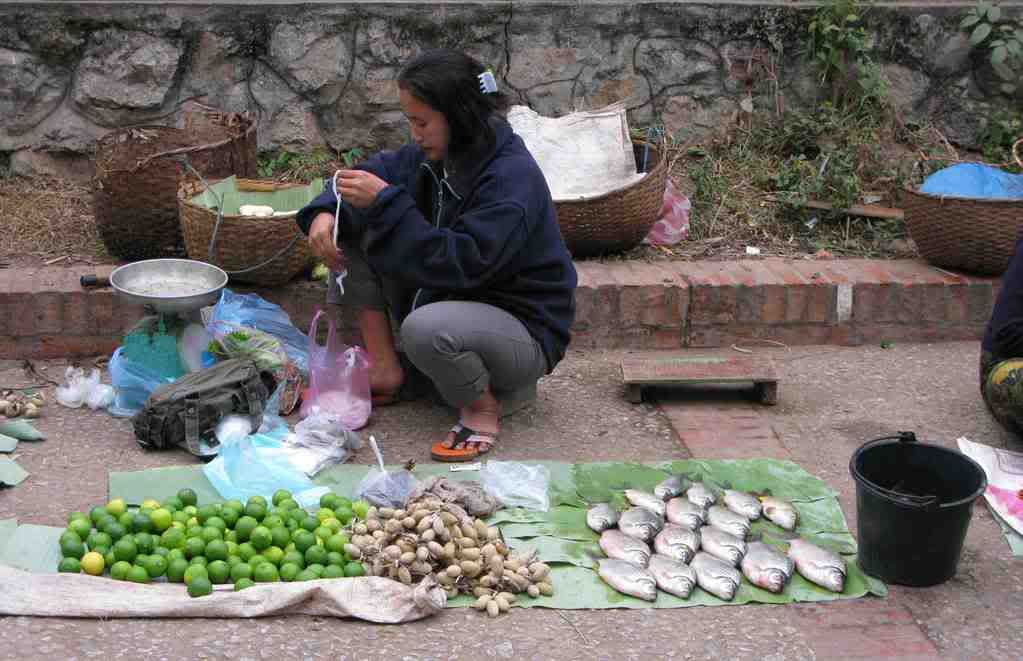
This might be new in Vietnam, but Lao villagers are definitely ahead of this trend. When we visited a village outside of Luang Prabang, Laos last month, we learned that the usual diet of fish, pork and poultry is often supplemented with meat from wild birds, snakes, rats and bats. And after visiting one of the local markets, we could understand why.


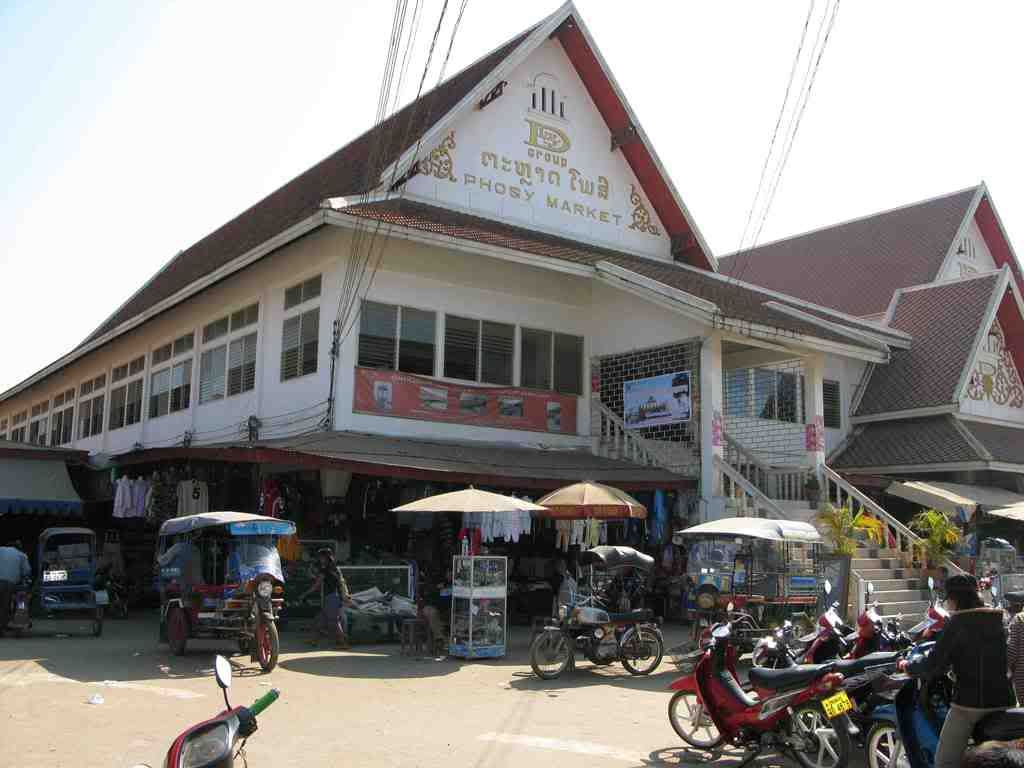
This is the Phosy Market, located in the large village of Phosy, on the outskirts of Luang Prabang. This market houses individual food vendors, as well as stalls selling clothing, kitchen utensils, and almost anything else one can imagine.


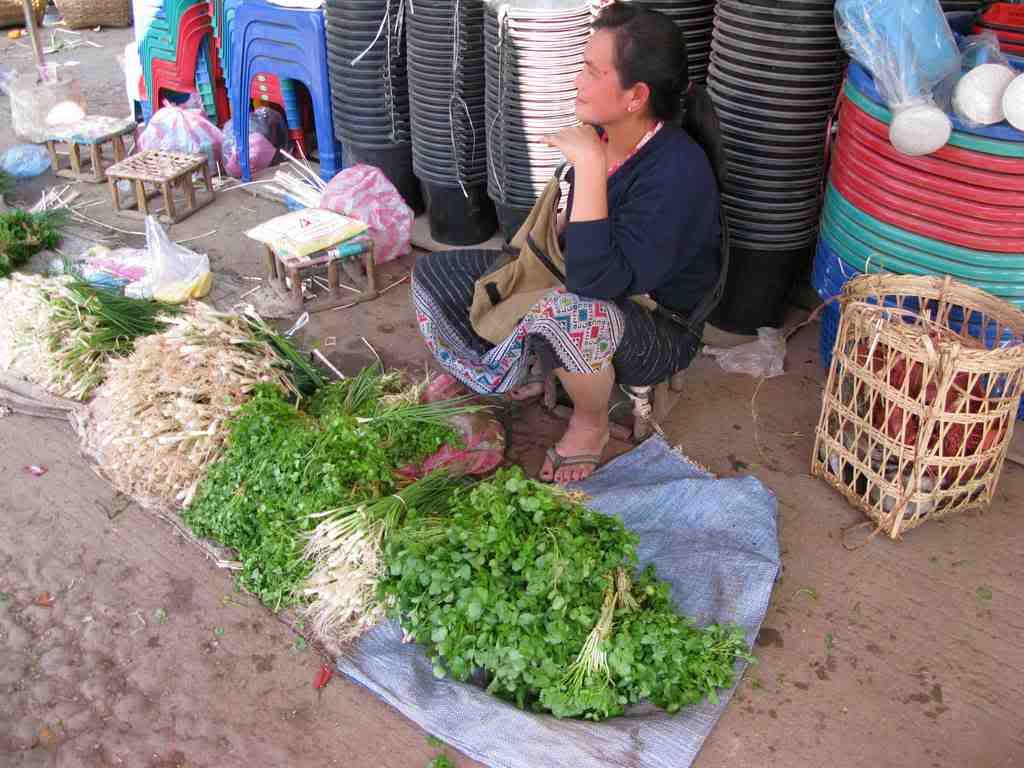
Here is one of the produce counters.


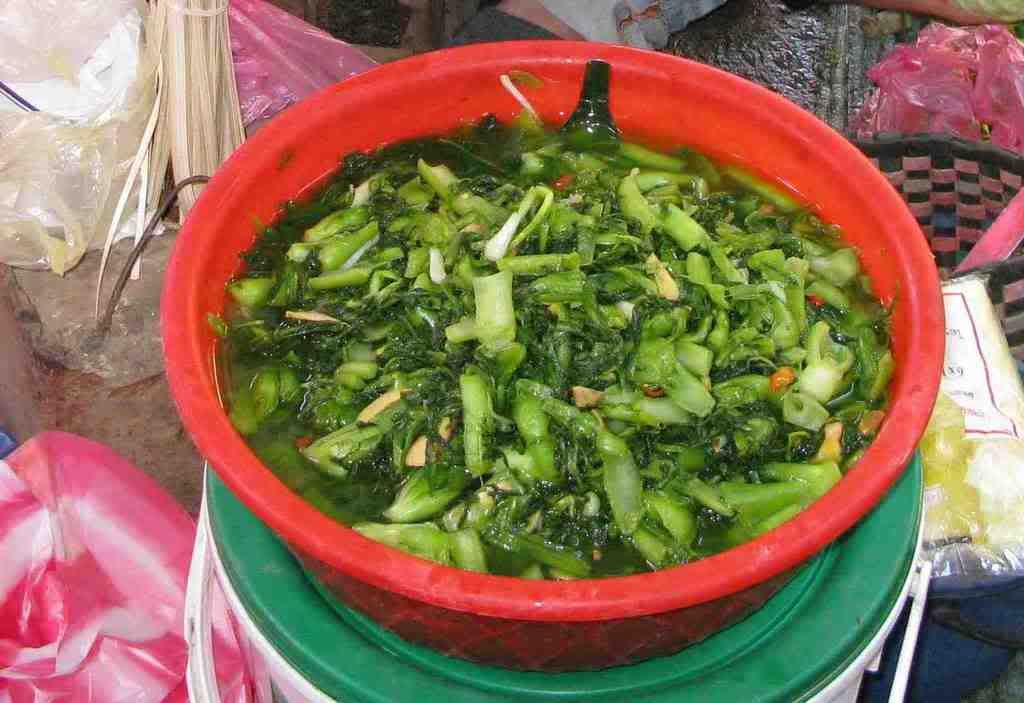
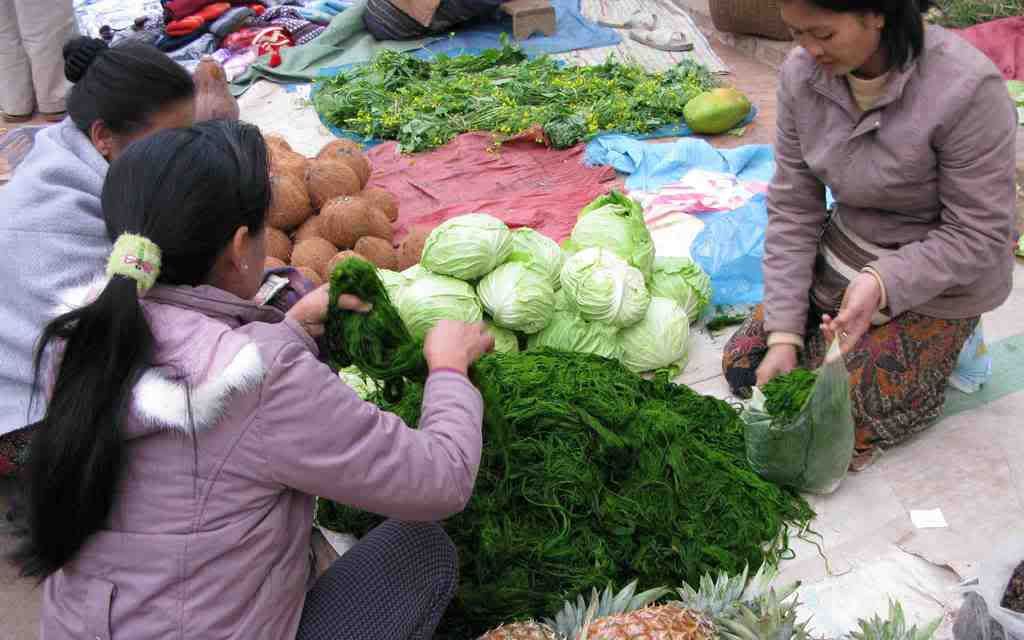
These cut greens have been pre-washed for customer convenience.


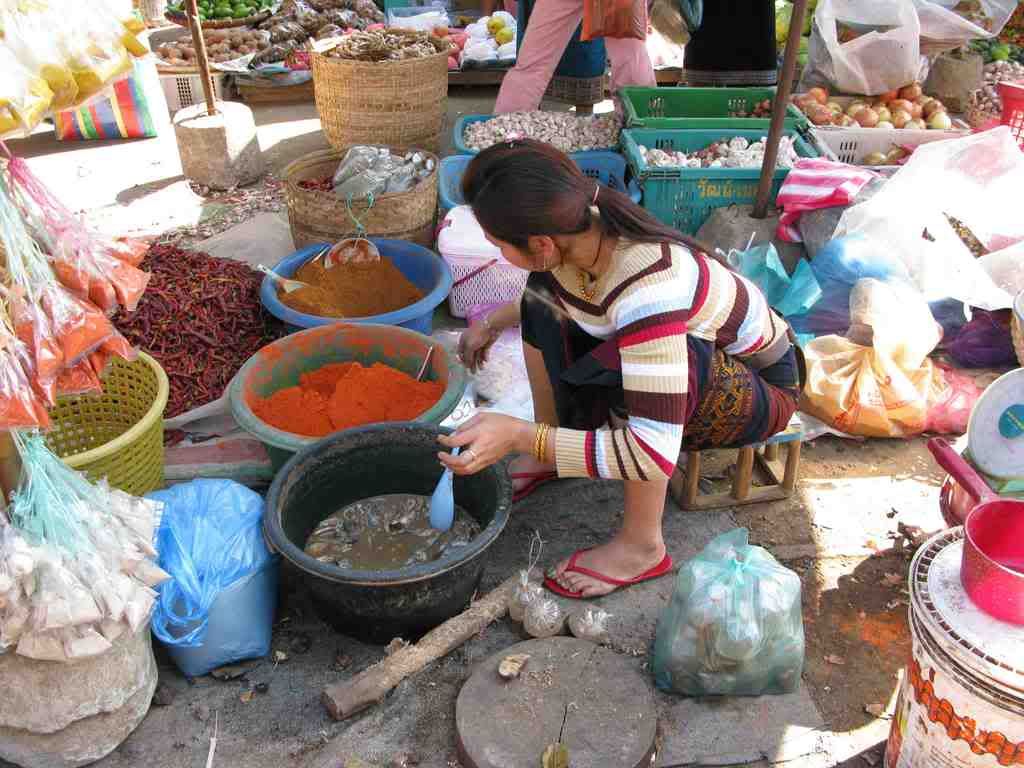
This vendor offers a variety of spices and condiments.


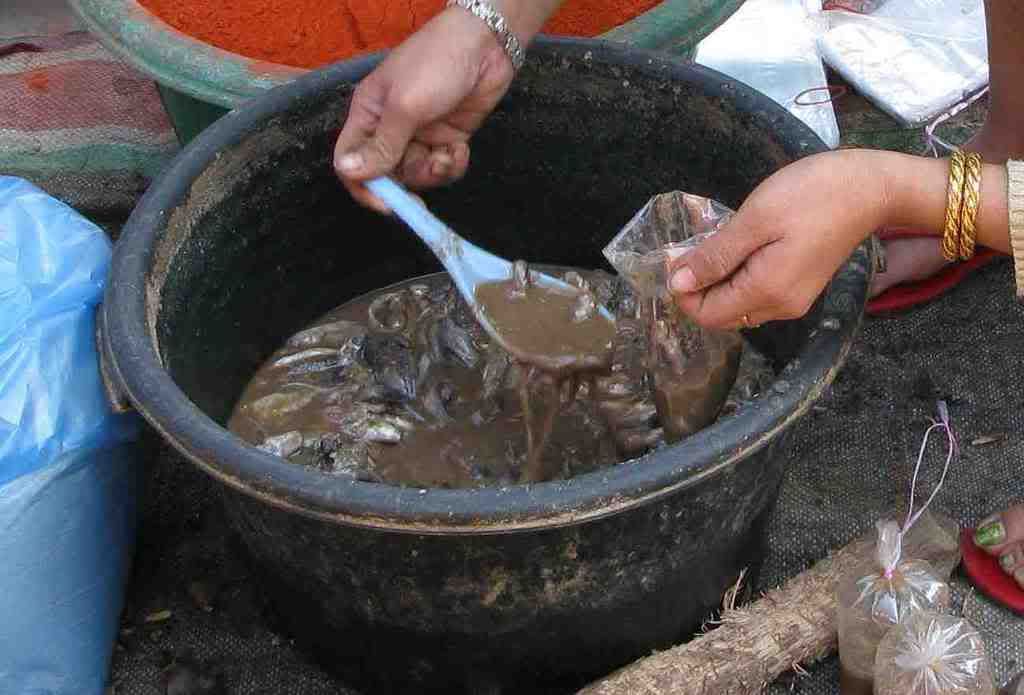
Fish sauce, anyone?


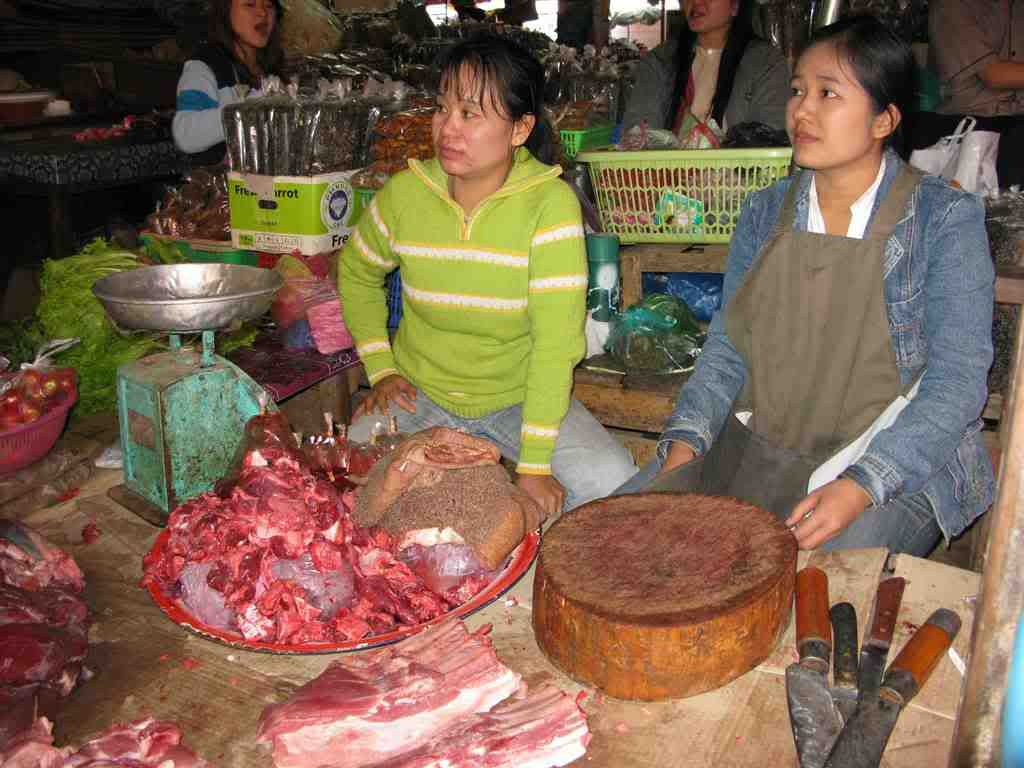
Here is one of the market's butcher shops.


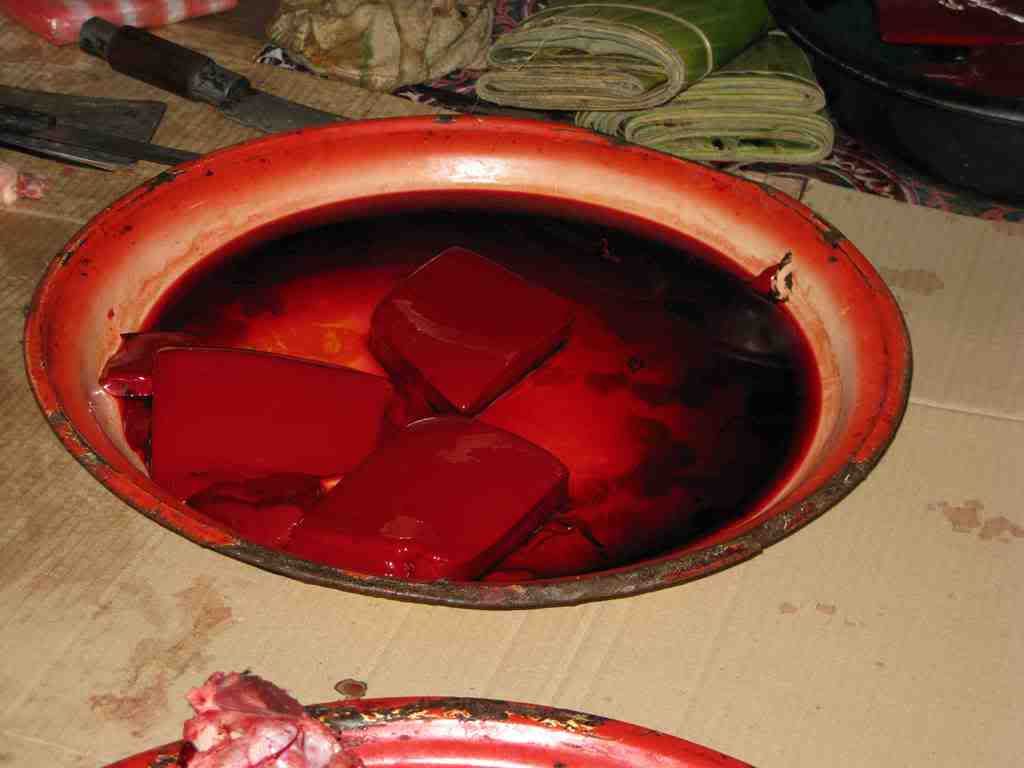
Pork blood is a local delicacy. The blood is collected, salted and allowed to clot. The blood cakes are eaten raw.


We saw no dairy stalls in this market, for a very good reason. Electricity, where it's available, costs approximately US$0.25 per kilowatt hour in Laos. That is expensive even by North American standards, and it puts refrigeration out of the economic reach of the average Laotian villager.

An Olympian Water Quality Effort

The citizens of Beijing should be grateful that their country was granted the privilege of hosting the 2008 Olympic Games. The Chinese government will begin monitoring the safety of the city's water supply and performing necessary maintenance in May - just in time to "guarantee" an adequate supply of "safe" water for the August 2008 Games.

There is no mention of plans to continue the water safety program after the games have ended.

Wednesday, February 6, 2008

Criminal Indictments for Melamine Miscreants

February 6, 2008. A federal grand jury indicted two Chinese companies and one U.S. firm today as a result of an FDA investigation into last year's poisoned pet food scandal. According to the indictments, fourteen dogs and cats died in 2007 from kidney failure after eating pet food containing wheat gluten that had been spiked with melamine and cyanuric acid in order to boost its apparent protein content.

The companies named in the indictments were Xuzhou Anying Biologic Technology Development Co., LTD., the processor and exporter of the wheat gluten, Suzhou Textiles, Silk, Light Industrial Products, Arts and Crafts I/E Co. LTD., the Chinese export broker, and ChemNutra, Inc. of Las Vegas, the importer of the adulterated wheat gluten. The owners and managers of all three companies were also named in the indictments.

The adulteration came to light last March, when FDA began to receive reports of kidney failure in dogs and cats. The outbreak of illnesses and deaths was traced to wheat gluten that was used as an ingredient in pet foods sold under a long list of different brand names. The pet foods had all been produced (co-packed) by a single company - Menu Foods. The wheat gluten, which was found to contain melamine and cyanuric acid, was imported from China and sold to Menu Foods by ChemNutra, Inc.

Neither cyanuric acid nor melamine are permitted food ingredients in the United States and Canada, but neither chemical was thought to be toxic at the concentrations found in the pet food. But scientists at the University of Guelph in Canada quickly discovered that a combination of the two chemicals produced urinary crystals that were identical to the crystals found in the urine of the affected animals. And these crystals were enough to cause the kidneys to fail.

This initial report was confirmed by a follow-up investigation commissioned by the American Association of Veterinary Laboratory Diagnosticians and coordinated by Michigan State University. The AAVLD investigation, which I summarized in a blog on December 13th, also concluded that the adulterated products had been responsible for the deaths of more than 300 dogs and cats.

The tragedy of this outbreak was that it was entirely the result of greed on the part of the off-shore suppliers and the importer, and a desire on the part of some pet food manufacturers – in order to respond to a consumer desire for "value" – to produce pet food as cheaply as possible. Quality and safety come at a cost. But excessive attention to the lowest possible price can end up costing more than anyone would ever care to pay.

Let's hope that these indictments will bring some small comfort to those pet owners who suffered the needless loss of their companions as a result of the adulterated pet food and will serve as a reminder to the food industry and to consumers of the high cost of cheap food.

Miscellaneous Outbreaks and Alerts

This seems to be a busy news day, so I've decided to summarize some of the items, with links to the full information. Here goes.

Hong Kong, Feb 6th. Sixteen patrons of Lei Yue Mun restaurant are being treated for food poisoning after eating contaminated seafood at the restaurant.

Clallam County, WA, Feb 5th.
The Washington State Department of Health warns residents to use bottled water for drinking, cooking or brushing their teeth, as a result of a water line break. Customers of the affected water utility are being asked to conserve water by taking short showers and avoiding doing laundry until service has been fully restored. Hmm, sounds like our month in Southeast Asia.

Umpqua Beach, OR, Feb 5th. The Oregon Department of Health is warning bathers to stay out of the water off Umpqua Beach because of the risk of elevated levels of fecal bacteria resulting from a sewage spill. Bathers at this time of year?

Nye Beach, OR, Feb 5th. Another sewage spill, this time at Nye Beach. It makes one wonder about the state of repair of the infrastructure.

Edinburgh, Scotland, Feb 5th. Health authorities are investigating a city nursery after a child was diagnosed with E. coli O157. There is no indication that the infection has spread to other children.

Redwood Shores, CA, Feb 2nd. The Sofitel Hotel has cleaned up its kitchen, and its act, after 62 people – including a member of the local Board of Supervisors – were infected with Norovirus after attending an event at the hotel last month.

Laos Cuisine - Part 1

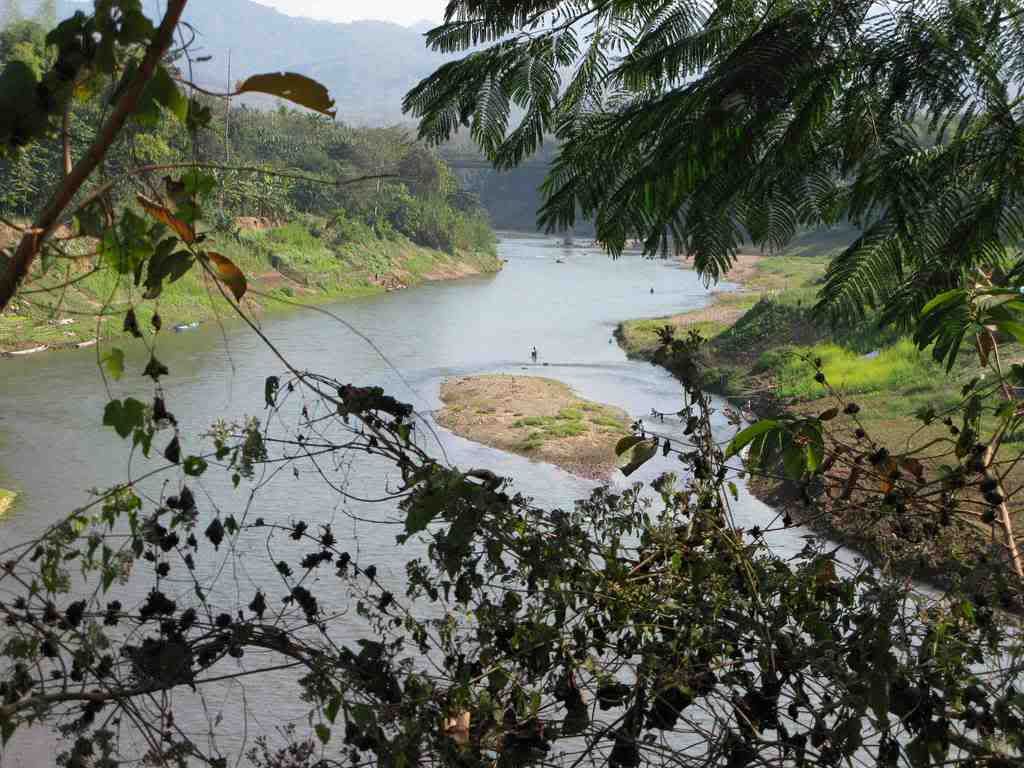
One of the “Great Rivers” of Asia, the Mekong meanders through land-locked Laos before entering Cambodia and then Vietnam, eventually evolving into the famous Mekong Delta and emptying into the South China Sea. The original name of the river – Mae Nam Khong – means “mother of all rivers”, and this (approximately) 4,350 km (2,700 mile) waterway truly is a life-giver to the Lao people (data from Wikipedia).


The Mekong River supplies fish to eat, water for drinking, washing and irrigation, and sediment to fertilize river-side vegetable gardens.


There is one more important element of Lao life that is furnished by the Mekong - riverweed.

A freshwater equivalent of seaweed, riverweed grows abundantly the Mekong, giving the river its green color. It is a grassy waterplant that wafts in the river currents just below the surface of the water.

Harvesting riverweed is easy. One simply needs to take a boat out on the river, navigate to a clump of riverweed, reach over the side of the boat and pull it on board.

Once gathered, the riverweed is used in several ways. Most often, fresh riverweed is laid onto bamboo racks in thin sheets and dried in the sun. The dried riverweed is sometimes broken into pieces, sprinkled with salt or sesame seeds, deep-fried and used as a snack. But it has other uses.

Here, dried riverweed mats are used as to display fish in the Luang Prabang street market.


Fresh riverweed is sold in bulk by a vendor in the Luang Prabang morning street market. Her customer will probably use her riverweed in a soup.


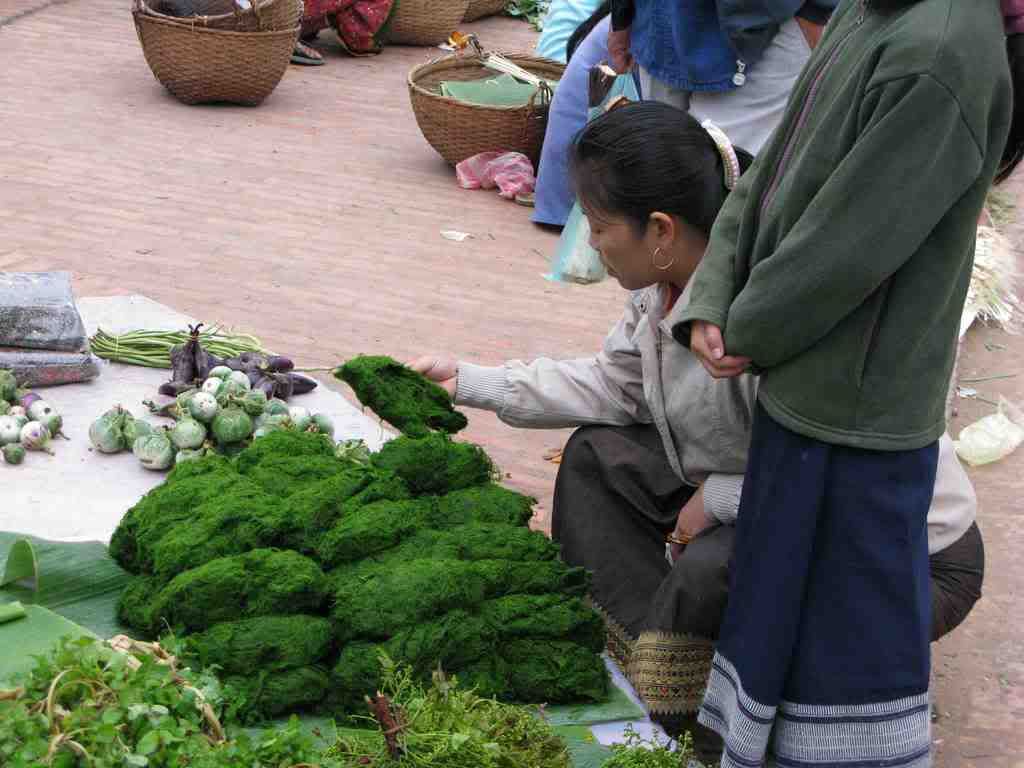
Another vendor offers riverweed in a more convenient package - compressed into large blocks for easy handling.


No matter how riverweed is used, this versatile product of the Mekong is one of the more unusual agricultural products of Laos.

Sesame Seed Crackers Recall in Canada

Just as a reminder that Clostridium botulinum isn't the only microbe around, the Canadian Food Inspection Agency is warning consumers in the Ottawa/Gatineau area that sesame seed crackers labeled with the name "Dépanneur Sylvestre, 9 rue Fortier à Gatineau" may be contaminated with Salmonella and should not be eaten.

Please see the CFIA press release for details on this recall.

Olivier Dip Distributed in Canada

It's taken longer than it should have, but news of the Olivier Parmesan & Asiago Dip recall is finally reaching consumers across the United States. And now the Canadian Food Inspection Agency has also issued a Health Hazard Alert, warning Canadian consumers that the product is at risk of contamination from Clostridium botulinum.

According to the CFIA news release, the affected products have been distributed through Williams-Sonoma stores in Ontario, Alberta and British Columbia. Williams-Sonoma is initiating a voluntary recall of the products from its Canadian stores. The agency asks all Canadian consumers to check their kitchens for the recalled products, as they may also have been distributed through other retail locations across Canada.

So, why haven't we seen a press release yet from Williams-Sonoma?

Tuesday, February 5, 2008

FDA Warns About Ciguatera Toxin In Fish

The FDA has alerted seafood processors to the potential for ciguatera toxin in fish taken from the northern Gulf of Mexico, south of the Texas-Louisiana coastline and near a National Marine Sanctuary.

Ciguatera toxin is produced by naturally-occurring microscopic algae, and accumulates in fish on its way up the food chain. The species of affected fish mentioned in this FDA alert are grouper, snapper and hogfish caught within 10 miles of the Marine Sanctuary and amberjack and barracuda caught within 50 miles of the sanctuary.

Fish that is contaminated with ciguatera toxin look, smell and taste normal. The toxin, which can only be detected by lab tests, is very stable, and is not destroyed by either freezing or cooking.

Symptoms of ciguatera poisoning are uncomfortable, but rarely fatal. The symptoms usually appear within a few hours of eating toxin-containing fish and include nausea, vomiting, diarrhea, numbness or tingling, muscle aches, and may last for several weeks. Please see the FDA notice for a full list of possible symptoms and contact your doctor if you are experiencing these symptoms and have recently have eaten fish.

Myanmar - The New Big Cheese?

We spent the last two weeks of our Southeast Asia adventure in Myanmar. One thing we learned very early in our travel through that country is that Myanmar has no dairy industry whatsoever - no refrigerated transport for bulk milk, no dairy farms, no milk pasteurization facilities, no bottling plants. And no cheese factories. So imagine my surprise at learning last week - from no less an authority than "The Myanmar Times" - that Yangon, Myanmar is now the home to a boutique cheese shop featuring locally-made cheeses.

According to the article, the shop, which is run by the son of a former diplomat, features artisan cheeses for which "...80 percent of the ingredients ... are local, such as cow, buffalo and goat milk...", as well as patés, yogurts, butter and sour cream, and eggs from "happy free-range chickens". Strange, but when we were in Yangon, the only dairy products except for some dodgey-looking yogurt that we found in the markets – even the high-end supermarkets – were milk from Australia, cheese from France and Switzerland, and (canned) butter from New Zealand.

Here, by the way, is one of those free-range chickens, happily pecking away at the edge of a manure pile.


Myanmar has an extremely poor track record on providing basic infrastructure to its citizens. Even in the major cities of Yangon and Mandalay, electricity outages – some lasting several hours – are a daily occurrence. It's hard to imagine any sort of industry prospering under these circumstances, much less one that depends on refrigeration to ensure the safety and quality of its products. Therefore, I'll take this cheese-y story in The Myanmar Times with a very large grain of salt.

My Hat's Off to Wal-Mart

Think what you like to about Wal-Mart's impact on local merchants, but in one important area this low-cost "big box" company is proving itself to be a true good corporate citizen.

Yesterday, Wal-Mart announced that it will be requiring all of its food suppliers to meet the standards set out by the Global Food Safety Initiative (GFSI). This means that all of Wal-Mart's suppliers of meat, poultry, produce, fish and private-label food products will have to commit to a food safety certification program, including regular audits by independent, third-party food safety experts. The program is being phased in during 2008; initial certification inspections of all suppliers will be carried out between July and December of this year. The target date for final certification of all suppliers is July 2009.

GFSI was launched in 2000 under the auspices of CIES - The Food Business Forum, an international organization that comprises nearly 400 companies. Now, seven member companies – all of them major international retail organizations, including Wal-Mart, Tesco, Carrefour, Metro, Migros, Ahold, and Delhaize – have agreed to a common set of four food safety benchmark programs. The GFSI Guidance Document adopted by these companies (5th edition was released in 2007) spells out the agreed-to certification parameters, which include appropriate application of HACCP, as well as adherence to practices set out by the International Standards Organization and the Codex Alimentarius.

It's nice to see that some major international corporations have decided food safety is good business.

Monday, February 4, 2008

Grazing in Bangkok - Part 2

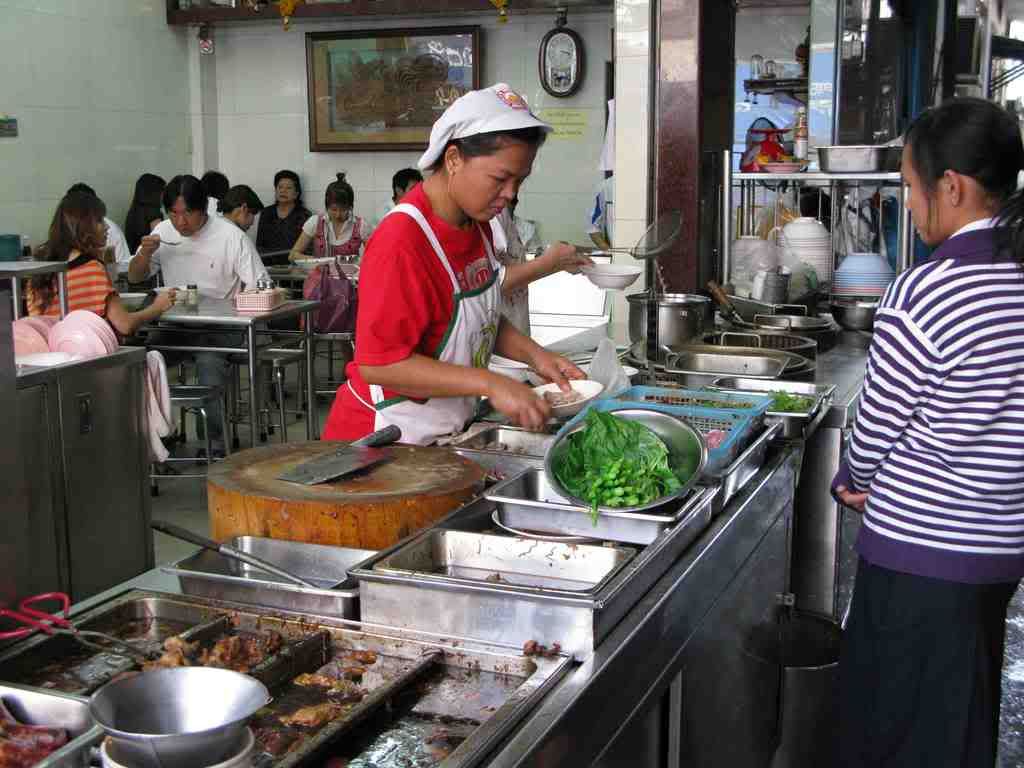
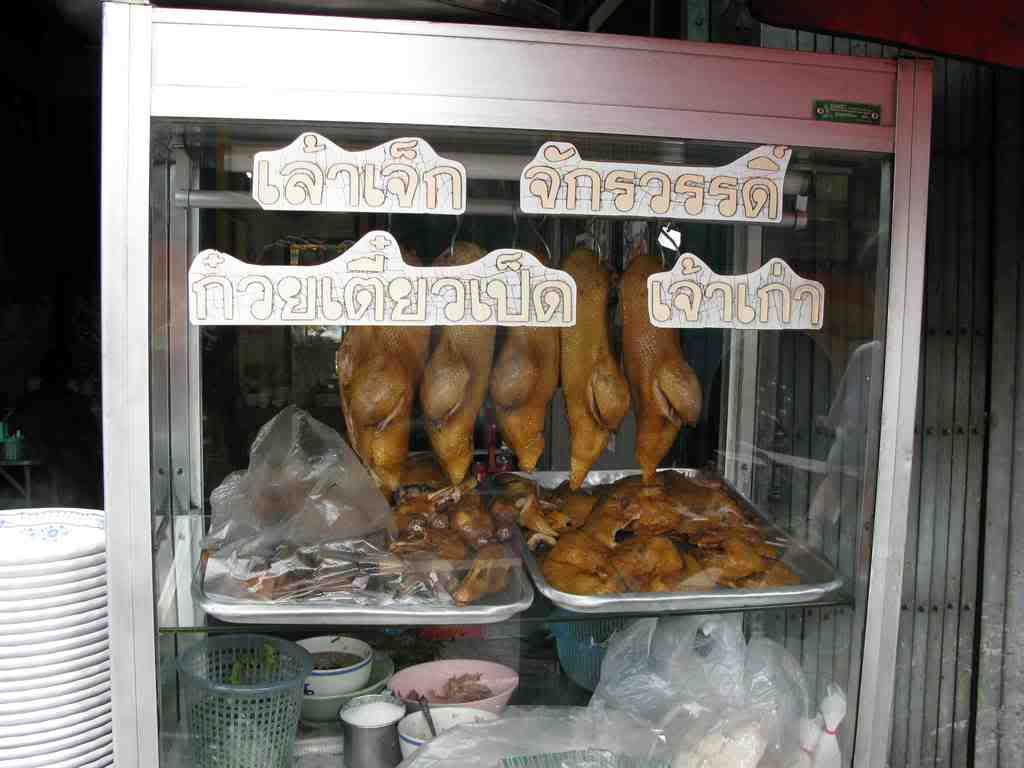
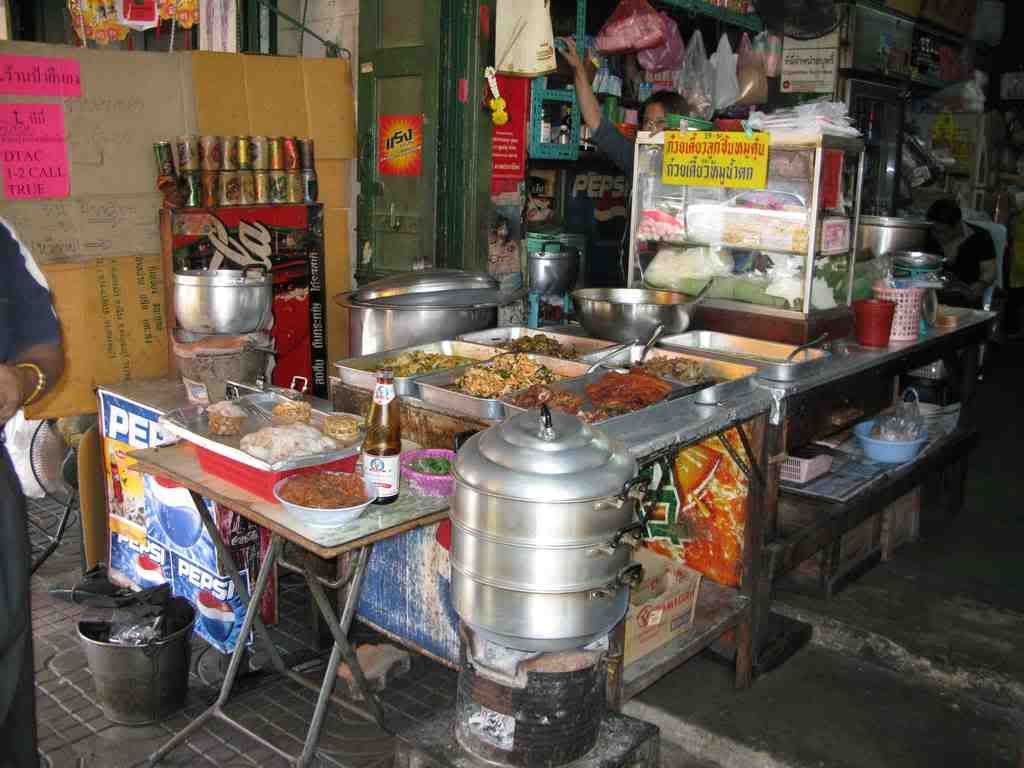
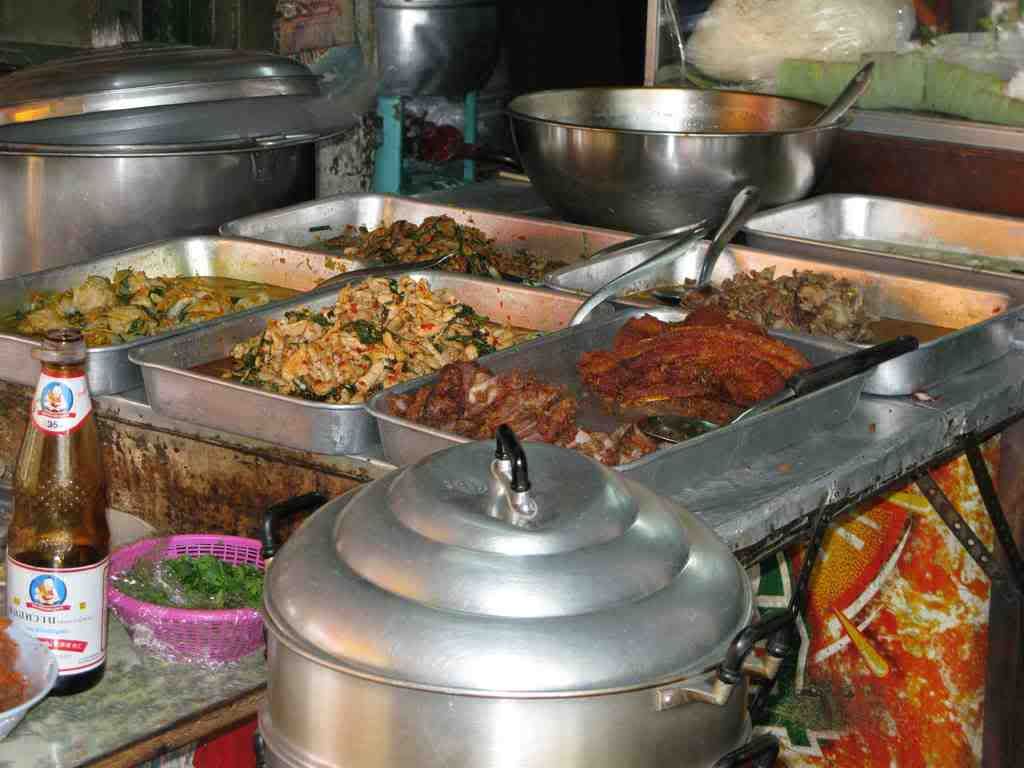
For those who don't like eating on the street, it's also possible to enjoy "sit-down" fast food, Bangkok-style. Here's one of the popular local spots to drop into for a bite to eat. Notice the well-used chopping block for cutting up all those fresh meats and vegetables.


Of course, if you prefer BBQ duck, that's available too. Don't the heads in the left-hand tray look delicious?


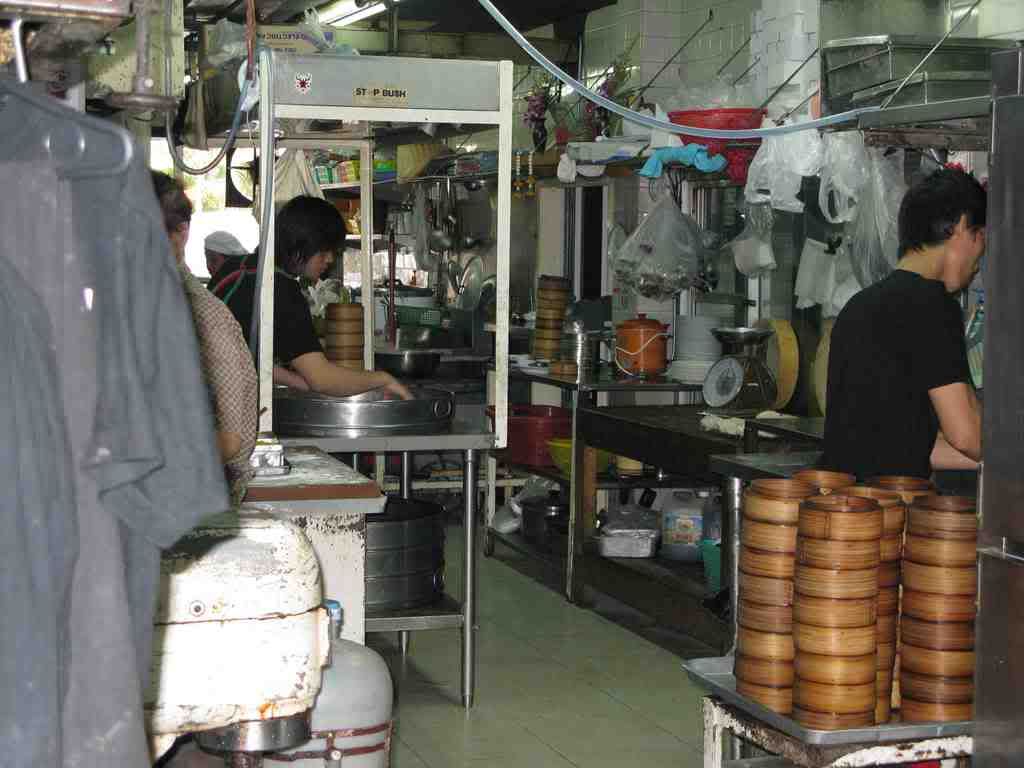
But don't expect too much in the way of cleanliness. Here's a picture my intrepid photographer managed to catch of the kitchen attached to one of the better-looking fast-food shops.

Grazing in Bangkok - Part 1

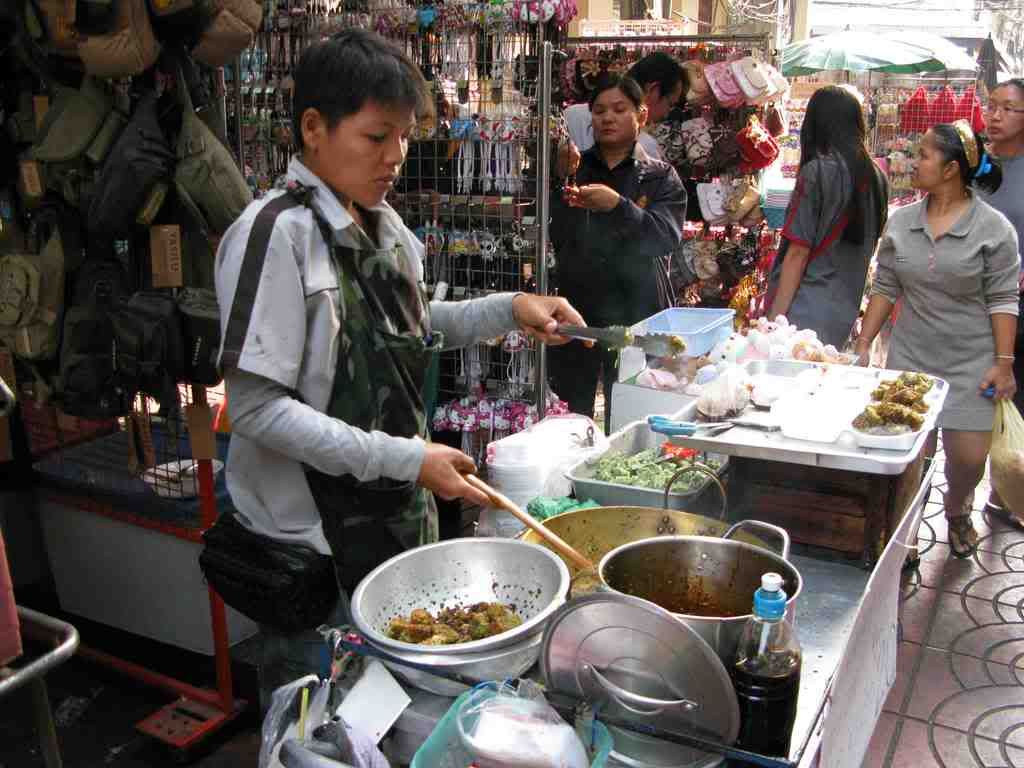
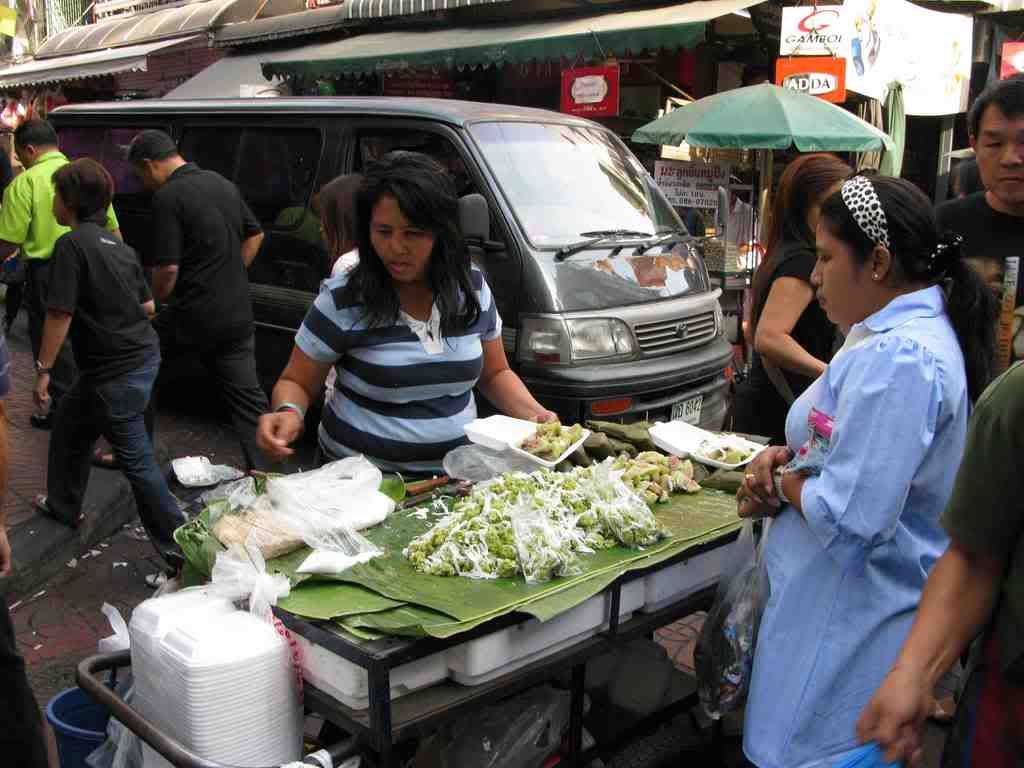
There are numerous Western-style fast food outlets in Bangkok, including Dunkin' Donuts. And 7-11 Stores are even more plentiful that in many U.S. cities. But the locals prefer their own version of fast food. Here are a few examples of what we saw while walking along some of the main streets of central Bangkok. Click on the individual photos to get the "big picture".

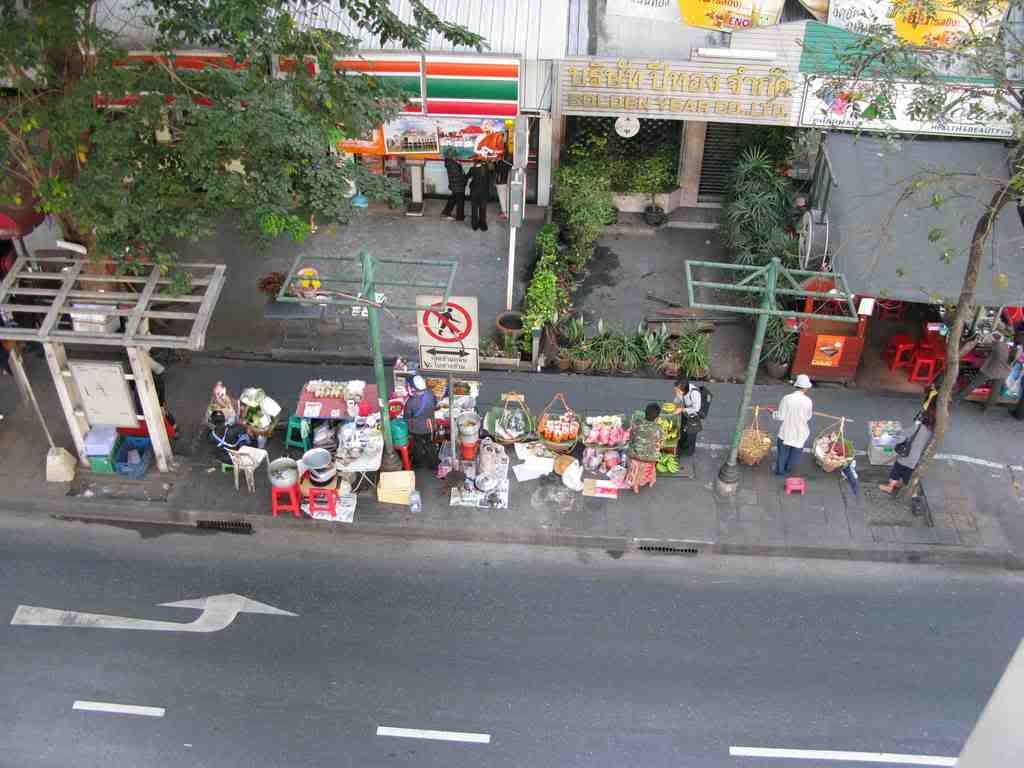
First, here's a bird's eye view of one of the food "strip malls". Note the signature "7-11" store colors on the building across from the food stalls.


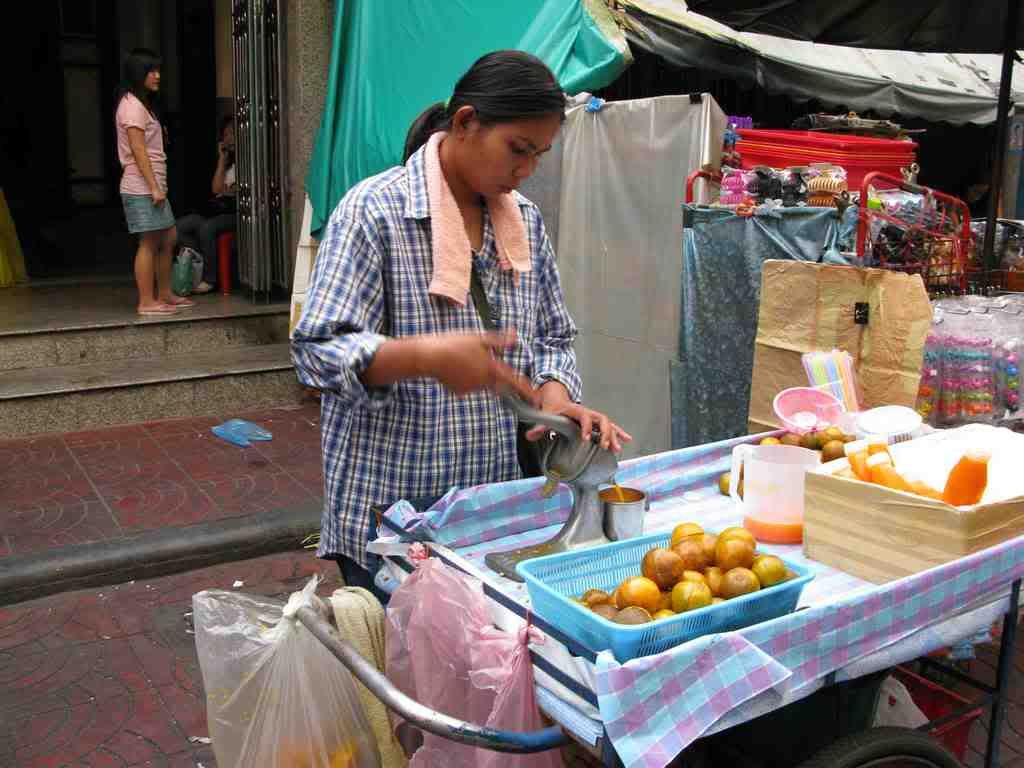
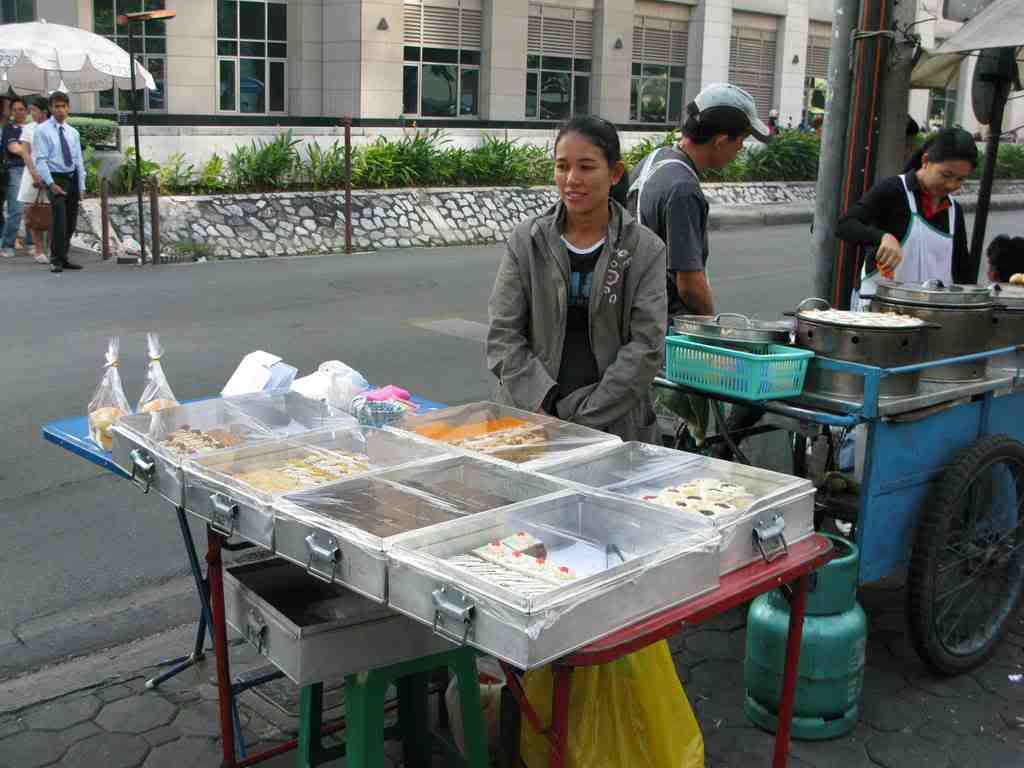
Anyone for fresh-squeezed orange juice? We saw several of these mini-factories along the sidewalks. The stall operator spent her time between customers hand-juicing the oranges. When the metal cup was full, she would pour the contents into the plastic pitcher. Once the pitcher was filled, she poured the juice into the plastic bottles and closed the bottles with self-sealing screw-caps. To her credit, the sealed bottles of juice were kept on crushed ice (unlike the juice in the pitcher).


Here are a few of the breakfast and lunch options available at sidewalk stalls. Many of the foods are mixed or dispensed by ungloved hand, and the food must fend for itself amid the hustle-bustle of street traffic.


And now for dessert. These lovely cakes and cream-filled pastries were protected in covered display cases from the air pollution and street traffic - but there was nothing to prevent the pastries from spoiling in the 30ºC heat of mid-morning Bangkok.


Bon Appétit!

Sunday, February 3, 2008

Olivier Dip Botulism Recall - Is Anybody Listening?

On Friday, February 1st, I reported that Olivier Napa Valley, Inc. was recalling seven production lots of its “Parmesan & Asiago Dip with Garlic & Basil” due to a risk that the product could support growth of Clostridium botulinum. According to the Company’s January 30th press release, the recall was initiated after “...state officials found elevated [pH] levels in the product; which can allow favorable conditions for botulism toxin production.”

The recall announcement appeared both on the California Department of Public Health website and on the FDA website on January 31st. But, even though the recalled products were distributed nationally to Williams-Sonoma retail stores, there has been no mention of this potentially deadly problem in the national media. Furthermore, one of my readers contacted her local Williams-Sonoma store on Friday and learned that they had not been notified of the recall.

While there have not been any illnesses associated with the recalled product, the risk is very real. Oil-packed garlic and other oil-packed foods have been the source of botulism outbreaks in the past. The combination of an anaerobic (oxygen-free) environment and mild acidity (pH of 4.6 or higher) creates the perfect conditions for the growth of Clostridium botulinum and production of its deadly neurotoxin. This recall deserves to be publicized every bit as widely as the on-going New Era Canning recall.

Saturday, February 2, 2008

Dunkin' Donuts - Thai Style (cont'd)

Dunkin' Donuts doesn't advertise this, but their Bangkok (Siam Square) location provides some entertainment along with their coffee and donuts. We were able to watch the assembly of a ham, lettuce & tomato croissant sandwich. Here's how it's done.
  1. Don a disposable glove on your left hand and grab a croissant. Take a bread knife in your (ungloved) right hand, put the croissant on the bare, stainless steel counter, slice the croissant and place it in the toaster.
  2. While waiting for the toaster, take a piece of ham out of the refrigerator with your gloved left hand, transfer it into your ungloved right hand, and place the ham on the bare counter. Repeat the process with a slice of tomato and a leaf of lettuce.
  3. While waiting for the croissant to toast, make sword slashes in the air with your bread knife, then saw on the (hatted) head of a co-worker with the knife blade. Wipe the knife blade using a towel that has been sitting on the counter.
  4. Remove the croissant from the toaster using your gloved hand, place it on the bare counter, and build the sandwich, finishing with a squirt of mayonnaise. Cut the sandwich in half, using the same bread knife; wipe the knife on the same towel.
  5. Remove your disposable glove and lay it carefully on the counter for reuse.
  6. Wipe the counter using that same towel, and lay the towel aside for reuse.
Now you know how to build a Dunkin' Donuts ham croissant sandwich, Bangkok style. Enjoy!

Milk - The Next Biofuel?

Hot news flash out of Sweden. Wapnö castle, which maintains a dairy herd of 1,000 cows, has found a new use for their milk. Or at least for the energy that is released when the milk is cooled.

Milk leaves a cow's udder at a temperature of 37ºC, and must be cooled quickly to 3ºC in order to prevent it from spoiling. The Swedes are using the warm milk to heat water for the castle (presumably using a heat-exchanger) and plan to replace the castle's entire boiler-based heating system with heat obtained from the milk.

Now that's energy efficiency!

Friday, February 1, 2008

Dip Recalled - Possible Clostridium botulinum

The California Department of Public Health is warning consumers that Olivier brand Parmesan & Asiago Dip with Garlic & Basil may be contaminated with Clostridium botulinum. The dip, which was produced by Olivier Olive Oil Products, Inc. of Saint Helena, CA, was distributed nationwide through Williams Sonoma stores and through Olivier Napa Valley retail stores in California. The company has initiated a voluntary recall of the suspect dip.

The recalled product has been packed in 11.76 oz jars with any of the following lot numbers:
  • OPA 34171
  • OPA 23471
  • OAP 17271
  • OAP 17671
  • OAP 36061
  • OAP 36161
  • OPA 33961
Clostridium botulinum produces a toxin that can paralyze the nervous system, and can be deadly. If you have purchased this product, please do NOT taste it. Either discard it or return it to the place of purchase for refund.

Dunkin' Donuts - Thai Style

When traveling in foreign lands, especially those in the "Third World", it can be comforting to stumble across a western food chain. On our third morning in Bangkok, we spotted a Dunkin' Donuts coffee shop and decided to drop in for coffee and donuts.

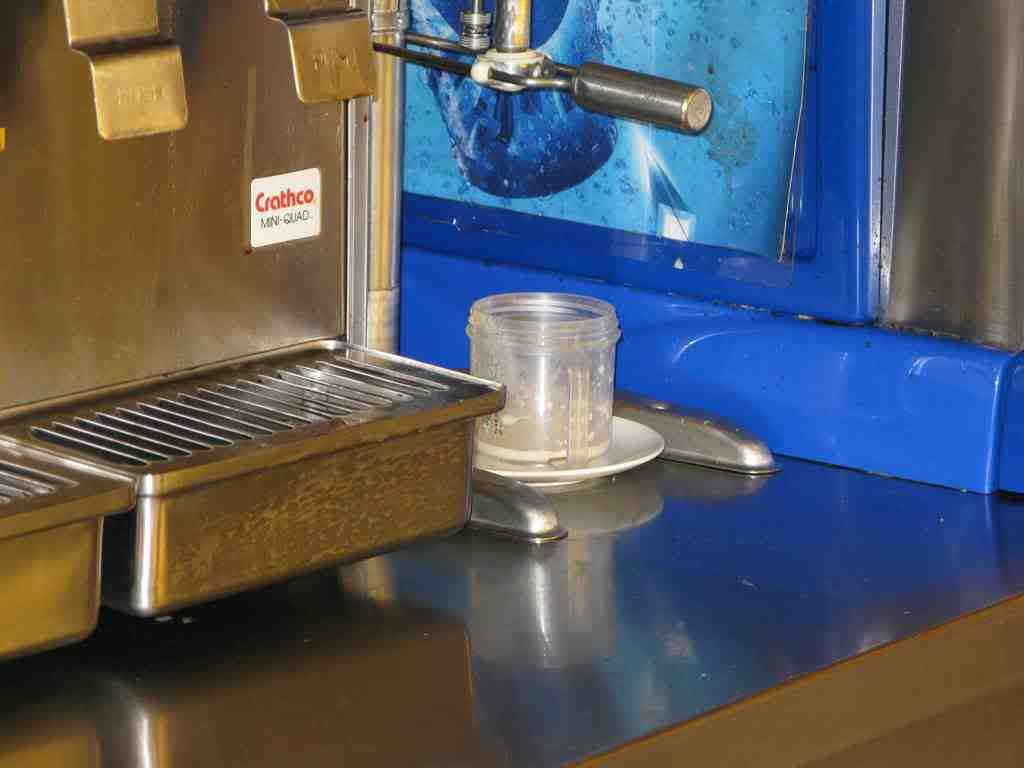
We walked up to the counter, selected our donuts, and ordered two coffees with cream. The clerk grabbed two empty coffee cups from the stack and walked over to the cream dispenser. She lifted the handle twice, to deliver two "shots" of cream into the handy plastic cup that was sitting - probably all morning - under the spigot (see photo). Then, she poured the cream from the plastic cup into the two empty coffee cups.

Fortunately, I happened to glance that way just as she was dispensing the cream, and and yelled out for her to STOP! The poor girl looked quite bewildered and couldn't understand what she had done wrong. I told her that we wanted the cream to be dispensed directly from the spigot into the coffee cups. She nodded, and poured the cream from the coffee cups back into the plastic cup to await the next customer. I then asked for clean coffee cups. She complied, and began, once more, to dispense fresh cream into the plastic cup, and then into the coffee cups. I stopped her again.

Finally, Michael (my husband and traveling companion) asked the clerk whether they had cold milk in their refrigerator. He instructed the clerk to pour milk from the refrigerated jug into two clean coffee cups. She did so, and we sat down to enjoy our hard-earned coffee and donuts. But from that day on, I made sure to carry non-dairy creamer with me at all times.

Michael and I spent four weeks touring countries in Southeast Asia. We visited Thailand, Laos, Cambodia and Myanmar. During the next several weeks, I'll be sharing with you some of our experiences from this highly educational – and sometimes challenging – voyage of discovery.

Thursday, January 31, 2008

Recall Alert - Raw Milk Cheese

The Indiana State Board of Animal Health is alerting consumers in Indiana, Ohio and Michigan to a risk of food poisoning associated with several varieties of raw milk cheese produced by Grassy Meadows Dairy of Howe, IN. The cheeses, which are being recalled by the manufacturer, contain unacceptably high levels of Staphylococcus aureus. The State Board advises consumers not to eat any cheese produced at this facility prior to January 30th.

A Look Back at January 2008

I have just returned from a month-long trip through Southeast Asia, and have been scanning through my accumulation of news archives to see what I missed. Here are a few of the things that happened in the United States and Canada while I was away.
  1. New Era Canning Company announced on January 18th a recall of green beans and canned garbanzo beans packed in #10 cans (institutional size) due to a risk of botulism. Four days later, the company expanded the recall to included all cans of green beans and garbanzo beans produced during the past five years.
  2. On January 21st, Kroger's recalled it's Tri-Bean Salad from stores in 14 states. The salads had been prepared using canned beans from New Era.
  3. FDA announced a recall of frozen salted yellow croaker and frozen dried yellow croaker on January 23rd, due to the possibility that the fish might be contaminated with Clostridium botulinum.
  4. USDA announced on January 5th a recall of more than 13,000 pounds of steak and ground beef products from Mark's Quality Meats of Detroit due to E. coli O157:H7 contamination. The meat was sold to Detroit area restaurants. No illnesses were associated with this recall.
  5. Rochester Meat Company of Rochester, MN recalled 188,000 pounds of ground beef on January 12th after six illnesses – five in Wisconsin and one in California – were linked to their meat. The ground beef had been distributed to restaurants and food service establishments nation-wide.
  6. On January 22nd, the Canadian Food Inspection Agency (CFIA) alerted consumers to Salmonella-contaminated organic sesame seeds. The seeds were imported from Uganda. On January 28th, Shiloh Farms of New Holland, PA announced the recall of its "Organic Unhulled Sesame Seeds", after FDA detected Salmonella in a sample of sesame seeds from one of their suppliers. Coincidence?
  7. On January 27th, CFIA warned consumers in the provinces of Quebec, Ontario and the Atlantic provinces to avoid consuming chicken sandwiches produced by Les Aliments Martel of Gatineau, QC, due to the risk that the sandwiches might be contaminated with Listeria monocytogenes.
  8. The Centers for Disease Control and Prevention (CDC) reported an on-going outbreak of Salmonella Paratyphi B var. Java that has been linked to pet turtles. As of January 18th, there have been 103 confirmed illnesses in 33 states. Young children are especially susceptible to becoming infected as a result of handling the contaminated turtles. FDA has posted a Consumer Update on the risks associated with Salmonella in pet turtles.
  9. Finally, Washington State Department of Agriculture announced on January 29th that it had found Listeria monocytogenes in a coconut-flavored frozen dessert produced by Ca Rem #1 Ice Cream of Sea Tac, WA. The non-dairy frozen dessert was distributed mainly through Asian restaurants and markets in Western Oregon and Western Washington, and is being recalled by the manufacturer. Consumers are advised to throw away any unused product.

I'm intrigued by the sudden upsurge of major canned food recalls in the last year or two – first Castleberry's and now New Era. This sector of the food industry has been under a HACCP-style program for many decades with apparently good results. I wonder whether the chronic underfunding of FDA's food inspection activities is bearing some bitter fruit.