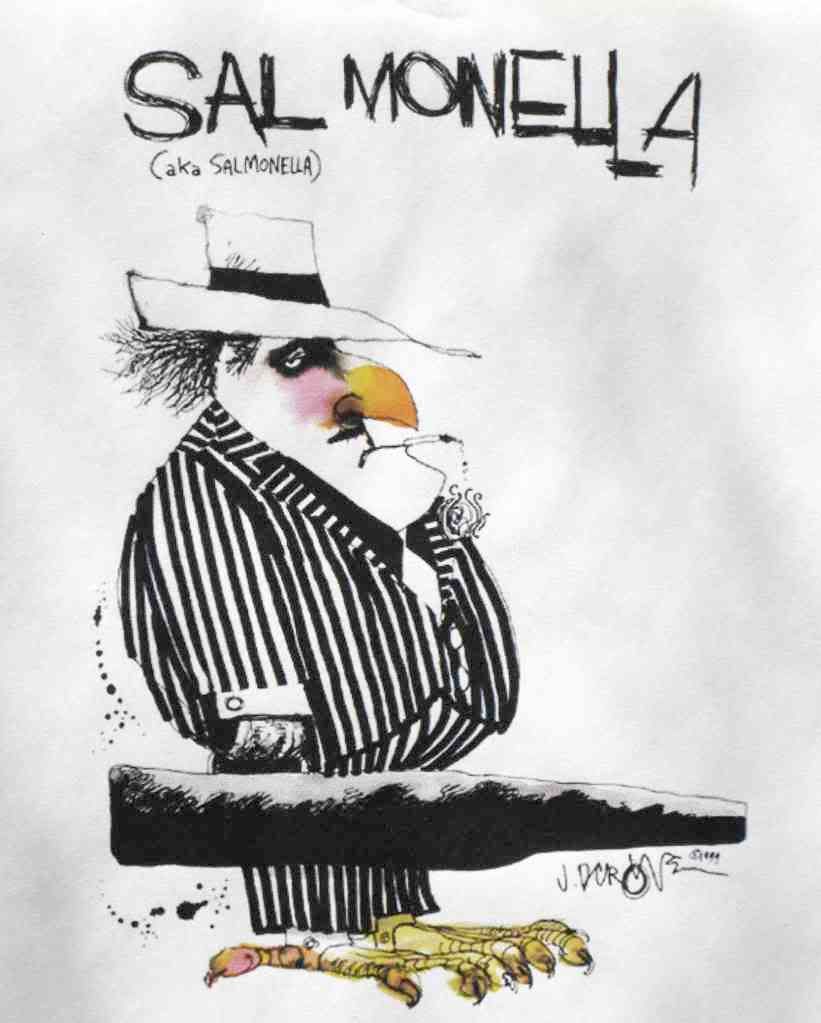
Thursday, May 21, 2009
The Next Food Safety Czar: A Modest Proposal
Saturday, October 4, 2008
Salmonella Outbreak Grows - Still No Recall In Sight
Updated 6:00 pm, October 4, 2008- Chicken Cordon Bleu: Code dates C8121, C126, C8133
- Chicken Kiev: Code date C149
Thursday, August 14, 2008
Nebraska Beef Ltd. Expands Most Recent Recall
The Nebraska Beef Ltd. recall of 1.2 million pounds of beef that was announced on August 8 has been increased by a further 200,000 pounds of primal cuts, subprimal cuts and boxed beef. The additional meat was processed on June 24th, one of the three dates mentioned in the August 8th recall notice."FSIS has concluded that the production practices employed by Nebraska Beef, Ltd. on June 24 were insufficient to effectively control E. coli O157:H7. The products subject to the expansion may have been produced under insanitary conditions."
Friday, August 1, 2008
USDA Missing In Action
Six people in Montgomery County, Ohio developed infections with E. coli O157:H7 in late July. Their illnesses were caused by the Nebraska Beef outbreak strain, and were traced to ground beef sold by three different markets in the Dayton area.Two of the illnesses were traced to meat purchased from Dorothy Lane Markets. That company announced a recall on July 28th of more than 25,000 packages of ground beef with sell by dates of June 9 - July 29. By July 31st, the store's customers had returned 1,255 packages of ground beef, and had received refunds.
According to the recall statement released by Dorothy Lane Markets, the affected meat was supplied to them by Coleman Natural Foods of Golden, Colorado (Coleman's beef division was purchased in April by Meyer Natural Angus of Loveland, CO). Coleman sent some of its meat – including the meat supplied to Dorothy Lane – to Nebraska Beef for processing.
Aside from the question of how Coleman could ensure that its meat remains "The Way Nature Intended" when it relies on a third-party grinding facility – especially a very large-scale processor like Nebraska Beef – there are some other outstanding issues here.
What happened to the other four people who became ill with E. coli O157:H7 in this disease cluster? Where did they purchase their meat, and why have those stores not issued a recall?
Why has Coleman (or its new parent, Meyer Natural Angus) not issued a recall notice? Was all of its affected meat supplied to Dorothy Lane Markets?
According to Bill Marler, a meat sample from All American Meats also has tested positive recently for the E. coli O157:H7 outbreak strain. And readers will remember that the meat responsible for the Georgia outbreak cluster – meat contaminated with the outbreak strain and originating from Nebraska Beef – was never recalled.
Why have we heard nothing from USDA's Food Safety and Inspection Service?
With each new piece of lab evidence and each new disease cluster that is linked to the Nebraska Beef outbreak strain, the silence from both FSIS and Nebraska Beef grows louder. How many more people must sacrifice their health before the agency and the company acknowledge that this is an on-going safety problem?
Does someone have to die before USDA takes action?
Thursday, July 3, 2008
USDA's Inadeqate Recall Alert System
With the United States in the midst of an outbreak of E. coli O157:H7 that has been traced to ground beef, and with the recall of more than 530,000 pounds of beef and beef trimmings from Nebraska Beef due to E. coli O157:H7 contamination, it's clear that our national recall alert system leaves a lot to be desired.The initial recall that resulted from this outbreak was announced by The Kroger Company on June 25th. The Kroger recall, which was limited to ground beef sold in their Michigan and Ohio stores, was also posted on the USDA/FSIS recall notice list.
Next, on June 30th, Nebraska Beef Ltd. announced its recall of 531,707 pounds of beef after FSIS found E. coli O157:H7 in samples from two federally inspected establishments that had purchased meat from Nebraska Beef. That recall, too, was posted on the FSIS web site. But the company and the agency declined to identify the establishments to which Nebraska Beef had shipped the recalled meat.
Kroger's expanded its recall very substantially on July 1st as a result of the Nebraska Beef recall. And Giant Food Stores recalled one batch of preformed burger patties that same day, due to "E. coli" contamination. Both of these July 1st recalls were described by the companies as "Class I" recalls – a classification that, according to USDA and FDA, represents a high level of health risk.
Neither of these July 1st recalls has appeared on the FSIS recall web page. The government appears to be relying solely on the supermarkets to get this vital food safety information into the hands of customers. Coverage of the expanded Kroger recall has been very spotty. The initial New York Times news item, for example, made no mention of the extension of the recall beyond the borders of Ohio and Michigan. And media reports of the Giant Food Stores recall have been conspicuous by their absence.
As of 2:30pm (EDT) yesterday, Michigan has confirmed 21 genetically linked cases of E. coli O157:H7. More than half of the patients purchased or ate ground beef from Kroger's, but the state does not say whether it has been able to trace back the source of the pathogen in the other confirmed cases. Ohio has now confirmed 20 cases linked genetically to this outbreak, and is investigating four more.
No other states have linked cases to this outbreak – yet. Georgia, one of the states included in the expanded Kroger recall, is investigating an outbreak of E. coli O157:H7 in the southwest part of the state, but has not yet established a food link. CDC still considers the E. coli O157:H7 outbreak to be confined to Ohio and Michigan. Let's hope they are right.
But containing a food poisoning outbreak requires cooperation from all parties – not just to recall the contaminated food, but to make sure that the information reaches consumers in timely way. It's clear that FSIS, by neglecting to post the July 1st recall actions of Kroger and Giant, is not pulling its share of the load. What is the agency waiting for – a larger outbreak?
Tuesday, March 4, 2008
More Listeria In The News
The 12 different products were manufactured on February 26th and 27th, and distributed in Connecticut, Florida, Georgia, Massachusetts, Minnesota, New Jersey, New York, Pennsylvania, South Carolina and Wisconsin.
Please consult the USDA news release for additional details.
Monday, March 3, 2008
IN-Humane Society?
"Why did the Humane Society wait until January 30th before releasing the results of their undercover investigation?"Now I have my answer. Meatingplace.com reported this morning that the Humane Society has admitted having deliberately kept the results of its undercover investigation from the USDA for five weeks in order to "...build public outrage." Wayne Pacelle (the president of the Humane Society) told Janie Gabbett of Meatingplace.com in a telephone interview,
"We specifically did not give this information much in advance to the USDA... If it had been given to USDA in advance and they excused the behavior and shut them down for a half a day or a day … that would have been an unacceptable outcome."Pacelle went on to dispute the February 29th statement issued by the San Bernardino County's District Attorney that his office encouraged the Humane Society to bring USDA into the picture. But Pacelle indicated that he might contact USDA sooner next time.
Remind me, please. Is the Humane Society's primary objective to promote animal welfare, or to promote itself?
Friday, February 29, 2008
HSUS vs. USDA – A "Downer" Of A Story
- December 23, 2003: A USDA lab diagnoses mad cow disease in the brain of a slaughtered "downer" cow. Eventually, the cow is discovered to have been imported from Canada (but that's another story).
- January 12, 2004: In response to the December mad cow discovery, USDA issues an Interim Final Rule that, among other things, bans the slaughter of "non-ambulatory" cattle for human consumption. This Interim rule is destined to remain in effect for 3 1/2 years.
- July 12, 2007: The Humane Society, in praising USDA's announcement of a permanent ban on the slaughter of most "downer" cows, expresses reservations about an amendment that opens a loophole. The Society's press release states:
"A complete “no downer” policy encourages better treatment of animals on the farm and during transportation to slaughter to avoid preventable injuries."
- July 13, 2007: USDA issues an "Affirmed Final Rule", which leaves in place most of the provisions of the Interim Final Rule, but which amends the total ban on "downer" slaughter. The amendment provides
"... that non-ambulatory disabled cattle that are offered for slaughter must be condemned but that FSIS inspection personnel will determine on a case-by-case basis the disposition of cattle that become nonambulatory after they have passed antemortem inspection."
- August 31, 2007: The USDA's Food Safety and Inspection Service (FSIS) issues Notice #56-07, advising its inspection staff of the Affirmed Final Rule and instructing inspectors to meet with meat establishment personnel in order to acquaint them with the provisions of the Affirmed Final Rule.
- October/November, 2007: The Humane Society of the United States carries out an undercover investigation at the Hallmark Meat Company and Westland Meat Company in Chino, CA, and provides the evidence to California law enforcement officials, but not to USDA.
- January 30, 2008: The Humane Society releases a videotape resulting from its investigation of Hallmark/Westland. The tape shows workers using a variety of inhumane actions to prod "downer" cattle back onto their feet.
- January 30, 2008: In response to the videotape, USDA suspends Hallmark/Westland Meat as a supplier to various federal food programs, including the School Lunch Program, and announces that it is opening an immediate investigation in to the company's actions. At the same time, the agency expresses regret that the Humane Society delayed releasing the results of its investigation to USDA.
- February 4, 2008: FSIS withdraws its inspectors from Hallmark/Westland Meat, effectively shutting them down.
- February 6, 2008: The Humane Society praises USDA's shutdown of Hallmark/Westland.
- February 15, 2008: The state of California files animal cruelty charges against two employees of Hallmark/Westland.
- February 17, 2008: USDA announces a 143 million pound recall of meat produced by Hallmark/Westland over a two-year period.
- February 22, 2008:Secretary of Agriculture Schafer criticizes the Humane Society for "sitting on" the incriminating videotape.
- February 27, 2008: The Humane Society initiates a lawsuit against USDA and FSIS.
- February 29, 2008: Contradicting the Humane Society's reasons for not informing USDA of its investigation sooner, District Attorney of San Bernardino County, stated in a telephone interview with Meatingplace.com that his office had not asked the Humane Society to withhold the information from USDA. On the contrary, he is quoted by Meatingplace.com as saying, "We recommended that they speak to USDA."
Tuesday, February 26, 2008
Secretary of Agriculture Ed Schafer: "My customers are the children of this country."
Secretary Schafer addressed a board meeting of the National Meat Association on February 22nd, just five days after USDA announced the recall by Hallmark/Westland Meat Packing Company of 143 million pounds of meat and the suspension of USDA contracts with the company. Some of his comments to this group of meat industry leaders would have been well received by a consumers' food safety advocacy group. Here are a few excerpts from the transcript of his speech:
"But something happened here that wasn't right, and we need to get to the bottom of it."These are laudable sentiments, coming from the head of a government department that has a history of putting industry ahead of consumers. Let's hope that USDA actions match Secretary Schafer's words.
"My focus I guess or my motto throughout my time in public service is boiled down to something that's pretty simple: Do the right thing."
"And you can count on that from me and USDA today that we will do the right thing here, now and in the future as we go forward."
"To other nations, this event raises a concern about the safety of our food processing system and the fact that we can provide a reason for them to keep our markets closed for U.S. products in the trade agreements. The only way that we can ally that concern is a thorough and credible investigation to promptly take any corrective actions that are called for, and we will do so."
"(I)n 1862 when President Lincoln formed the USDA he called it the People's Department . . . because he said it touches so many people in so many different ways."
"And I'm reminded today that what (sic) I believe: My customers are are the children of this country."
Tuesday, February 19, 2008
Democratic Presidential Candidates: On Food Safety
I looked for, and found, Barack Obama's statement, also released yesterday, which I have quoted in full below.
It would be nice to know what the co-sponsorship and voting records of both Senators has been on the various food safety bills that have been presented in Congress while they have been in office.Chicago, IL - Senator Barack Obama released a statement on the Department of Agriculture's decision to recall 143 million pounds of frozen beef that came from "downed" animals. The consumption of downed cattle can pose a higher risk of contamination from E. coli, salmonella or mad cow disease.
Senator Obama released the following statement:
"Senator Barack Obama released a statement on the Department of Agriculture's decision to recall 143 million pounds of frozen beef that came from "downed" animals. The consumption of downed cattle can pose a higher risk of contamination from E. coli, salmonella or mad cow disease."Senator Obama said: "Although the Department of Agriculture has now recalled the tainted beef, an estimated 37 million pounds has gone to school lunch programs, and unfortunately, officials believe that most of the meat has already been consumed by schoolchildren. This incident demonstrates yet again the inadequacy of the food recall process. Far too often, tainted food is not recalled until too late.
"When I am President, it will not be business as usual when it comes to food safety. I will provide additional resources to hire more federal food inspectors. I will also call on the Department of Agriculture to examine whether federal food safety laws need to be strengthened, in particular to provide greater protections against tainted food being used in the National School Lunch Program.
"As the parent of two young daughters, there are few issues more important to me than ensuring the safety of the food that our children consume. I commend the Humane Society of the United States for bringing this important issue to the public attention and believe that the mistreatment of downed cows is unacceptable and poses a serious threat to public health."
Sunday, February 17, 2008
Record Recall of Meat from Downer Cattle
The USDA action resulted from an undercover investigation, which was carried out last fall by the Humane Society of the United States and reported on January 30th. The Humane Society investigation revealed that Hallmark/Westland was processing meat from "downer" cattle – cows that were staggering or unable to stand on their own – in contravention of USDA and California regulations. Some of the meat from the slaughtered downer cattle was supplied to school children through USDA's School Lunch Program.
On January 30th, USDA announced the immediate suspension of Hallmark/Westland as a supplier of meat to the School Lunch Program and other federal food and nutrition programs, and initiated its own investigation into the Humane Society's allegations. Today's recall is a result of the USDA investigation.
In classifying this recall as "Class II" rather than "Class I", USDA is signaling that it does not believe the recalled meat to be a significant hazard to human health. Nevertheless, downer cows are known to be more likely to carry human pathogens such as E. coli O157:H7 than ambulatory cows. A study carried out in 2001 and reported in 2003 revealed that downer cows had a more than 3-fold higher chance of carrying E. coli O157:H7 than ambulatory cows.
There are still some important, unanswered questions regarding this scandalous situation:
- Why did the Humane Society wait until January 30th before releasing the results of their undercover investigation?
- Has USDA checked any of the recalled meat for E. coli O157:H7 or other pathogens?
- Where were the USDA inspectors when the downer cattle were being prodded and pushed by employees of Hallmark/Westland?
Saturday, February 9, 2008
Tasmanian Tummy - The New Delhi Belly?
The outbreak, which had claimed 27 victims by then, had been tied to catered food served at several functions. By February 2nd, the toll had climbed to 56 victims, some of whom had eaten catered food while attending two separate funerals at a funeral home. At least three of the victims were sick enough to have needed hospitalization.
The number of victims has since grown to at least 75 - and possible 120 - people, and epidemiological studies have revealed a probable culprit - one or more sauces made from raw eggs.
Raw eggs have become a political hot potato in Tasmania's state parliament. Tasmanian Green Party MP, Nick McKim, has been excoriating Primary Industries Minister David Llewellyn over his department's ineffectual efforts at protecting the public's health. McKim has suggested that a conflict of interest exists within the Primary Industries Department, and that the state's public health department should be handed food safety regulatory responsibility for the agricultural sector.
The Tasmanian regulatory situation sounds very similar to the situation in the United States, where the US Department of Agriculture, together with the 50 State Departments of Agriculture, are responsible both for promoting US agricultural products and for regulating meat, poultry and egg processors.
Conflicts of interest are frowned upon in most other situations, including government agencies and advisory boards. Why do we continue to allow this flagrant conflict of interest to taint our food safety system?
Thursday, January 31, 2008
A Look Back at January 2008
- New Era Canning Company announced on January 18th a recall of green beans and canned garbanzo beans packed in #10 cans (institutional size) due to a risk of botulism. Four days later, the company expanded the recall to included all cans of green beans and garbanzo beans produced during the past five years.
- On January 21st, Kroger's recalled it's Tri-Bean Salad from stores in 14 states. The salads had been prepared using canned beans from New Era.
- FDA announced a recall of frozen salted yellow croaker and frozen dried yellow croaker on January 23rd, due to the possibility that the fish might be contaminated with Clostridium botulinum.
- USDA announced on January 5th a recall of more than 13,000 pounds of steak and ground beef products from Mark's Quality Meats of Detroit due to E. coli O157:H7 contamination. The meat was sold to Detroit area restaurants. No illnesses were associated with this recall.
- Rochester Meat Company of Rochester, MN recalled 188,000 pounds of ground beef on January 12th after six illnesses – five in Wisconsin and one in California – were linked to their meat. The ground beef had been distributed to restaurants and food service establishments nation-wide.
- On January 22nd, the Canadian Food Inspection Agency (CFIA) alerted consumers to Salmonella-contaminated organic sesame seeds. The seeds were imported from Uganda. On January 28th, Shiloh Farms of New Holland, PA announced the recall of its "Organic Unhulled Sesame Seeds", after FDA detected Salmonella in a sample of sesame seeds from one of their suppliers. Coincidence?
- On January 27th, CFIA warned consumers in the provinces of Quebec, Ontario and the Atlantic provinces to avoid consuming chicken sandwiches produced by Les Aliments Martel of Gatineau, QC, due to the risk that the sandwiches might be contaminated with Listeria monocytogenes.
- The Centers for Disease Control and Prevention (CDC) reported an on-going outbreak of Salmonella Paratyphi B var. Java that has been linked to pet turtles. As of January 18th, there have been 103 confirmed illnesses in 33 states. Young children are especially susceptible to becoming infected as a result of handling the contaminated turtles. FDA has posted a Consumer Update on the risks associated with Salmonella in pet turtles.
- Finally, Washington State Department of Agriculture announced on January 29th that it had found Listeria monocytogenes in a coconut-flavored frozen dessert produced by Ca Rem #1 Ice Cream of Sea Tac, WA. The non-dairy frozen dessert was distributed mainly through Asian restaurants and markets in Western Oregon and Western Washington, and is being recalled by the manufacturer. Consumers are advised to throw away any unused product.
I'm intrigued by the sudden upsurge of major canned food recalls in the last year or two – first Castleberry's and now New Era. This sector of the food industry has been under a HACCP-style program for many decades with apparently good results. I wonder whether the chronic underfunding of FDA's food inspection activities is bearing some bitter fruit.
Friday, December 28, 2007
Dear Martha,
First, let’s talk turkey. Unless you have spent the last few decades living in an isolation booth, you must know that by USDA’s own admission, 20-25% of raw ground turkey meat is contaminated with Salmonella. Yet your recipe directions do not provide for a reliable “kill” step. For example, your “Whole-wheat spaghetti and turkey meatballs” recipe directs the reader to prepare the meatballs as follows:
“In a skillet, heat 1 tablespoon olive oil over medium high. Cook 20 frozen Light Turkey Meatballs until browned, 5 to 7 minutes. Add 1 1/2 cups store-bought marinara sauce and 1/2 cup water: Cook until heated through, 5 minutes.”
These instructions leave too much to the reader’s imagination. Browning alone is not enough to cook the meatballs completely, and “heated through” can mean different things to different people. Starting with hard-frozen meatballs increases the risk that the center of the meatballs won’t reach 165ºF, which is the “safe” temperature recommended by USDA.
I also take strong exception to your instructions for cooking chicken in the microwave. Microwave cooking is a notoriously unreliable way to kill bacteria, especially in a solid piece of meat such as a chicken breast. Customers who purchased ConAgra’s Banquet pot pies found that out the hard way. Cooking the chicken breasts until the meat is “...just opaque throughout...” is not a guarantee of microbiological safety.
A few weeks ago, when I was browsing eggnog recipes on-line, I came across yours. It sounded very tasty, but also very risky. It was completely inappropriate for you to publish a recipe that called for raw eggs without adding at least a precautionary statement about the possibility that the eggs might contain Salmonella Enteritidis. You could easily have recommended that pasteurized eggs be used in the recipe.
According to (now 10 year old) data from the US Centers for Disease Control and Prevention, there are approximately 76 million cases of food-borne disease in the US every year. That is more than one case of food-borne illness for every four people in this country every year. It is time that you, and others like you, shouldered some responsibility for teaching the public how to cook meals that are not only tasty and nutritious, but also are microbiologically safe.
Sincerely,
Phyllis Entis, MSc., SM(NRM)
Where's The Beef?
When they discovered the theft, the company notified USDA. The agency has issued a public health alert, which provides details of the establishment number, lot numbers, and packaging. If you have purchased any of ground beef described in the USDA notice, please discard it or return it to the store.
Monday, December 24, 2007
Safe Holiday Eating
The magazine reports that more than 60% of consumers say that they thaw their frozen food in the refrigerator, and the majority of consumers know that poultry should be cooked to an internal temperature of 165ºF. But 63% of those surveyed admitted that they rarely, if ever, used a meat thermometer, and one third claimed to be able to tell that meat was "done" simply by looking at it.
Government agencies and food safety educators spend a great deal of time and effort trying to "get the message out". While they appear to be having some degree of success, the next question is how to get consumers to implement that information.
For starters, here are a few reminders for a food-safe holiday season.
1. Use a meat thermometer when roasting your holiday turkey. You can find details at the USDA web site, and in my blogs of November 23rd and December 12.
2. Use pasteurized eggs to prepare your eggnog, or choose a recipe that includes a cooking step to prevent the possiblity of Salmonella in your eggnog. Remember, there isn't enough alcohol in the eggnog to kill Salmonella.
3. Always clean up very thoroughly after handling or preparing raw meat, eggs or poultry. Remember that Salmonella, Campylobacter and other microbes can be transferred from sponges, dishrags, countertops, sink faucets and the handles of knives and utensils - not just cutting boards.
4. Thaw frozen food in the refrigerator, not at room temperature.
5. Cool cooked food quickly - in the refrigerator, not on the countertop. Your refrigerator can handle the load. Do not try to cool the food in large, deep batches. Spread it out in a shallow layer in several containers, if necessary, to cool it rapidly. Then, once the food has cooled, you can consolidate it into a single container.
If you have any tips of your own to add, or questions about safe handling, please post a comment.
Have a happy and safe holiday!
Tuesday, December 18, 2007
Consumer Confidence Moving From Medium To Rare?
This morning, USDA's Food Safety and Inspection Service announced yet another recall of raw ground beef due to contamination with E. coli O157:H7. The recall was a small one – only 102 pounds – but it illustrates clearly one of the problems with processors' attitudes. The contamination was not discovered by the Tennessee firm that processed the ground beef. It was detected by USDA after the meat had already been sold to consumers.
The U.S. consumer would have much more confidence in the safety of the country's meat supply if she could be sure that she and her family wasn't being used as the "canary in the cage" for the meat industry.
Monday, December 17, 2007
It All Comes Out In The Wash
Processors of “fresh-cut”, washed produce can economize by recycling water. The water is chlorinated, of course, to take care of those pathogens that might be lurking in the lettuce (or spinach). You know which ones - E. coli O157:H7 and Salmonella. After all, put enough chlorine in the wash water and the microbes will be killed. Most of them will, anyway.
The catch is that organic material - soil, bits of produce, fecal matter and whatever else is washed off the produce - inactivates the chlorine. And the more times the water is recycled through the produce washing processing line, the more organic material it collects and the less active chlorine is left to kill the microbes.
This isn’t rocket science - it’s simple arithmetic. Nor is it particularly new. A 1981 research paper described how turbid and organic-laden water reduced the ability of chlorine to kill bacteria. It's nice of USDA to go to the trouble of reconfirming that for us.
Packaged “fresh-cut, washed” produce is neither “fresh-cut” nor particularly well washed. Is it any wonder that spinach and lettuce have been associated with outbreak after outbreak of food borne disease for the last ten years and more?
Personally, I’m sticking with buying intact heads of lettuce and washing the individual lettuce leaves under running tap water just before making my salad.
Friday, December 14, 2007
Ethanol, Clean Energy and E. coli O157:H7
Cellulosic ethanol can be produced from a variety of plant material. At present, about 80% of it is made using corn. But the production process doesn't use up all of the corn. What is left behind after the fermentation and clean-up is a by-product known as "spent grain" or "distiller's grain".
Distiller's grain is not without its uses, especially to the cattle industry. Feedlot operators have been feeding this relatively inexpensive grain to their cattle. And distillers are enjoying the windfall revenue from what would otherwise be waste material. There is, however, a cloud on the horizon.
Recently, researchers at Kansas State University announced that feeding distiller's grain to cattle resulted in a higher incidence of E. coli O157:H7 in the hindgut of the animals. This contradicts findings reported by another major agricultural school, the University of Nebraska - Lincoln. Nebraska researchers did not find any indication that adding distiller's grain to the diet produced an increased incidence of E. coli O157:H7.
So there you have it - one of those situations that turns a microbiologist's hair gray. The USDA's Agricultural Research Service lab in Clay Center, NE is in the midst of a similar study, which is scheduled to be completed by the end of 2008. Best two out of three, anyone?
The process of raising cattle for slaughter has undergone many changes over the decades - in feedlot environment, types of feeds, and handling of manure and runoff. Unfortunately, thought is usually only given to the microbiological impact of these changes after the fact. For once, it would be nice to see data supporting the microbiological safety or benefits of a significant change before that change is implemented.
Thursday, December 6, 2007
Bush-League Food Protection Plan
According to news media reports, the focus of the hearing was mainly on the issues surrounding risk assessment and the concentration of FDA attention on "high-risk" products. But in zeroing in on the "high-risk" issue, Senators have apparently overlooked an even greater flaw in this Plan - the so-called "mandatory recall" provision.
For several years, Senator Tom Harkin (now Chairman of the Senate Agriculture Committee) has sponsored legislation to provide the FDA and USDA with authority to mandate recalls of foods that present a hazard to human health. Each time, the Bush Administration claimed that it had no need of such authority; the voluntary recall system was working. Now, the Administration appears to have had a change of heart. Or has it?
The mandatory recall authority proposed in the Plan reads as follows:
"This authority would be limited to foods that the Secretary has reason to believe are adulterated and present a threat of serious adverse health consequences or death. It would be imposed only if a firm refuses or unduly delays conducting a voluntary recall. An order to recall food could only be issued by the HHS Secretary, Deputy Secretary, or Commissioner of Food and Drugs, and would be accompanied by appropriate due process rights."
There are several major flaws in this proposal. The most glaring is the total exclusion of mandatory recall authority for USDA, the federal government department that regulates all meat, poultry and processed egg products in the United States (including, for example, pepperoni-topped pizza). Another loophole is the lack of definition of the terms "threat of serious adverse health consequences", "unduly delays" and "due process rights". Are vomiting or diarrhea "serious adverse health consequences", or would the new authority only cover life-threatening situations such as botulism or hemolytic uremic syndrome (HUS)? How long is an undue delay? Who decides? And what constitutes "due process rights"? Will FDA need to go to court each time it needs to exercise its mandatory recall authority?
Canada has had mandatory recall authority on its books for ten years under the Canada Food Inspection Agency Act. The law, which covers all foods, simply states:
"19. (1) Where the Minister believes on reasonable grounds that a product regulated under an Act or provision that the Agency enforces or administers by virtue of section 11 poses a risk to public, animal or plant health, the Minister may, by notice served on any person selling, marketing or distributing the product, order that the product be recalled or sent to a place designated by the Minister.”
There is no requirement, under the Canadian law, for the Canada Food Inspection Agency to demonstrate that a company has "unduly delayed" implementing a recall. The authority is the Agency's to use as needed to ensure prompt action and to protect public health.
President Theodore Roosevelt once advised that we should "Walk softly and carry a big stick." That advice should be heeded by this Administration in its dealings with the food industry, both domestic and foreign. Unfortunately, the "mandatory recall" proposal described in the Food Protection Plan will have the FDA walking on eggshells with nothing more than a small twig in hand with which to enforce its mandate.