Friday, May 22, 2009

Recall Roundup: May 22, 2009

Here is today's list of food safety recalls, product withdrawals and allergy alerts. The live links will take you directly to the official recall notices and company news releases that contain detailed information for each recall and alert.


United States
  • Allergy Alert: Western Bagel Baking Corporation recalls two code dates of Publix Brand 100% Whole Wheat Sliced Bagels, due to the presence of undeclared egg.
  • Pet Food Recall: Nutro Products, Inc. has recalled several varieties of dry cat food due to incorrect levels of zinc and/or potassium. The recall pet foods were distributed nationally in the United States.

Canada
  • Allergy Alert: Fruits et Légumes Tardif recalls various several poultry-based or meat-based patés due to the presence of undeclared egg protein. The recalled items bear packaging dates up to and including May 21, 2009 and were sold only at Fruits & Légumes Tardif, 559 chemin Saint-Jean, Laprairie
  • Pet Food Recall: Nutro Products, Inc. has recalled several varieties of dry cat food due to incorrect levels of zinc and/or potassium. The US-manufactured pet foods were distributed in Canada.


Mexico, Central America, South America
  • Pet Food Recall (Mexico): Nutro Products, Inc. has recalled several varieties of dry cat food due to incorrect levels of zinc and/or potassium. The US-manufactured pet foods were distributed in Mexico.


Australia and New Zealand
  • Pet Food Recall (New Zealand): Nutro Products, Inc. has recalled several varieties of dry cat food due to incorrect levels of zinc and/or potassium. The US-manufactured pet foods were distributed in New Zealand.


Asia, Africa and the Pacific
  • Pet Food Recall (several countries): Nutro Products, Inc. has recalled several varieties of dry cat food due to incorrect levels of zinc and/or potassium. The US-manufactured pet foods were distributed in Japan, Korea, Thailand, Malaysia, Singapore, Indonesia and Israel.


Some supermarket chains post recall notices on their web sites for the convenience of customers. To see whether a recalled food was carried by your favorite supermarket, follow the live link to the supermarket's recall web site.


*The Kroger umbrella encompasses numerous supermarket, marketplace and convenience store chains, listed on the Kroger corporate home page.


If you would like to receive automatic email alerts for all new articles posted on eFoodAlert, please submit your request using the link on our sidebar.

Thursday, May 21, 2009

URGENT: NUTRO PRODUCTS RECALL

May 21, 2009

Nutro Products is recalling several varieties of NUTRO® NATURAL CHOICE® COMPLETE CARE® Dry Cat Foods and NUTRO® MAX® Cat Dry Foods with “Best If Used By Dates” between May 12, 2010 and August 22, 2010. 

The recalled products were distributed in across the United States, and also in Canada, Mexico, Japan, Korea, Thailand, Malaysia, Singapore, Indonesia, New Zealand, and Israel.

The recall was triggered after Nutro discovered a production error by its US supplier of mineral premixes. Two premix batches contained insufficient amounts of potassium, and one of those batches also contained too much zinc. 

Nutro advises cat owners who use the recalled products to switch immediately to another formula, and to monitor their cats for symptoms that include a reduction in appetite or refusal of food, weight loss, vomiting or diarrhea. 

For more information on this recall, consumers and cat owners should contact Nutro Products at 1-800-833-5330, or visit the company's web site at www.nutroproducts.com.

Summer's Coming. So Is E. coli O157:H7

May 21, 2009

Today's eFoodAlert Recall Roundup includes Valley Meats' 95,000+ pound recall of E. coli O157:H7-contaminated ground beef products.

The ground meat, distributed nationally under several different brand names, has been linked to a cluster of E. coli O157:H7 infections in Ohio, Pennsylvania and Illinois.

None of the three affected states have posted warnings on their web sites – perhaps the Ohio, Pennsylvania and Illinois health departments are too busy chasing suspect swine flu cases. The outbreak also is not large enough to have made it onto CDC's web site. 

Just in time for Memorial Day Weekend, the first major ground beef recall of the grilling season is a reminder to follow safe food handling practices at all times – especially during summer cook-outs and picnics.

  • Keep hot foods hot and cold foods cold;
  • Wash your hands and all utensils after handling raw meats, poultry or eggs;
  • Buy a meat thermometer – AND USE IT!
  • Cook foods to the internal temperature recommended by USDA – 160ºF for ground beef.

And watch out for more recall announcements.

Recall Roundup: May 21, 2009

Here is today's list of food safety recalls, product withdrawals and allergy alerts. The live links will take you directly to the official recall notices and company news releases that contain detailed information for each recall and alert.


Peanut Butter Outbreak Recalls
  • Rio Pluma LLC (a division of Stapleton Spence Packing Company) reissues its recall of various peanut products to clarify affected codes.


United States

  • Allergy Alert: Domega International Co Ltd., recalls FMD Brand Spiced Bean, due to the presence of undeclared sulfites. The Spiced Bean, which was sold nationwide, is a product of China. The problem was discovered by the New York State Department of Agriculture & Markets during a routine sampling program.
  • Food Safety Recall: Valley Meats LLC, (Coal Valley, IL) recalls approximately 95,898 pounds of ground beef products that may be contaminated with E. coli O157:H7. The recalled products, which were distributed nationally under several different brand names, have been linked to a cluster of E. coli O157:H7 infections in Ohio, Pennsylvania and Illinois.


Asia, Africa and the Pacific
  • Mercury Poisoning Alert (Hong Kong): The Department of Health warns consumers against using Qian Yan (White Cream) and Qian Yan (Yellow Cream) after the cosmetics were linked to a case of mercury poisoning. The two products contained 11,000 and 9,000 times the permitted levels of mercury, respectively.
  • Food Safety Alert (Taiwan): Up to 77% of Chinese dried radish and 44% of dried small shrimp failed government lab tests due to the presence of excessive levels one or more of the preservatives sulfur dioxide, benzoic acid and sorbic acid.
  • Food Safety Alert (Taiwan): The Taipei County government seized rice destined for school lunch programs after the rice was determined to be substandard. Noodles will be served until a new supply of rice can be procured.


Some supermarket chains post recall notices on their web sites for the convenience of customers. To see whether a recalled food was carried by your favorite supermarket, follow the live link to the supermarket's recall web site.


*The Kroger umbrella encompasses numerous supermarket, marketplace and convenience store chains, listed on the Kroger corporate home page.


If you would like to receive automatic email alerts for all new articles posted on eFoodAlert, please submit your request using the link on our sidebar.

The Next Food Safety Czar: A Modest Proposal

May 21, 2009

One of Tom Vilsack’s first acts after being confirmed as Secretary of Agriculture was to name Ronald F. Hicks as Acting Deputy Undersecretary for Food Safety. In his memo announcing the appointment, Secretary Vilsack said of Mr. Hicks that his “… extensive experience will bring great benefit to the Agency as this administration shapes its vision for a productive transition.”

And what, exactly, does Ron Hicks bring to the food safety table? An academic background in veterinary science? In microbiology? In anything biological? Or, maybe, expertise in developing and implementing food safety programs – anywhere?

Not a chance! Ronald Hicks is an attorney by training and an administrator by temperament.  His previous position was Chief Operating Officer of FSIS, with emphasis on the “…design, operations and improvement of FSIS management systems.”  In short, Ron Hicks is a desk jockey with a law degree.

Hicks’ immediate boss was Elizabeth Johnson, the Acting Undersecretary for the Office of Food Safety (She left in December 2008). Johnson worked as a research dietitian within USDA, a nutritionist within the food labeling division of FDA, and as a consultant to government and the private sector on nutrition, farm credit and livestock issues. Food safety was not in her resumé.

Reporting to Hicks is Alfred Almanza, the present FSIS Administrator. Almanza began his career as an inspector with USDA 30 years ago, and has risen through the ranks. He is the only member of the senior USDA team who has direct training and experience in food safety issues.

Secretary Vilsack badly needs a senior team member with the knowledge and experience to guide USDA’s efforts to revamp food safety policies and enforcement. We have found the perfect candidate.

Dr. David Theno has all the necessary qualifications for the position of Undersecretary for the Office of Food Safety. After earning his degrees in animal sciences, he worked for large food companies, such as Armour Foods and Foster Farms. He has led his own independent consulting firm. In 1993, following a disastrous outbreak of E. coli O157:H7, Jack-In-The-Box recruited Dr. Theno to reinvent that organization’s tattered food safety program.

The program developed and implemented by David Theno earned awards both for the company and for him. Last year, Dr. Theno retired from Foodmaker (the parent of Jack-In-The-Box), and is now an independent consultant once again. 

Dr. Theno knows the meat industry, knows food safety, and knows how to get things done. Tom Vilsack needs him at the pinnacle of the food safety pyramid.

David Theno has the right stuff!

Wednesday, May 20, 2009

Cholera Chronicle: May 20, 2009

Welcome to the eFoodAlert Cholera Chronicle. Periodically, we'll present a summary by region of cholera news from around the world.

Cholera is spread through human fecal contamination of food and water supplies. It is a frequent Disease of Disaster, accompanying famines, floods, wars, and other natural- or man-made disasters. Its victims typically are destitute, displaced or debilitated. And, all too often, dead.


Africa
  • Zimbabwe: The United Nations reported on May 11th that the death toll for this 9-month outbreak has reached 4,271; at least 97,400 people have been infected with Vibrio cholerae since August 2008. The good news is that the number of new cases has dropped significantly – just 65 during April. Nevertheless, the conditions that allowed this outbreak to spin out of control are still in place. Zimbabwe suffers from inadequate medical facilities, inadequate sewage treatment, and and inadequate supply of fresh, safe drinking water. Mugabe inherited a system that worked. When he eventually steps down – or dies – he will bequeath to his successor a broken-down, dysfunctional national infrastructure.
  • Kenya: The government is responding to limit the spread of an incipient outbreak of cholera in the capital city of Nairobi. Three cases have been reported so far. The city's water and sewage company also has responded, by moving to clean and repair the Nairobi sewer system, which typically suffers from an average of 600 sewage blockages and overflows per month.


Asia
  • Vietnam: The country's annual tussle with cholera is well underway. Already, one person has died of cholera and 53 have been infected. At least 500 people have reported suffering from acute diarrhea. The outbreak has spread to 11 provinces so far. Some of the cases have been blamed on contaminated dog meat. As a result, the country has temporarily shut down a dozen or more dog slaughterhouses in an effort to contain the outbreak. 


Cholera can be treated successfully, if adequate medical facilities are available. More importantly, outbreaks can be prevented, by providing communities with safe drinking water, and with sanitary disposal facilities for human waste. 

2008 was the International Year of Sanitation. The World Health Organization partnered with other agencies to promote improvements in sanitation in underdeveloped areas of the world. But it will take many years before these efforts make a significant dent in the problem. 

Meanwhile, cholera will continue to follow in the wake of world disasters.

Recall Roundup: May 20, 2009

Here is today's list of food safety recalls, product withdrawals and allergy alerts. The live links will take you directly to the official recall notices and company news releases that contain detailed information for each recall and alert.


United States
  • Food Safety Recall: Kellogg Company recalls three batch codes of MorningStar Farms Mini Corn Dogs (Veggie, 10 oz) on the advice of FDA, after a routine audit determines that they may have been packaged under conditions that did not comply with Good Manufacturing Practices.
  • Food Recall: ShopRite of EveshamRoad (Cherry Hill, NJ) recalls all store-made ground meat produced and sold on Monday, May 18, 2009 due to possible contamination with pieces of plastic film wrap.


Europe, Including the United Kingdom
  • Allergy Alert (UK): Tiger Retail Ltd recalls some Rotstern Crispy Rounds confectionery, due to the presence of undeclared peanut protein. The recalled items were manufactured in Germany.

Asia, Africa and the Pacific
  • Pharmaceutical Safety Recall (Hong Kong and Macau): Prowin Laboratories Ltd recalls two batches of gels for mouth ulcer, due to contamination with unacceptable levels of bacteria and molds. No pathogens were detected in the products. The prescription and over-the-counter pain-relief and anti-inflammatory gels were manufactured for Prowin by Marching Pharmaceutical Ltd., a Hong Kong-based contract manufacturer.


Some supermarket chains post recall notices on their web sites for the convenience of customers. To see whether a recalled food was carried by your favorite supermarket, follow the live link to the supermarket's recall web site.


*The Kroger umbrella encompasses numerous supermarket, marketplace and convenience store chains, listed on the Kroger corporate home page.


If you would like to receive automatic email alerts for all new articles posted on eFoodAlert, please submit your request using the link on our sidebar.

Tuesday, May 19, 2009

Who's Minding The [Food Safety] Store?

May 19, 2009

Yesterday, the Senate confirmed the appointment of Margaret Hamburg as the new FDA Commissioner. She joins HHS Secretary Kathleen Sibelius and Agriculture Secretary Tom Vilsack at the top of the US Food Safety triumvirate. 

Dr. David Acheson and Dr. Stephen Sundlof – holdovers from the Bush Administration – continue to fill supporting roles as FDA Associate Commissioner for Food, and Director of the Center for Food Safety and Applied Nutrition, respectively.

As usual, food safety is “tail-end Charlie” at USDA. The current FSIS Administrator, Alfred Almanza, is a holdover from the previous Administration. President Obama has yet to nominate a new Administrator for this most senior food safety position at USDA. Meanwhile, the positions of Undersecretary and Deputy Undersecretary of Agriculture for Food Safety also continue unfilled.

Vilsack, Sibelius and Hamburg most likely will guide US food safety policy for the remainder of President Obama’s first term. What do we know about them, and what do their appointments tell us about the President’s true commitment to revamping the US food safety infrastructure?

Secretary Tom Vilsack (Agriculture): Former Governor of Iowa. Secretary Vilsack was a supporter of biodiesel and ethanol production, health care reform and education reform during his tenure as Governor. He also led agricultural trade missions, promoting sales of his state’s agricultural products. The Secretary’s official biography makes no mention of his stance on food safety.

Secretary Kathleen Sibelius (Health and Human Services): Former Governor of Kansas; former Kansas Insurance Commissioner. The Secretary’s official biography does not even mention food safety. In her written testimony, submitted during her confirmation hearing, she stated, “… health reform would be my mission …”

FDA Commissioner Margaret “Peggy” Hamburg: Former Assistant Health Secretary in the Clinton Administration; Former New York City Health Commissioner. Dr. Hamburg is described as an expert in bio-terrorism. 

Secretaries Vilsack and Sibelius both were strong supporters of President Obama during his nomination campaign. Their appointments are highly political. Neither they, nor FDA Commissioner Hamburg, can claim any significant background or record regarding food safety. These are the people who now lead the President’s new Food Safety Working Group

The American consumer deserves – and should demand – the appointment of a Cabinet Secretary whose primary mission is food safety. This crucial public health sector must not continue to be a political football.

Recall Roundup: May 19, 2009

Here is today's list of food safety recalls, product withdrawals and allergy alerts. The live links will take you directly to the official recall notices and company news releases that contain detailed information for each recall and alert.


Europe, Including the United Kingdom
  • Allergy Alert (UK): Waitrose recalls Oriental Supper For Two with Spring Rolls due to presence of undeclared fish, shellfish, milk and peanut.
  • Food Safety Alert (France): The Ministry of Agriculture and Fisheries warns consumers that certain pork liver-based raw sausages may be a source of Hepatitis E virus infections. The Ministry warns that these products should only be consumed "fully cooked and has directed producers of these types of sausages to modify their package labeling accordingly.


Asia, Africa and the Pacific


Some supermarket chains post recall notices on their web sites for the convenience of customers. To see whether a recalled food was carried by your favorite supermarket, follow the live link to the supermarket's recall web site.


*The Kroger umbrella encompasses numerous supermarket, marketplace and convenience store chains, listed on the Kroger corporate home page.


If you would like to receive automatic email alerts for all new articles posted on eFoodAlert, please submit your request using the link on our sidebar.

Monday, May 18, 2009

Recall Roundup: May 18, 2009

Here is today's list of food safety recalls, product withdrawals and allergy alerts. The live links will take you directly to the official recall notices and company news releases that contain detailed information for each recall and alert.


Pistachio Product Recalls


Peanut Butter Outbreak Recalls
  • Edaleen Dairy recalls Tin Roof Sundae Ice Cream and Chocolate Peanut Butter Nut Ice Cream 


United States
  • Food Safety Recall: L&M Companies, Inc. recalls one lot of whole cantaloupes that may be contaminated with Salmonella


Australia and New Zealand
  • Food Safety Recall (New Zealand): Gourmet Foods (Tauranga) recalls Pat's Pantry and Ponsonby Pie steak pies with use by dates between May 7 and May 24, due to contamination with pieces of bone.


Some supermarket chains post recall notices on their web sites for the convenience of customers. To see whether a recalled food was carried by your favorite supermarket, follow the live link to the supermarket's recall web site.


*The Kroger umbrella encompasses numerous supermarket, marketplace and convenience store chains, listed on the Kroger corporate home page.


If you would like to receive automatic email alerts for all new articles posted on eFoodAlert, please submit your request using the link on our sidebar.

Folic Acid In Our Food

May 18, 2009

What is folic acid, and why are New Zealand's bakers up in arms over it?

Folic acid, or folate, is a member of the vitamin B family. Together with vitamin B12, folate is essential for the formation of normal red blood cells and for DNA synthesis. Dietary sources for folate include citrus fruit and raw, leafy vegetables.

Folate deficiency, like vitamin B12 deficiency, produces a type of anemia. Possible sources of the vitamin deficiency can include:
  • Inadequate amount of raw, leafy vegetables or citrus fruit in the diet;
  • Overcooking vegetables (folate levels in food are greatly reduced by excessive cooking);
  • Drinking excessive amounts of alcohol (interferes with folate absorption by the body);
  • Interference from certain pharmaceuticals;
  • Pregnancy and breast-feeding; and
  • Kidney dialysis.

An individual whose folate level is low for any of these reasons can take an oral supplement to correct the deficiency. Often, though, a healthy woman, who has not yet realized that she is pregnant, may be lacking in folate without realizing it. And this can have a serious effect on the health of her unborn baby.

Folate deficiency during the first three months of a woman's pregnancy – and even during the six months prior to her becoming pregnant – may result in birth defects such as spina bifida – a faulty or incomplete formation of the spinal cord and spinal column.

The connection between low folate levels and defects such as spina bifida has been known for at least 15 years. The debate over how best to ensure that women of childbearing age receive enough folate to prevent neural tube defects has been going on ever since the link was established. Which brings us back to the New Zealand bakers.

The previous government of New Zealand, led by Helen Clark, had decided to mandate the fortification of most bread with folic acid. The Clark government announced this policy change after the existing program – to fortify only certain brands of bread – proved ineffective. But, according to a recent poll reported by The New Zealand Herald, 87% of New Zealanders don't want their bread fortified with folic acid. In the face of this public opposition, the current government has promised to take a second look at the policy.

The Bakers Association is fighting the planned fortification mandate, which puts the onus on individual bakers to add folic acid to each batch of bread dough, rather than requiring millers to fortify their flour, as most other countries have done.

In its fight against fortification, the Bakers Association has claimed that adding folic acid to bread would make it less safe, calling the program ". . . a mass medication experiment that won't work." The comment was echoed by the chief executive of the Food and Grocery Council, who described fortification as ". . . a medical experiment of grand proportions." The Herald article also referred to recent studies that suggest a link between folic acid fortification and increased risk of colon cancer.

The "experiment" already has been underway for more than a decade in the United States and Canada, and more than 50 other countries also have adopted folate fortification. 

This map, provided by the Flour Fortification Initiative, illustrates the distribution of flour fortification mandates worldwide. Dark blue countries mandate fortification of at least one type of flour; countries shown in light blue have a policy of voluntary fortification; yellow indicates that a policy is in the planning stages.


If the Bakers Association is correct and folate fortification causes colon cancer, the world is in for a major outbreak of this disease. A recent study from Chile suggests that colon cancer has increased in that country since mandatory flour fortification was implemented. In addition, a Dutch study released last year indicated that cancer cells in lab culture grew more rapidly in the presence of high concentrations of folic acid. But US colon cancer rates fell by 10% between 1999 and 2005, from 55 cases per 100,000 people in 1999 to 49.5 cases in 2005 (the most recent year for which CDC data are available).

In both Canada and the United States, folic acid fortification of flour has been mandatory since 1998. And this policy has born fruit. By 2007, the United States had experienced a 26% reduction in the incidence of folate-related birth defects; Canada documented a 42% drop. All at a cost of just pennies per person.

Overlooked in the folate debate is a recent suggestion that folic acid fortification of flour may be linked with increased rates of autism. Here again, though, the evidence is not clear-cut. Autism rates have been rising steadily in the United States since the 1980's – well before folate was added to flour.

Nevertheless, the New Zealand government is correct to reexamine its position. It is wrong to place the onus on individual bakers to fortify their bread. This would lead to erratic fortification levels and an enforcement nightmare. 

If fortification is desirable – and we believe that it is – the place to fortify is at the flour mill.  

Sunday, May 17, 2009

The Case of The Waist-ed Cake: Thinking Outside The Box

May 17, 2009

by Quintzy Doodle

Note to Readers: This article first appeared on several Labradoodle discussion boards and has been reprinted here by permission of its author, Quintzy. Dates have been omitted to protect Momsy.

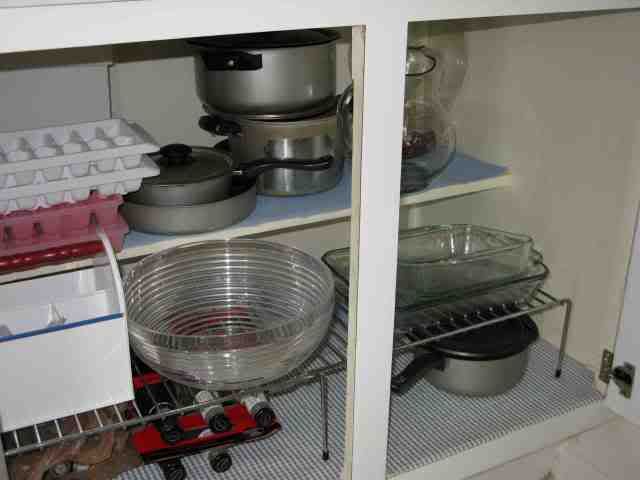
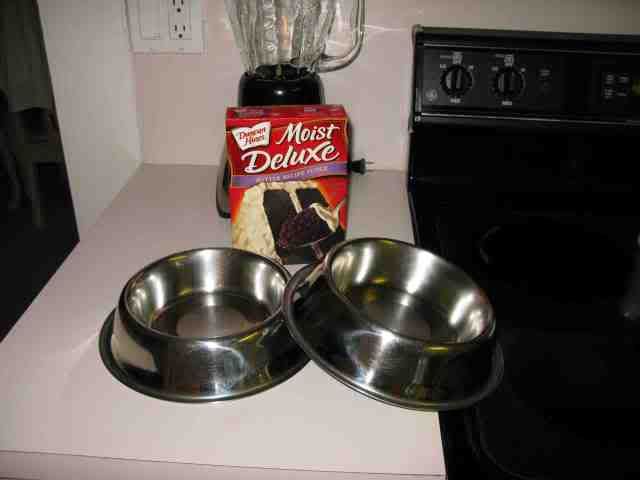
It was Momsy's birthday. Popsy and I decided to bake her a birthday layer cake, since it was a special birthday for her (it has a zero in it). But we ran into a little problem. 


We couldn't find two cake pans the same size!


No matter how hard we looked, everything was different sizes.


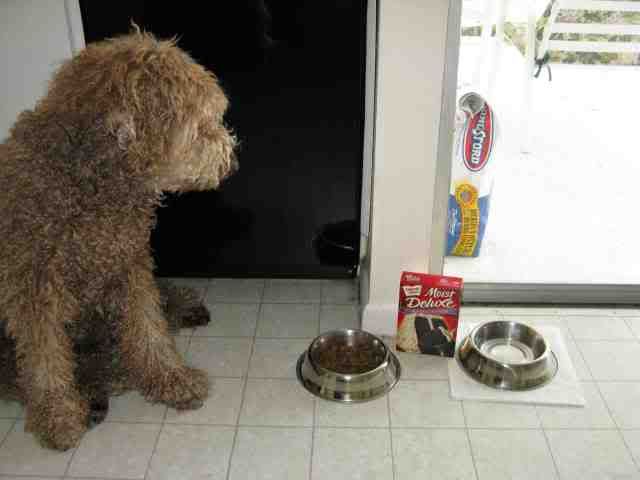
Finally, while Popsy was giving me breakfast, he had a brainwave.


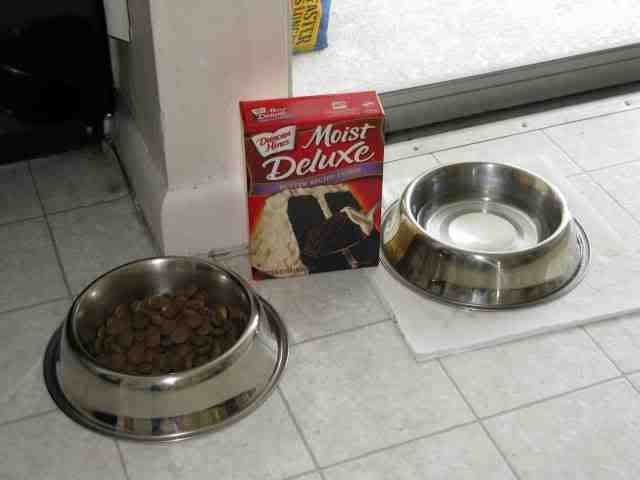
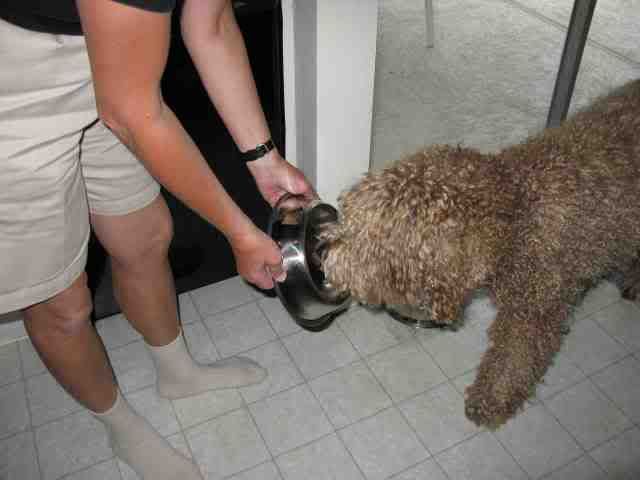
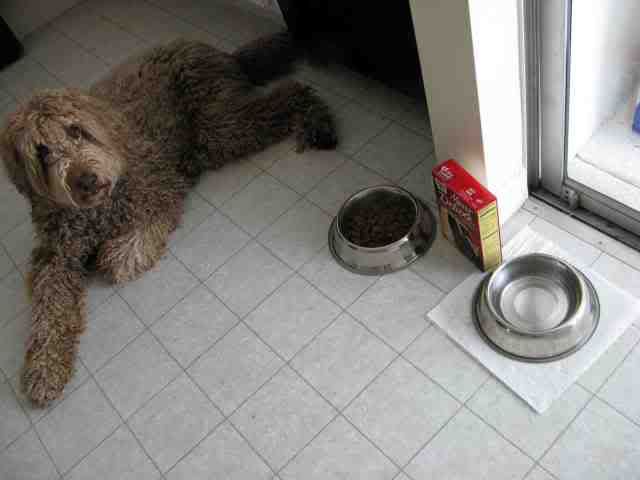
"Gee, Popsy," I said, " I know that my food and water bowls are both the same size, but are you sure they will work as cake pans?"


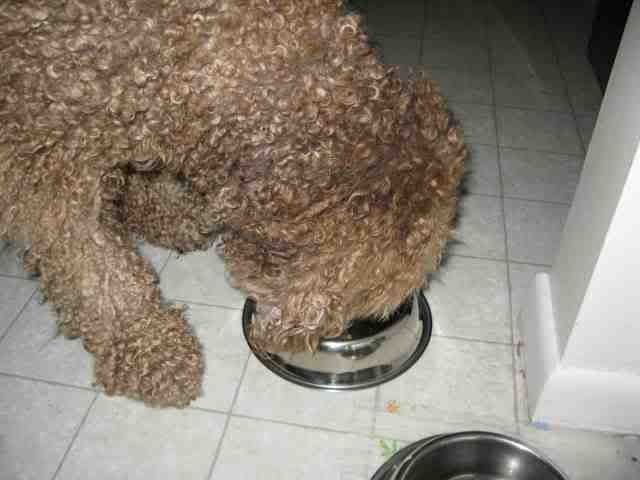
Popsy said that he thought they would work, so I hurried up and finished my breakfast.


And then I did the dishes.


Now my bowls were all shiny clean and ready for their new duties.


First we greased and dusted the bowls.


Then Popsy started to assemble the cake. The mix called for butter.


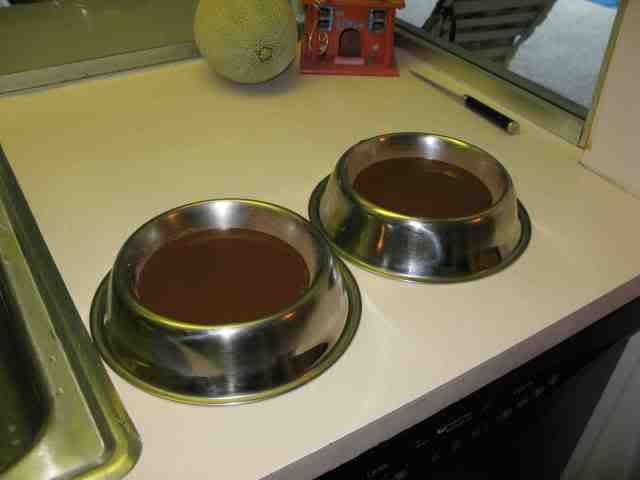
By the time he was done, the batter also contained eggs and water.


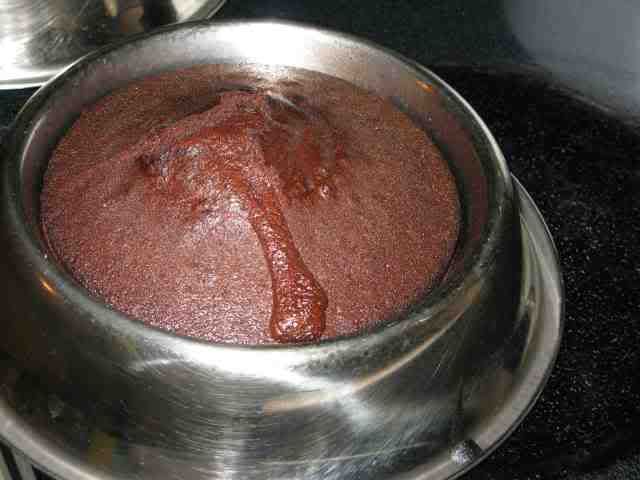
Popsy poured the batter into my bowls and they were ready for the oven.


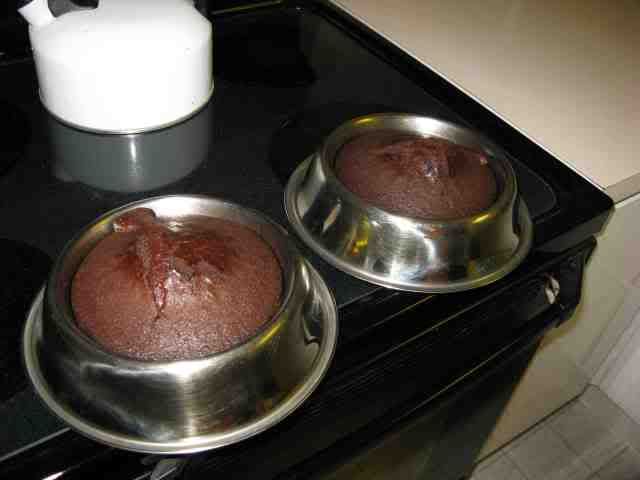
Magical things happened in the oven, and when Popsy took the bowls back out, they looked like this.


They looked like Kilauea after an eruption.


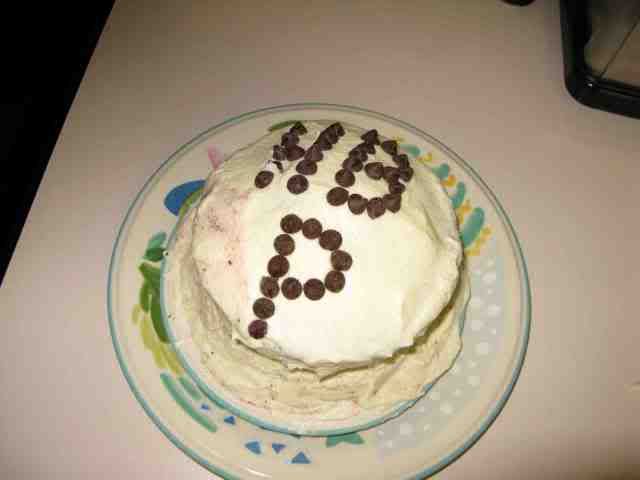
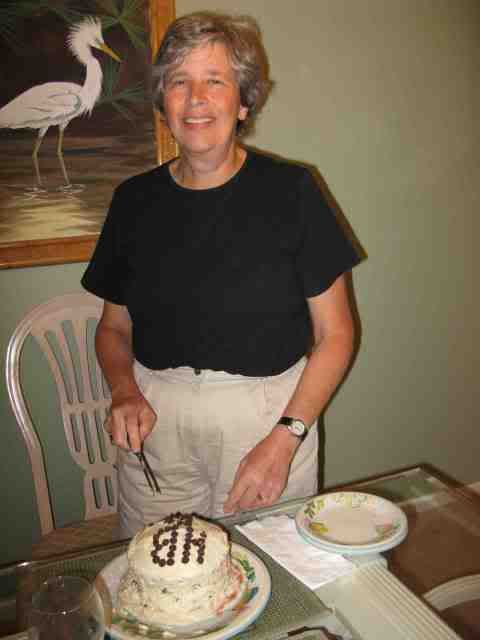
But after Popsy got through with it, the cake looked great. It even had an hourglass figure, 'cause he put the two bottoms together.


Momsy REALLY liked her special birthday cake. She said it was delicious!


Thanks, Popsy, for letting me help you bake a birthday cake for Momsy. 

Saturday, May 16, 2009

Recall Roundup: May 16, 2009

Here is today's list of food safety recalls, product withdrawals and allergy alerts. The live links will take you directly to the official recall notices and company news releases that contain detailed information for each recall and alert.


United States
  • Food Safety Recall: Los Corrales (Houston, TX) recalls all of its dried chorizo produced since January due to microbial health risks resulting from inadequate documentation of the cooking process. The recalled chorizo was distributed to stores in Dallas, Houston, and parts of East Texas.
  • Food Safety Recall: L&M Companies Inc. has recalled some cantaloupes sold at Wal-Mart Stores in North Carolina, South Carolina and South Hill, VA after Salmonella was detected in a melon from the farm where they were grown.


Canada
  • Allergy Alert: Rocky Mountain Grain Products recalls "More Than a Square Meal" bar with Raisins (200 g pkg) bearing UPC 8 31537 00012 2, due to the presence of undeclared sulfites.
  • Food Safety Recall: La Fromagerie Couland recalls all cheeses sold up to and including May 15, 2009, due to microbial hazards resulting from inadequate pasteurization controls.


Some supermarket chains post recall notices on their web sites for the convenience of customers. To see whether a recalled food was carried by your favorite supermarket, follow the live link to the supermarket's recall web site.


*The Kroger umbrella encompasses numerous supermarket, marketplace and convenience store chains, listed on the Kroger corporate home page.


If you would like to receive automatic email alerts for all new articles posted on eFoodAlert, please submit your request using the link on our sidebar.