Showing posts with label risky. Show all posts

Tuesday, July 21, 2009

Risky Eating: Pre-Chewed Food

July 21, 2009

Pre-chewing food is one way for mothers who have no access to commercial baby food – or who simply can't afford it – to prepare puréed food for their babies. The practice of pre-chewing food usually is associated with poor countries. Occasionally, though, mothers and care-givers in the developed world engage in the practice – perhaps as a way to induce a baby to eat.

The practice of feeding pre-chewed food was already known to increase the risk of early development of tooth decay in children. Now, researchers at St. Jude's and the CDC have discovered that pre-chewed food also can transmit the AIDS virus (HIV) from mother to child.

The research report, which will appear in the August 2009 issue of Pediatrics, documents three such cases of AIDS transmission in the United States. HIV is not transmitted in saliva; blood must be present. This can happen if the person doing the chewing suffers from bleeding gums. The baby, too, must have an open sore in its mouth – perhaps as a result of teething.

While the practice of pre-chewing is uncommon in developed countries, it is not unheard of. A quick Google search turned up several websites where the practice is discussed: Alternative Baby and Yahoo! Answers, to name just two.

If, for some reason, you feel compelled to engage in this practice, be sure that your dental hygiene is impeccable. Otherwise, your baby will receive an unexpected and unwanted dietary supplement – a smorgasbord of all the bacteria and viruses that live in your mouth.

Wednesday, March 25, 2009

Risky Eating: Raw and Undercooked Eggs

March 25, 2009

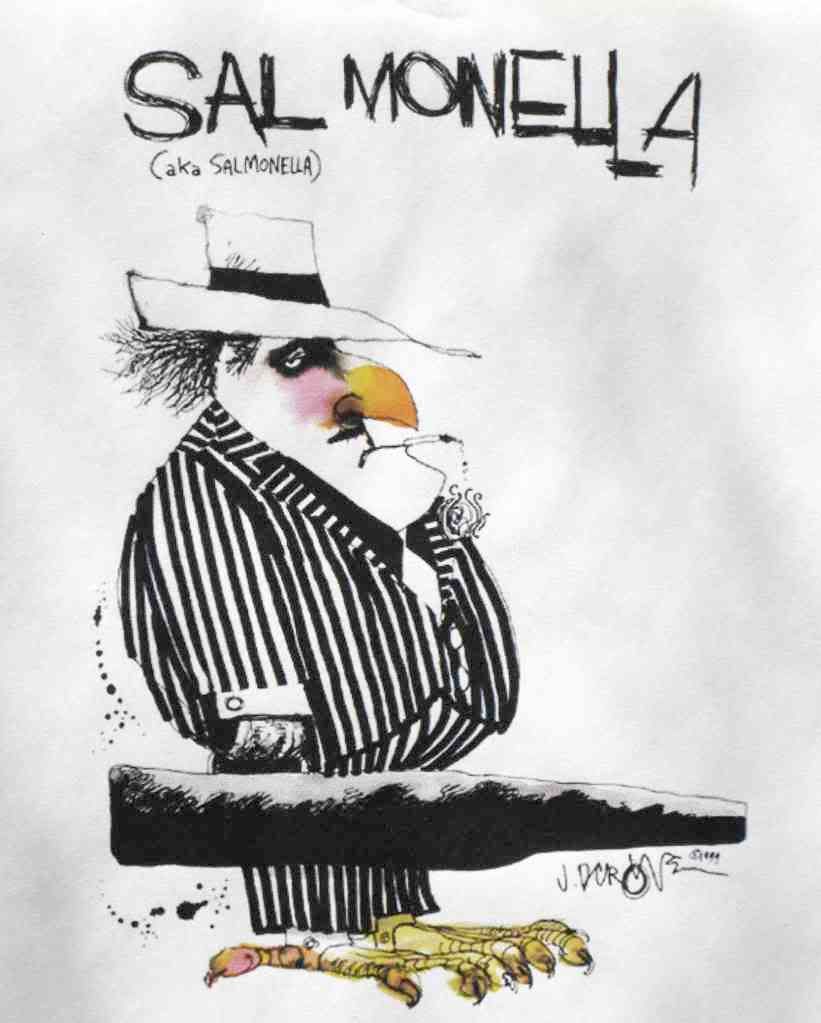
We were reminded the other day that apparently clean, intact shell eggs sometimes may contain Salmonella. The reminder came in the form of a recall of organic eggs from den Dulk Poultry Farms

The eggs were shipped to Costco, Safeway and Pack n' Save stores in western Nevada and northern California. The California Department of Health Services has issued its own warning and has promised to post a list of retail locations where the eggs were available as soon as that information is released to them. 

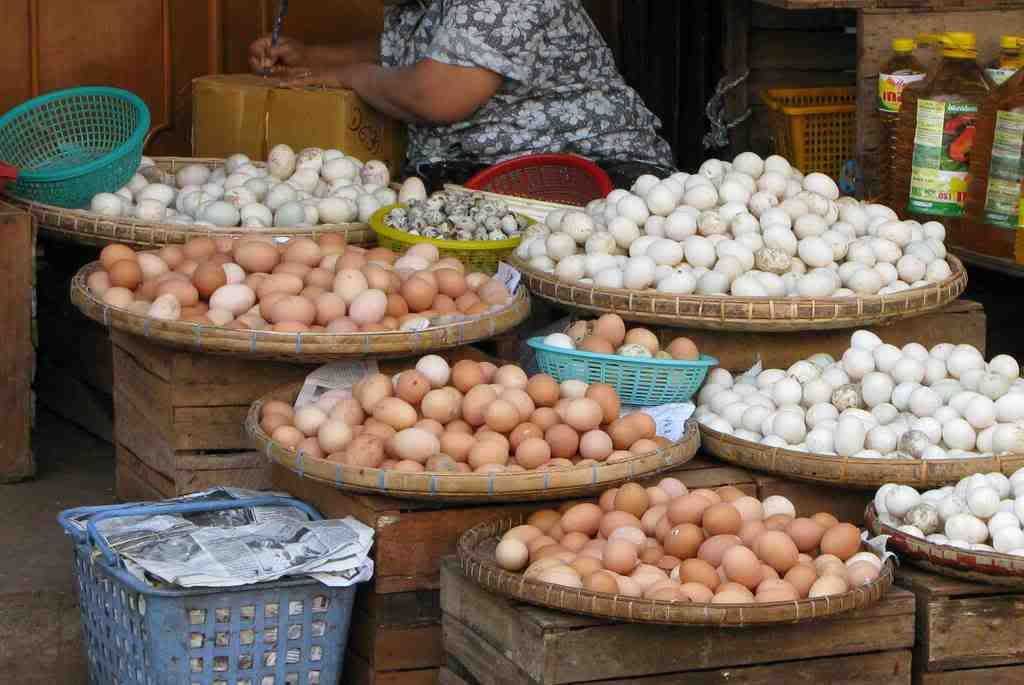
While shell eggs are only occasionally contaminated with Salmonella – USDA estimates one contaminated egg in 20,000 – raw or undercooked eggs have been linked to several outbreaks of Salmonella food poisoning, both in the United States and elsewhere.

Restaurant and food service patrons should be especially aware of the risk of consuming undercooked or "runny" eggs. Several outbreaks have been traced to the practice of cracking and pooling eggs in the evening in preparation for the next day's breakfast rush. This practice can allow a single contaminated egg to taint the entire pool.

Even though the pooled eggs are refrigerated, the egg mix may not be cooled to a temperature that would prevent Salmonella from multiplying. And restaurants that offer scrambled eggs in a breakfast buffet sometimes choose to undercook the eggs so that they do not dry out in the buffet display. As a result, eggs offered in a breakfast buffet present a special risk of spreading Salmonella.

In 1985, 91 attendees at a convention held in Santa Fe, New Mexico were infected with Salmonella after consuming runny eggs from a breakfast buffet offered during the convention. Egg storage, handling and cooking practices also have been blamed for Salmonella outbreaks in the United Kingdom, Japan, Australia, and elsewhere. 


Which came first - the chicken or the egg?

As far as Salmonella is concerned, the answer is clear. Salmonella-infected laying hens produce Salmonella-contaminated eggs, either during the development of the egg inside the hens or as a result of environmental contamination of the shell after laying. And one source of contamination is the feed.

Finland, which has undertaken great efforts over the years to minimize Salmonella in its poultry flocks, has been struggling recently with Salmonella-contaminated feed from a single producer. As of Monday, Salmonella had been detected at 23 Finnish egg-producing poultry farms and six pig farms, all of which received the contaminated feed.

Finnish policy requires that a Salmonella-infected poultry flock be destroyed and the poultry farm completely sanitized before a new flock is introduced. Understandably, poultry farmers who received the Salmonella-contaminated feed are waiting nervously for the results of lab tests that will decided the fate of their flocks.

The policy in Finland – indeed, in all of Scandinavia and in many other EU countries – may seem draconian to poultry and egg farmers in other countries. But it has made major inroads in controlling the presence of Salmonella in eggs and poultry meat in those countries. The incidence of Salmonella in Finnish cattle, swine, poultry and eggs is less than 1%. A survey of nearly 700 chilled chicken carcasses in Swedish slaughterhouses did not detect a single Salmonella-contaminated carcass.

In September 2004, FDA issued a Proposed Rule for the "Prevention of Salmonella Enteritidis in Shell Eggs During Production." The extended comment period for the proposed rule expired in June 2005. This Proposed Rule, which had the stated purpose of reducing the frequency of Salmonella contamination in eggs, was never issued as a Final Rule (i.e., never implemented) – either in its original form or with amendments.

Until the United States – along with other countries outside the EU – chooses to address this problem, consuming raw or undercooked eggs will remain a risky business.

Monday, March 16, 2009

Risky Eating: Sprouts

March 16, 2009

The multi-state Salmonella Saintpaul outbreak that has been linked to contaminated alfalfa sprouts from SunSprout Enterprises, Inc. has grown. In South Dakota alone, state investigators have identified an additional 24 suspect cases. Five states have reported outbreak-related illnesses. 

The Salmonella Saintpaul outbreak is the second recorded incident so far this year of Salmonella-contaminated alfalfa sprouts. Nor is 2009 exceptional in this regard.

For more than a dozen years, various types of seed sprouts – bean, radish, alfalfa and others – have been linked, epidemiologically or by lab analysis, to outbreaks of Salmonella and E. coli O157:H7

Sprouts are especially prone to containing high numbers of bacteria, simply because of the conditions used to induce sprouting. Germination of sprout seeds is carried out under mild temperature conditions and in a moist environment – perfect conditions for the multiplication of bacteria, including Salmonella and E. coli O157:H7. Even the most conscientious sprout producer is at risk of growing a contaminated batch of sprouts.

There is no reliable way for a consumer to determine visually whether a particular package of sprouts may be contaminated. Fresh sprouts are just as risky as those at the end of their recommended shelf life. The only way to avoid contracting a food borne infection from eating sprouts is to refrain from consuming raw sprouts.

Unfortunately for those among us who used to enjoy a sprinkling of sprouts on top of a salad, this crisp, guilt-free alternative to high-calorie chick peas or croutons has become just one more form of risky eating.

Sunday, March 8, 2009

Risky Eating: Unpasteurized Milk and Cheese

March 8, 2009

Raw milk seems to have won a new convert – Rachel Forrest, a former restaurant owner and present restaurant reviewer who lives and works in Portsmouth, NH.

In her March 4th "Wine Me Dine Me" column, which appears at Seacoastonline.com, Ms. Forrest trumpeted her conversion to raw milk, writing that the raw milk she purchases from Brookford Farm is "... so creamy and rich I have to ration it out to make it last."

Ms. Forrest goes on to enumerate the claimed health benefits of raw milk, stating,

"Sure, pasteurization kills micro-organisms, but it also destroys proteins, enzymes, those good omega-3 fatty acids, vitamins and lots of flavors that are naturally in milk. And get this, lactose intolerant crowd — there's no altering of the proteins so there's still lactase in the milk. If you're allergic to cow's milk or intolerant, you might be able to drink raw milk with no issues."

In making this statement, Ms. Forrest has swallowed the marketing prose of the producer, Brookford Farm, along with her raw milk. The Brookford Farm web site makes the following claims:

"Pasteurization kills microorganisms, denatures the proteins and destroys valuable enzymes, omega-3 fatty acids, flavorful compouns, probiotics and vitamins naturally occuring in milk. Consequently, the milk is not in its natural state and many health benefits have been destroyed. Because the proteins haven't been alterned, and lactase is still present, many people who are allergic to cow's milk or lactose intolerant are able to drink raw milk with little problem."

Ms. Forrest should have cross-checked her facts. According to Cornell University, the lactase enzyme is produced by the cells of the intestine. Lactase is not present in fresh milk at the time it leaves the teat - or a mother's breast. The presence of lactase in dairy products is as a result of bacteria that enter the milk, either through environmental contamination or by deliberate inoculate (such as for yogurt manufacture).

And milk allergies relate to the protein in milk, not the inability to digest lactose. Individuals may be allergic to milk protein whether or not the milk has been pasteurized.

As for the safety issue, Ms. Forrest acknowledged that there is a risk. "But," she writes, "there's risk in lots of things I eat."

We were reminded of these risks several times just in the last few weeks. 

  • Washington State is investigating several cases of Listeria monocytogenes infections in the hispanic community. Four of the victims were pregnant women; some of the four miscarried. The State suspects Mexican style cheese made with unpasteurized milk as the source of the outbreak. 
  • Pennsylvania reported an outbreak last month of six cases of Campylobacter illness among consumers of raw milk from Dean Farms (d.b.a. Pasture Maid Creamery, LLC). Dean Farms stopped selling its raw milk at the request of the State, but resumed sales after samples taken from the farm after the outbreak was identified tested negative for Campylobacter.
  • Vermont issued a warning last month to consumers of raw milk from a small farm in that state. According to the Vermont Department of Health and the Vermont Agency of Agriculture, Food and Markets, two dairy cows on a farm in Chittenden County tested positive for rabies. The farm did not sell raw milk to the public.

To gain further insight into the risks associated with raw dairy products – and into the validity of some of the benefits claimed by proponents of raw milk, please read the article by J.T. LeJeune that appeared in the January 2009 issue of Clinical Infectious Diseases.


Wednesday, March 4, 2009

Risky Eating: Uneviscerated Fish

March 4, 2009

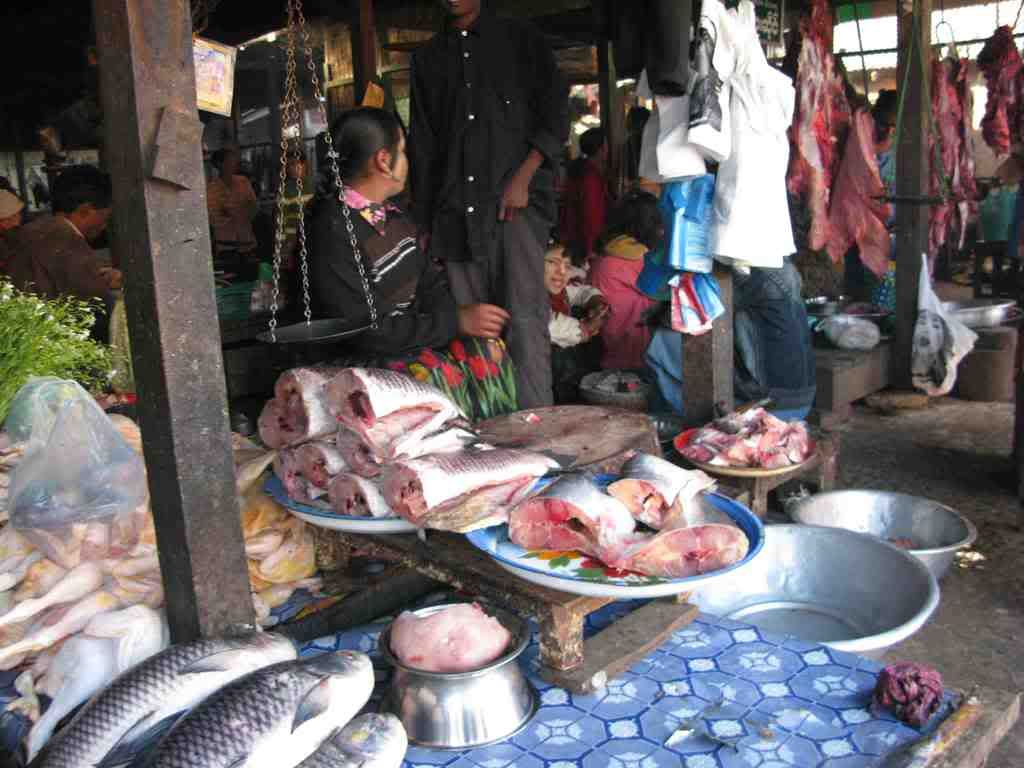
Last week, the New York State Department of Agriculture and Markets issued three separate food safety alerts warning consumers to avoid eating certain uneviscerated fish. Two of those alerts have been echoed by FDA.

The following fish products were the subject of these alerts.

  • S&M (USA) Enterprise Corp. Uneviscerated White Herring (16 oz clear plastic bags): Product of China; Distributed in New York State; No UPC or lot codes; FDA Alert Issued 
  • San Link Inc. Uneviscerated Vacuum Packaged Dried Chechon (Random weight plastic bags, 0.66 lb average): Product of Russia; Distributed in New York State; Date code 21.12.2008; FDA Alert Issued
  • Gusto Food Inc. Steamed Mackerel (1/2 lb plastic bags): Product of Thailand; Distributed in New York, New Jersey, Connecticut, Massachusetts, Maine, Ohio, and Michigan; No UPC or lot codes

New York State prohibits the sale of processed, uneviscerated fish due to the risk of botulism. Spores of Clostridium botulinum have been known to concentrate in the viscera (intestines) of fish, and may germinate and grow – and produce a deadly neurotoxin – if conditions are favorable. Some Clostridium botulinum strains are able to produce toxin even at refrigeration temperatures.

The risk of botulism poisoning from uneviscerated fish has been understood for more than 20 years. Small outbreaks were reported in CDC's Morbidity and Mortality Weekly Report in 1987 (New York), 1990 (Hawaii) and 1992 (New Jersey).

Symptoms of Clostridium botulinum food poisoning typically make their appearance from 12-36 hours after the victim has consumed food that contains botulinum toxin. Victims may suffer from nausea, vomiting, fatigue, dizziness, headache, double vision, or dry throat and nose. In severe cases, the symptoms may progress to paralysis and respiratory failure. With prompt and proper treatment, the fatality rate is approximately 5 to 10%. Symptoms may last from 2 hours to 2 weeks, depending on the amount of toxin ingested, the health status of the victim and the treatment provided. 

Consumers who purchased one of the recalled uneviscerated fish products should either discard it carefully – out of reach of children and pets – or return it to the store for a refund.