Monday, February 15, 2010

Recall Roundup: February 15, 2010

Here is today's list of food safety recalls, product withdrawals and allergy alerts. The live links will take you directly to the official recall notices and company news releases that contain detailed information for each recall and alert.

If you would like to receive automatic email alerts for all new articles posted on eFoodAlert, please click here or submit your request using the sidebar link. Please include "subscribe eFoodAlert" in the subject line.


Europe
  • Food Safety Recall (Denmark): Asia World recalls Hung Thanh brand Phu Quoc Fish Sauce (Lot #VN 138 VI 008) due to the presence of excess histamine.
  • Food Safety Recall (France): Anju Enterprises recalls several Indian style condiments due to the presence of excess phthalates.
  • Food Safety Withdrawal (Ireland): Carlingford Oyster Company withdraws from sale raw oysters harvested from Carlingford Lough, Co. Louth, due to possible contamination with Norovirus (a.k.a. winter vomiting bug).
  • Food Safety Notification (EU #2010.0174): Aflatoxins in ground nutmeg from the Netherlands; distributed in Belgium.
  • Food Safety Notification (EU #2010.0175): Mercury in frozen marlin from unknown origin, via Germany; distributed in Austria.


Asia, Africa and the Pacific Islands


Some supermarket chains post recall notices on their web sites for the convenience of customers. To see whether a recalled food was carried by your favorite supermarket, follow the live link to the supermarket's recall web site.


*The Kroger umbrella encompasses numerous supermarket, marketplace and convenience store chains, listed on the Kroger corporate home page.


Guest Blog: Reducing E. coli O157:H7 In Frozen Ground Beef

The following Guest Blog first appeared on Safety Zone, a regular blog feature on the Meatingplace.com site, and is reproduced here with the kind permission of its author, Dr. James Marsden.


Retail Frozen Ground Beef Patties and Risks of E. coli O157:H7

It's time to recognize that retail frozen ground beef patties pose an increased risk to consumers and take steps to reduce that risk.

If you conduct a Google search using the words “frozen ground beef patties and E. coli”, you will see that this product category has been implicated in an inordinate number of cases, outbreaks and recalls. The Topps recall and other highly publicized events over the past several years resulted from contaminated frozen ground beef patties. The October New York Times story that described a devastating illness that resulted from E. coli O157:H7 contamination also involved retail frozen ground beef patties.

Frozen ground beef patties were also implicated in the 1993 Jack-in-the-Box outbreak and other early public health events involving E. coli O157:H7. Fast food chains have taken steps to assure the safety of frozen beef patties, including raw material and finished product testing, the implementation of validated cooking processes that fully inactivate E. coli O157:H7 and process control measures that guarantee proper cooking every time. These systems have been effective in controlling the problem in fast food restaurants and other restaurants that use frozen beef patties.

The problem still exists when consumers prepare retail frozen ground beef patties at home. This is because frozen patties are inherently difficult to cook uniformly and sufficiently to control pathogens. If all consumers were educated about the risks associated with frozen beef patties, and took the same steps that have been successful in restaurant preparation, the problem would be solved. This would require that great care be taken when cooking frozen beef patties and the universal use of thermometers to verify that the cooked product has reached a minimum temperature of 160 degrees F. Efforts to inform and encourage consumers to adhere to these practices should continue. However, it is not realistic to expect that all consumers will apply perfect cooking methods when preparing frozen ground beef patties. The risk of E. coli contamination in these products has to be reduced upstream.

Here are 6 steps that I believe would make frozen ground beef patties safer for consumers:
  1. Assure that beef carcasses are processed to minimize the risk of pathogen contamination.
  2. Apply a validated intervention to chilled beef carcasses prior to fabrication.
  3. Test beef trimmings for E. coli O157:H7 using N-60 sampling procedures at slaughter plant.
  4. Apply at least one validated intervention to beef trimmings before grinding.
  5. Adopt a test and hold policy for finished frozen ground beef patties that applies to every production lot (Microbiological testing procedures now allow for results in less than 24 hours).
  6. Implement a prominent labeling statement for frozen ground beef patties with consumer information that underscores the importance of proper cooking (in addition to safe handling labels).

These steps in addition to continued efforts to identify and implement pre-harvest interventions and carcass pasteurization technologies would reduce the risk of E. coli O157:H7 in retail frozen ground patties and also help restore consumer confidence in beef products in general.


About Jim Marsden: Dr. James L. Marsden is Regent's Distinguished Professor of Food Safety and Security at Kansas State University, and the senior science advisor for the North American Meat Processors Association. He is the past president of the American Meat Institute Foundation in Washington, DC and a graduate of Oklahoma State University.


If you would like to receive automatic email alerts for all new articles posted on eFoodAlert, please click here or submit your request using the sidebar link. Please include "subscribe eFoodAlert" in the subject line.

Saturday, February 13, 2010

Recall Roundup: February 13, 2010

Here is today's list of food safety recalls, product withdrawals and allergy alerts. The live links will take you directly to the official recall notices and company news releases that contain detailed information for each recall and alert.

If you would like to receive automatic email alerts for all new articles posted on eFoodAlert, please click here or submit your request using the sidebar link. Please include "subscribe eFoodAlert" in the subject line.


United States
  • Allergy Alert: Daniel's Western Meat Packers (Pico Rivera, CA) recalls approximately 16,290 pounds of frozen turkey patty products because they were inadvertently mislabeled and may contain undeclared wheat.
  • Food Safety Recall: Huntington Meat Packing Inc. (Montebello, CA) expands its recall of January 18 to include approximately 4.9 million additional pounds of beef and veal products that were not produced in accordance with the company's food safety plan. The recall was expanded based on evidence collected in an ongoing criminal investigation being conducted by the Office of the Inspector General (OIG) with assistance from FSIS.


Canada
  • Consumer Product Safety Recall: Natural Color Productions (New Westminster, BC) recalls Vancouver-Themed Decorative Glazed Ceramic Wall Plates because Health Canada has determined that the glaze may contain lead and cadmium in excess of allowable limits. The made-in-China decorative plates were sold in Natural Color Production stores across Canada between May 2006 and January 2010.


Asia, Africa and the Pacific Islands
  • Cosmetic Products Safety Alert (Taiwan): The Department of Health advises consumers not to purchase or use six cosmetic products imported from mainland China, because these products contain mercury, a toxic heavy metal that is banned from cosmetics in Taiwan.


Some supermarket chains post recall notices on their web sites for the convenience of customers. To see whether a recalled food was carried by your favorite supermarket, follow the live link to the supermarket's recall web site.


*The Kroger umbrella encompasses numerous supermarket, marketplace and convenience store chains, listed on the Kroger corporate home page.


Friday, February 12, 2010

Recall Roundup: February 12, 2010

Here is today's list of food safety recalls, product withdrawals and allergy alerts. The live links will take you directly to the official recall notices and company news releases that contain detailed information for each recall and alert.

If you would like to receive automatic email alerts for all new articles posted on eFoodAlert, please click here or submit your request using the sidebar link. Please include "subscribe eFoodAlert" in the subject line.


United States
  • Food Safety Recall: Estrella Family Creamery (Montesano, WA) recalls its Red Darla cheese because it has the potential to be contaminated with Listeria monocytogenes. The recalled soft cheese was sold January 2010 through February 11, 2010 at the Ballard and Seattle’s U-District farmer's markets, two Seattle restaurants, retail stores in the Seattle-Tacoma area, and the firm’s retail store in Montesano, Washington; a retail market in San Francisco, California; and a cheese shop in Springfield, New Jersey.
  • Food Safety Recall: Trader Joe's Company recalls Trader Joe’s Chocolate Chip Chewy Coated Granola Bars (UPC 82818, Use by Dates/Lot Codes 16JUL10H2 and 17JUL10H1), manufactured by Bloomfield Bakery, a subsidiary of Ralcorp Holdings, Inc. because the products may be contaminated with Salmonella. The recalled granola bars were sold in Trader Joe's locations across the United States.
  • Pet Food Safety Recall: Nature's Variety recalls one batch ("Best if used by 11/10/10) of Chicken Formula Raw Frozen Diet for dogs and cats, because the raw pet food may be contaminated with Salmonella. The recalled product was available in retail stores across the United States and over the Internet.
  • Dietary Supplement Recall: Price Chopper advises its customers that Iovate has recalled all expiration dates of Hydroxycut 7 Day Cleanse (70 ct., UPC 6-31656-60161) due to a labeling problem.


Canada
  • Allergy Alert: A&M Home Products recalls Incredible Edible Spread'Em Soya Oil Margarine with Garlic, Herbs and Spices, because the margarine contains undeclared milk ingredients. The recalled item was sold in retail stores in Ontario, and may also have been available in other parts of Canada.
  • Pet Food Safety Recall: Nature's Variety recalls one batch ("Best if used by 11/10/10) of Chicken Formula Raw Frozen Diet for dogs and cats, because the raw pet food may be contaminated with Salmonella. The recalled product was available over the Internet and also through limited distribution in retail stores in Canada.


Europe


Some supermarket chains post recall notices on their web sites for the convenience of customers. To see whether a recalled food was carried by your favorite supermarket, follow the live link to the supermarket's recall web site.


*The Kroger umbrella encompasses numerous supermarket, marketplace and convenience store chains, listed on the Kroger corporate home page.


Nature's Variety Recalls Raw Pet Food

Chicken Formula Raw Frozen Diet for dogs and cats may contain Salmonella

Nature's Variety has recalled three products with a Best If Used By date of 11/10/10 after Salmonella was discovered in a sample of this date code batch, according to a news release issued late yesterday. The affected products were sold in retail stores throughout the United States, over the Internet and, to a limited extent, in Canada.

The recalled items consist of Nature’s Variety Chicken Formula Raw Frozen Diet packaged in the following forms:
  • 3 lb chicken medallions (UPC# 7 69949 60130 2)
  • 6 lb chicken patties (UPC# 7 69949 60120 3)
  • 2 lb chicken chubs (UPC# 7 69949 60121 0)

The problem was uncovered following a consumer complaint. The batch code relating to the complaint tested negative for Salmonella; however, testing of additional lot codes revealed the presence of Salmonella in the 11/10/10 batch.

FDA is aware of the Salmonella-positive finding, and is working with Nature's Variety on this recall, according to Laura Alvey of FDA's Center for Veterinary Medicine.

Nature's Variety has posted the following customer instructions on the Company website:
  • If your package has not been opened, please return the unopened product to your retailer for a full refund or replacement.
  • If your package has been opened, please dispose of the raw food in a safe manner by securing it in a covered trash receptacle. Then, bring your receipt (or the empty package in a sealed bag) to your local retailer for a full refund or replacement.

As a result of this incident, CEO Reed Howlett has committed Nature's Variety to implementing a "test and hold" policy for all of its raw, frozen products. This usually means that every production batch will be held by the manufacturer until a sample of the batch has been cleared by the company's internal or third-party testing lab. Howlett did not indicate whether the new "test and hold" approach would apply to any other Nature's Variety products.

Technologies are available to kill bacterial pathogens, such as Salmonella, without altering the taste, texture, or "raw-ness" of a food. One such process – high hydrostatic pressure – is already being used by at least one manufacturer of raw pet foods.

"Test and Hold" is a worthwhile procedure, but finished product testing along cannot guarantee a product that is pathogen-free. Nature's Variety and other manufacturers of "raw" pet food must look beyond finished product testing, and adopt methods that will ensure the microbiological safety of their products.

If you would like to receive automatic email alerts for all new articles posted on eFoodAlert, please click here or submit your request using the sidebar link. Please include "subscribe eFoodAlert" in the subject line.

CDC Adds Second Salmonella To Daniele Outbreak Profile

Latest report notes – but excludes from outbreak totals – 5 cases of Salmonella Senftenberg

CDC announced late yesterday that 225 Salmonella Montevideo illnesses have now been linked to recalled Daniele salami. Cases have been reported by 44 states and the District of Columbia. At least 43 people have been hospitalized. None of the illnesses have been linked to salami from any other company.

An additional five people have been infected with a strain of Salmonella Senftenberg that matches the genetic profile of the Salmonella Senftenberg found in a package of Daniele salami in Washington State. One of the five people reported having eaten a recalled Daniele product during the week before become ill.

Two of the Salmonella Senftenberg cases are from California; one or more of the others may be from Illinois, which still had several illnesses under investigation as of February 6th.

Black pepper imported from Vietnam has been implicated as the source of Daniele's woes. FDA is still trying to recover Salmonella from previously unopened containers of the suspect pepper. So far, the only Salmonella-positive pepper samples were drawn from previously opened containers located at Daniele's Rhode Island food processing facility.

CDC reminds consumers to discard any recalled products or return them to the store for refund. Individuals who think that they have been made ill as a result of having eaten a recalled product should contact their health care providers.

If you would like to receive automatic email alerts for all new articles posted on eFoodAlert, please click here or submit your request using the sidebar link. Please include "subscribe eFoodAlert" in the subject line.

Thursday, February 11, 2010

Recall Roundup: February 11, 2010

Here is today's list of food safety recalls, product withdrawals and allergy alerts. The live links will take you directly to the official recall notices and company news releases that contain detailed information for each recall and alert.

If you would like to receive automatic email alerts for all new articles posted on eFoodAlert, please click here or submit your request using the sidebar link. Please include "subscribe eFoodAlert" in the subject line.


United States
  • Allergy Alert: Champ Meatball Co. (Whittier, CA) recalls approximately 750 pounds of frozen cured pork patty mix because it contains undeclared wheat.
  • Allergy Alert: Stop & Shop and Giant Food recall Party Platter Cookies (24 oz.), sold in the supermarket in-store bakeries, because they contain undeclared almonds and almond paste.
  • Food Safety Recall: Schmalz European Provisions (Springfield, NJ) recalls approximately 1,485 pounds of ready-to-eat sausage products that may contain plastic pieces. The recalled products were produced on January 7, 2010 and were distributed to retailers in California, Connecticut, Florida, Georgia, Indiana, New Hampshire, New Jersey, New York, North Carolina, Ohio, Oregon, and Texas.
  • Food Safety Recall: Trader Joe's recalls Trader Joe’s Chocolate Chip Chewy Coated Granola Bars (Use by Dates/ Lot Codes 16JUL10H2 and 17JUL10HI) due to a risk of "serious food-borne illness." Customers are asked to return the recalled packages (full or empty) to a Trader Joe's store for a refund.
  • Food Safety Recall: Tom Paige Catering Company (Cleveland, OH) recalls all products supplied on or after February 2, 2010, except for frozen, three-compartment meals, after a routine inspection carried out by the Ohio Department of Agriculture detects Listeria monocytogenes in a sample of chicken and dumplings.
  • Pet Food Safety Recall: Nature's Variety recalls their Chicken Formula Raw Frozen Diet for dogs and cats with a "Best If Used By" date of 11/10/10 because these products may be contaminated with Salmonella.


Canada
  • Allergy Alert: Chef Kebab (4231, boulevard Samson, Laval, QC) recalls Basterma, because it contains undeclared soy.
  • Food Safety Recall: Chef Kebab (4231, boulevard Samson, Laval, QC) recalls Soujouk, because it lacks the label instruction "Cuire avant de consommer" ("Cook before eating").


Europe


Australia and New Zealand
  • Allergy Alert (New Zealand): Heller Tasty Ltd. recalls Hellers Sensational Chinese Honey Sausages (1 Kg; Use by date 180310), sold in supermarkets throughout the North Island since 05 February 2010. Due to a labeling error (packages actually contain Chunky Cheese Sausages), the product contains undeclared dairy.


Some supermarket chains post recall notices on their web sites for the convenience of customers. To see whether a recalled food was carried by your favorite supermarket, follow the live link to the supermarket's recall web site.


*The Kroger umbrella encompasses numerous supermarket, marketplace and convenience store chains, listed on the Kroger corporate home page.


French Lettuce Sickens Scandinavians

264 Danes suffer gastroenteritis after eating Lollo Bionda lettuce from France

Contaminated Lollo Bionda lettuce grown in southwest France was responsible for 11 food-borne disease outbreaks in Denmark and 3 in Norway during January 2010, according to a report in today's Eurosurveillance Weekly. Eight more outbreaks are still under investigation in Denmark.

On January 22nd, the Danish Food Standards Agency announced a recall of Lollo Bionda lettuce after the lettuce was linked epidemiologically to an outbreak of Norovirus gastroenteritis. Norovirus also was been recovered from lettuce samples obtained from a catering company.

Most of the contaminated lettuce apparently was supplied to two catering companies. Individuals were infected as a result of eating sandwiches prepared by these caterers. Little, if any, lettuce that was sold in retail markets was linked to the outbreaks.

In addition to Norovirus, at least eleven of the outbreak victims were found to be infected with an enterotoxigenic strain of E. coli (E. coli O6:K15:H16). A small number of victims also harbored Staphylococcus aureus (2), Clostridium perfringens (3) or Bacillus cereus (2).

Now, that's what I call serious contamination!

Of course, at least some of the findings (notably, Staphylococcus aureus, which is not an enteric pathogen) probably were simply coincidental to the illnesses.

Denmark issued a food safety alert through the EU's Rapid Alert System for Food and Feed on January 25th, and French authorities are investigating the possible source of the problem. The French government has issued no statements on this outbreak or on the progress of its investigation. There have been no reports of related illnesses in France.

This outbreak report illustrates – once more – the ease with which a contamination problem in one country can affect consumers outside that country's borders. And it is equally a reminder that the problem of fresh produce contamination is not restricted to underdeveloped countries.

Raw sprouts have already been declared unsafe additions to sandwiches and salads. Must we forego lettuce, too?


If you would like to receive automatic email alerts for all new articles posted on eFoodAlert, please click here or submit your request using the sidebar link. Please include "subscribe eFoodAlert" in the subject line.


Wednesday, February 10, 2010

Recall Roundup: February 10, 2010

Here is today's list of food safety recalls, product withdrawals and allergy alerts. The live links will take you directly to the official recall notices and company news releases that contain detailed information for each recall and alert.

If you would like to receive automatic email alerts for all new articles posted on eFoodAlert, please click here or submit your request using the sidebar link.


United States
  • Food Safety Recall: Price Chopper recalls Central Market Classics Turtle Cheesecake (28 oz.; UPC 4173500892; Best By 16DEC10) because it may contain foreign objects.


Europe
  • Food Safety Recall (Denmark): Aldi recalls frozen marinated turkey fillets due to Salmonella contamination. The recalled products (imported from Germany) were sold in Aldi supermarkets throughout Denmark.
  • Dietary Supplement Safety Advisory (Italy): The Ministry of Health advises consumers to avoid using New Super Slim weight loss supplement, which is made in China and sold over the Internet, because the product contains the unauthorized ingredient, sibutramine – a prescription-only medication that can produce serious side effects.
  • Food Safety Notification (EU #2010.0145): Chlorfenvinphos and coumaphos in gelatinous beads for chewing on the basis of propolis from Italy; distributed in Italy and Slovakia.
  • Food Safety Notification (EU #2010.0146): Insect larvae in dried dates from Tunisia; distributed in Italy.
  • Food Safety Notification (EU #2010.0147): Metal pieces in sliced mushrooms from Spain; distributed in Portugal.
  • Animal Feed Safety Notification (EU #2010.0148): Salmonella enteritidis in sunflower oil cake from Spain; distributed in France.
  • Food Safety Notification (EU #2010.0149): Salmonella Jerusalem in protein powder from Italy; distributed in Norway.
  • Dietary Supplement Safety Notification (EU #2010.0150): Unauthorised substance tadalafil in food supplement from the United States, via the Netherlands; distributed in Finland.
  • Food Safety Notification (EU #2010.0151): Excessive sulphite in red cherries cocktail from Italy; distributed in Greece.


Asia, Africa and the Pacific Islands
  • Dietary Supplement Recall (Hong Kong): Department of Health warns consumers to avoid using the product Man Power, for managing sexual dysfunction because it contains the unauthorized Western drug tadalafil, which can cause serious side effects.
  • Dietary Supplement Warning (Philippines): FDA warns consumers to avoid certain dietary supplements that make unsupported claims to cure illnesses and may cause side effects.


Australia and New Zealand
  • Regulatory Status Update (Australia): The Victorian Department of Health advises consumers that the emergency order for semi-dried tomatoes that was issued under the Food Act has now expired. Food Standards Australia has developed a proposal for traceability and processing of semi-dried tomatoes and is soliciting comments.


Some supermarket chains post recall notices on their web sites for the convenience of customers. To see whether a recalled food was carried by your favorite supermarket, follow the live link to the supermarket's recall web site.


*The Kroger umbrella encompasses numerous supermarket, marketplace and convenience store chains, listed on the Kroger corporate home page.


Pepper Production - A Dirty Business

Salmonella in pepper? Why am I not surprised?

Pepper is a fruit – a berry to be precise – with some similarities to grapes.

Both grow on vines. Both grow in clusters. Both are harvested by hand. But the resemblance ends at harvest.

While grapes are typically eaten fresh or pressed to make juice and wine, pepper – according to McCormick & Company – is the number one selling spice in the United States.

The pepper plant (proper name Piper nigrum) is a tropical plant and grows in countries with a seasonal monsoon climate, including India, Indonesia, Vietnam and Brazil. The vines can attain a height of 12 feet when properly supported by trees, poles, or trellises.

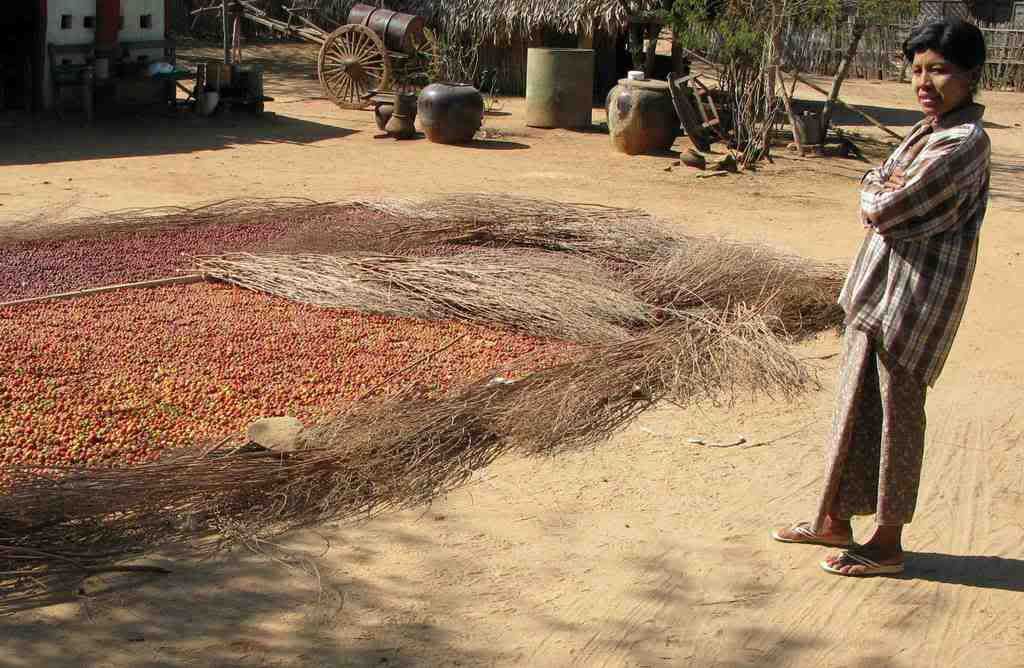
Once harvested, the pepper clusters are laid out on grass mats to dry in the sun. The berries are turned frequently, to ensure uniform drying and are brought indoors at night. After 7-10 days, they are ready to be sold.

At this stage, the dried pepper berries – now properly called peppercorns – are still loaded with a variety of stems, stones, dirt and debris. The processor must clean and grade the peppercorns before packaging them. Some processors, such as VKL Vietnam Ltd., steam-sterilize peppercorns and other spices to minimize the risk of microbiological contamination.

"How," you ask, "do microbes get onto the peppercorns?"

The answer is simple. It happens during the 7-10 days that the berries sit out in the sun to dry.

I travelled through Southeast Asia in 2008 and had the opportunity to see how both fruit and fish are dried in the sun in Laos and Myanmar (Burma). Although the Vietnam government has been trying to develop solar energy methods for drying produce, many small farmers in that country still use traditional methods.


Farmers in Myanmar dry their produce on grass mats laid on the ground in front of their houses, and "protect" the drying fruit with a border of straw.


In the same open area, one often finds:

The family cow or ox


And a free ranging chicken finding its lunch next to the family manure pile


Get the picture?

If you would like to receive automatic email alerts for all new articles posted on eFoodAlert, please click here or submit your request using the sidebar link. Please include "subscribe eFoodAlert" in the subject line.

The Other Salmonella In Daniele's Meat

Salmonella Senftenberg cases under investigation
(Posted February 6, 2010 and updated February 10, 2010)

The California Department of Public Health (CDPH) is investigating two isolated cases of Salmonella Senftenberg that match a strain recovered in late January from a Daniele variety package. So far, there is no epidemiological evidence linking the cases either to black pepper or to consumption of any Daniele meat product. According to Ron Owens of the CDPH Office of Public Affairs, the investigation is ongoing.

One or more other states may also be investigating Salmonella Senftenberg illness reports, but no one else is saying so publicly at this time.

Illinois has acknowledged that it is investigating "...a number of Salmonella cases that may be linked to the outbreak," but declined to be more specific. When I asked whether any of the cases involved Salmonella Senftenberg, I was told, "Hopefully soon CDC will make a determination of which serotypes of Salmonella will be included in the outbreak definition. At this point only Montevideo has been included."

Among the other states that were kind enough to respond to my inquiry, Florida simply referred me to the CDC and USDA web sites, and Minnesota replied that their policy is to not disclose any details of an active investigation. The following states have affirmed that they have no reported cases of Salmonella Senftenberg: Alabama, Arizona, Arkansas, Colorado, Connecticut, Hawaii, Idaho, Iowa, Kansas, Louisiana, Maine, Missouri, New Mexico, North Carolina, North Dakota, Oklahoma, Oregon, South Dakota, Tennessee, Utah, Vermont and Wisconsin (Updated February 10, 2010).

CDC, which is limiting the outbreak definition to cases of Salmonella Montevideo – at least for now – issued a status update on the outbreak yesterday afternoon. As of 9pm on February 4th, 213 individuals from 42 states and the District of Columbia are confirmed to have been infected with the Montevideo outbreak strain. At least 42 people have been hospitalized, and the known duration of the outbreak now stretches from July 4, 2009 to January 21, 2010.

Before CDC decides to change the outbreak definition to include Salmonella Senftenberg (or any other Salmonella strain), it will need convincing lab and epidemiological evidence. Full cooperation from possible outbreak victims would make this evidence much easier to collect.

While Salmonella cultures obtained from clinical samples must be reported to CDC, infected individuals are under no obligation to cooperate with epidemiological investigations to determine the source of the pathogen. A number of apparent victims of this outbreak have declined to answer the detailed food history questionnaire developed to determine whether their illnesses are linked to consumption of deli meats or pepper.

I urge anyone who has experienced symptoms of salmonellosis (diarrhea, stomach cramps, mild fever, nausea, etc.) to consult a doctor and, if asked, to cooperate fully with all follow-up investigations.

If you would like to receive automatic email alerts for all new articles posted on eFoodAlert, please click here or submit your request using the sidebar link.

Tuesday, February 9, 2010

Recall Roundup: February 9, 2010

Here is today's list of food safety recalls, product withdrawals and allergy alerts. The live links will take you directly to the official recall notices and company news releases that contain detailed information for each recall and alert.

If you would like to receive automatic email alerts for all new articles posted on eFoodAlert, please click here or submit your request using the sidebar link.


United States
  • Allergy Alert: Turkey Hill Dairy (Conestoga, PA) recalls its 1.5 qt. (48 oz./1.42L) packages of Chocolate Marshmallow Premium Ice Cream because the product may contain almonds that were inadvertently added during production and are not included in the list of ingredients. The recalled ice cream is sold only in select stores in Central Pennsylvania.
  • FDA Warning Letter: FDA warns Meyer Food Service LLC dba Empire Fish Co. (Wauwatosa, WI) that an October 2009 inspection of the Company's seafood processing facility revealed serious violations of the seafood Hazard Analysis and Critical Control Point (HACCP) regulation.


Canada
  • OTC Pharmaceutical Product Safety Recall: At the request of Health Canada, Iovate Health Sciences International Inc. (Oakville, ON) has recalled the unauthorized product Complete 7-Day Cleanse because it contains a number of active ingredients with a combined effect that may pose serious health risks. The recalled product is sold at retail outlets across Canada, and over the Internet.


Europe
  • Allergy Alert: Premier Foods Group recalls Cadbury Chunks Bournville (180g) because one batch of the product was found to contain undeclared milk protein.


Asia, Africa and the Pacific Islands
  • Food Safety Advisory (Taiwan): Consumer's Foundation reports that 15% of Chinese New Year food specialties contain excessive levels of germicides or preservatives.
  • Dietary Supplement Safety Warning (Philippines): Food and Drug Administration warns consumers not to purchase or use Zhen De Shou fat loss capsules and teas because these unregistered products may contain amphetamine, sibutramine or steroids.
  • Cosmetic Product Safety Warning (Philippines): Food and Drug Administration warns consumers not to purchase or use three Jaioli cosmetic products, because the unauthorized products contain excessive mercury.


Some supermarket chains post recall notices on their web sites for the convenience of customers. To see whether a recalled food was carried by your favorite supermarket, follow the live link to the supermarket's recall web site.


*The Kroger umbrella encompasses numerous supermarket, marketplace and convenience store chains, listed on the Kroger corporate home page.